Arsène Lupin, super-sleuth
Maurice Leblanc
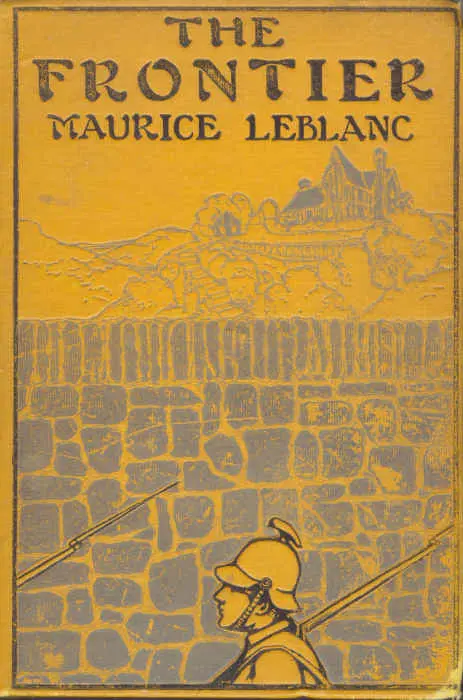
THE CLASSIC COLLECTION · 1912
"The Frontier" by Maurice Leblanc is a novel written in the early 20th century. The story revolves around the character of Morestal, a patriotic farmer and mayor, whose life is intricately connected to the tension between France and Germany, set against the backdrop of looming war. Through the lives of Morestal, his son Philippe, and the intertwining paths of other residents near the French-German border, the narrative grapples with themes of loyalty, national pride, and the personal costs of conflict. The opening of the book sets a tense atmosphere as Morestal and his wife discuss the ongoing disturbances along the French-German frontier, specifically the repeated damage to a boundary post, symbolizing deeper issues of national integrity and personal conflict stemming from past wars. We see Morestal's fierce pride in France and a palpable sense of foreboding as he reflects on the possibility of conflict re-emerging with Germany. The arrival of their son Philippe, a professor who has differing views, introduces an imminent clash of ideologies within the family, encapsulating the overarching struggle between old patriotic sentiments and newer, more progressive worldviews. As Philippe returns home with his wife Marthe, layers of personal history entwine with the national narrative, hinting at dramatic tensions both within the family and across the border.
Introduction adapted from the source catalogue; source summaries may be automatically generated.
Free to read · English · 57,388 words · No account needed
MAKE TIME FOR A GOOD BOOK
On by default. Untick to stop anonymous reading totals. Each page counts after 10 seconds in view. How this works.
Anonymous counting is on unless you have switched it off.
That morning, on the Tuesday, Philippe came to the Old Mill. Mme. Morestal was told and hurried down, in a great state of excitement, eager to vent her wrath upon her unworthy son. But, at the sight of him standing outside on the terrace, she overcame her need of recrimination and uttered no reproach, so frightened was she at seeing him look so pale and sad.
She asked:
"Where have you been?"
"What does it matter?" replied Philippe. "I ought not to have come back ... but I could not keep away, because of father.... I was too much upset.... How is he?"
"Dr. Borel won't say anything definite yet."
"And what is your opinion?"
"My opinion? Well, frankly speaking, I am very hopeful. Your father is so strong! But, all the same, it was a violent shock...."
"Yes," he said, "that is what alarms me. I have not lived, these last two days. How could I possibly go before knowing for certain?..."
She hinted, with a certain feeling of apprehension:
"Then you want to stay here?"
"Yes ... provided he does not know."
"The fact is ... it's like this ... Suzanne is here, in your father's room.... He insisted on her coming...."
"Oh!" he said. "Is Suzanne here?"
"Where would you have her go? She has no one left. Who knows when Jorance will be out of prison? And, besides, will he ever forgive her?"
He stood wrapped in thought and asked:
"Has Marthe met her?"
"There was a terrible scene between them. I found Suzanne with her face streaming with blood, all over scratches."
"Oh, the poor things!" he murmured. "The poor things!..."
His head fell; and, presently, she saw that he was weeping.
As she had no word of consolation to offer him, she turned round and walked to the drawing-room, where she shifted the furniture so as to have the satisfaction of putting it back in its place. She tried to find a pretext to utter her resentment. When Philippe sat down at the table, she showed him the newspapers:
"Have you seen them?"
"Yes, the news is bad."
"That's not the point. The point is that the cabinet has fallen on the publication of the under-secretary's report. The whole Chamber rose up in protest."
"Well?"
"Well, that report is the one based upon the last enquiry ... of two days ago ... at the Butte-aux-Loups.... So you see ..."
Philippe felt a need to justify himself:
"You forget, mother, that there was an unexpected factor in the case. Before the sitting of the Chamber, a telegram had been published reporting the words spoken by the emperor after hearing the Statthalter's explanation."
He pointed to one of the papers:
Your reading position is saved on this browser. Take it to another device with a library code. Reading pages adapt to text, rather than matching a printed edition.
Maurice Leblanc
Maurice Leblanc
Maurice Leblanc
Maurice Leblanc
BEHIND THE BOOK
This eBook is for the use of anyone anywhere in the United States and most other parts of the world at no cost and with almost no restrictions whatsoever. You may copy it, give it away or re-use it under the terms of the Project Gutenberg License included with this eBook or online at www.gutenberg.org. If you are not located in the United States, you will have to check the laws of the country where you are located before using this eBook. Read the source licence.
The original source file, including credits and licence, is retained by this library. Request an original-format copy at no charge. Please include the book title and Project Gutenberg identifier #28480.
KEEP YOUR CURIOSITY GOING
Cécile Tormay

Moritz Busch
Coulson Kernahan
John L. Ransom

Maurice Baring
Frances Wright