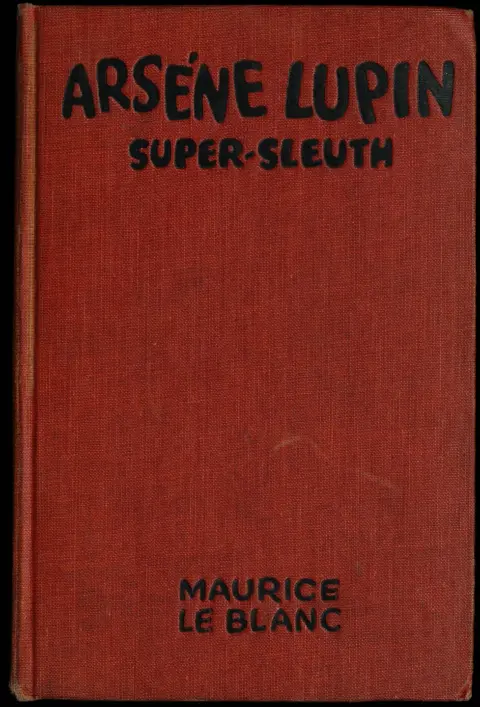
Arsène Lupin, super-sleuth
Maurice Leblanc
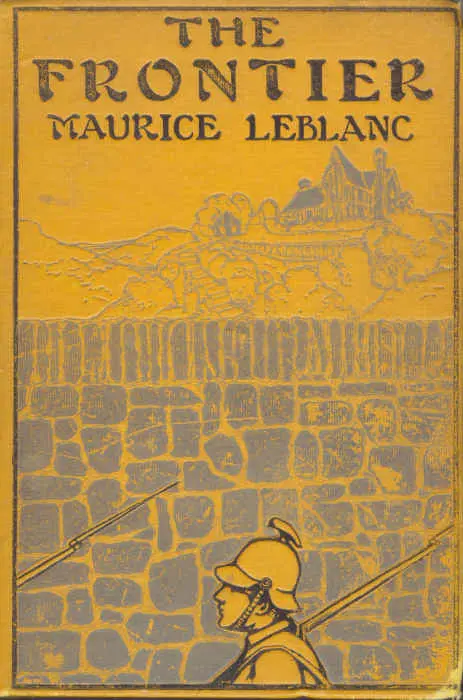
THE CLASSIC COLLECTION · 1912
"The Frontier" by Maurice Leblanc is a novel written in the early 20th century. The story revolves around the character of Morestal, a patriotic farmer and mayor, whose life is intricately connected to the tension between France and Germany, set against the backdrop of looming war. Through the lives of Morestal, his son Philippe, and the intertwining paths of other residents near the French-German border, the narrative grapples with themes of loyalty, national pride, and the personal costs of conflict. The opening of the book sets a tense atmosphere as Morestal and his wife discuss the ongoing disturbances along the French-German frontier, specifically the repeated damage to a boundary post, symbolizing deeper issues of national integrity and personal conflict stemming from past wars. We see Morestal's fierce pride in France and a palpable sense of foreboding as he reflects on the possibility of conflict re-emerging with Germany. The arrival of their son Philippe, a professor who has differing views, introduces an imminent clash of ideologies within the family, encapsulating the overarching struggle between old patriotic sentiments and newer, more progressive worldviews. As Philippe returns home with his wife Marthe, layers of personal history entwine with the national narrative, hinting at dramatic tensions both within the family and across the border.
Introduction adapted from the source catalogue; source summaries may be automatically generated.
Free to read · English · 57,388 words · No account needed
MAKE TIME FOR A GOOD BOOK
On by default. Untick to stop anonymous reading totals. Each page counts after 10 seconds in view. How this works.
Anonymous counting is on unless you have switched it off.
At six o'clock, driven by hunger, she went down to the dining-room. As she came out, after eating a little bread and drinking a glass of water, she saw Mme. Morestal going down the front-door steps to meet the doctor. She then remembered that her father-in-law was ill and that she had not yet seen him. His bedroom was close by. She crossed the passage, knocked, heard a voice--the voice of a nurse, she thought--say "Come in," and opened the door.
Opposite her, at a few steps' distance, beside the sleeping man, was
Suzanne.
"You! You!" fumed Marthe. "You here!..."
Suzanne began to tremble under her fixed gaze and stammered:
"It was your father-in-law.... He insisted.... The doctor came ..."
And, with her knees giving way beneath her, she said, over and over
again:
"I beg your pardon.... Forgive me ... forgive me.... It was my fault.... Philippe would never have ..."
Marthe at first listened without stirring. Perhaps she might have been just able to restrain herself. But, at the name of Philippe, at the name of Philippe uttered by Suzanne, she gave a bound, clutched the girl by the throat and flung her back against the table. She quivered with rage like an animal that at last holds its foe. She would have liked to destroy that body which her husband had clasped in his arms, to tear it, bite it, hurt it, hurt it as much as she could.
Suzanne gurgled under the onslaught. Then, losing her head, Marthe, stiff-fingered, clawed her with her nails on the forehead, on the cheeks, on the lips, those moist, red lips which Philippe had kissed. Her hatred gained new life with every movement. Blood flowed and mingled with Suzanne's tears. Marthe vilified her with abominable words, words which she had never spoken before. And, drunk with rage, thrice she spat in her face.
She ran out of the room, turned back, hissed a parting insult, slammed the door and went down the passage, calling:
"Victor! Catherine!"
Once in her room, she pressed the bell-push until the servants came:
"My trunk! Bring it down! And get the carriage ready, Victor, do you
hear? At once!..."
Mme. Morestal appeared, attracted by the noise. Dr. Borel was with her.
"What's the matter, Marthe? What is it?"
"I refuse to stay here another hour!" retorted Marthe, heedless of the presence of the doctor and the servants. "You can choose between Suzanne and me...."
"My husband promised ..."
"Very well. As you choose that woman, I am going."
Your reading position is saved on this browser. Take it to another device with a library code. Reading pages adapt to text, rather than matching a printed edition.
Maurice Leblanc
Maurice Leblanc
Maurice Leblanc
Maurice Leblanc
BEHIND THE BOOK
This eBook is for the use of anyone anywhere in the United States and most other parts of the world at no cost and with almost no restrictions whatsoever. You may copy it, give it away or re-use it under the terms of the Project Gutenberg License included with this eBook or online at www.gutenberg.org. If you are not located in the United States, you will have to check the laws of the country where you are located before using this eBook. Read the source licence.
The original source file, including credits and licence, is retained by this library. Request an original-format copy at no charge. Please include the book title and Project Gutenberg identifier #28480.
KEEP YOUR CURIOSITY GOING
Cécile Tormay

Moritz Busch
Coulson Kernahan
John L. Ransom

Maurice Baring
Frances Wright