Arsène Lupin, super-sleuth
Maurice Leblanc
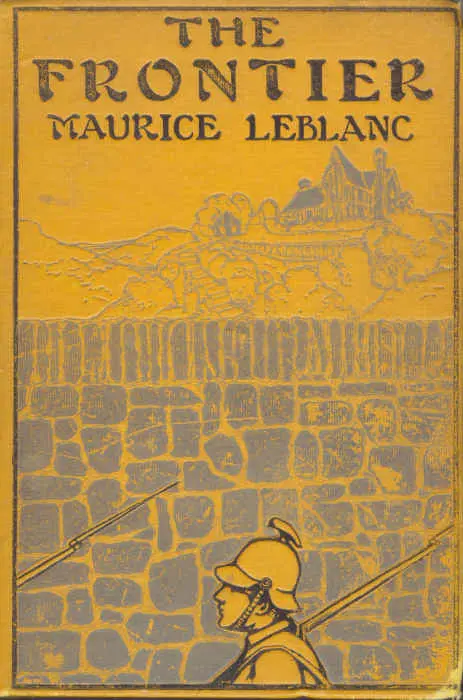
THE CLASSIC COLLECTION · 1912
"The Frontier" by Maurice Leblanc is a novel written in the early 20th century. The story revolves around the character of Morestal, a patriotic farmer and mayor, whose life is intricately connected to the tension between France and Germany, set against the backdrop of looming war. Through the lives of Morestal, his son Philippe, and the intertwining paths of other residents near the French-German border, the narrative grapples with themes of loyalty, national pride, and the personal costs of conflict. The opening of the book sets a tense atmosphere as Morestal and his wife discuss the ongoing disturbances along the French-German frontier, specifically the repeated damage to a boundary post, symbolizing deeper issues of national integrity and personal conflict stemming from past wars. We see Morestal's fierce pride in France and a palpable sense of foreboding as he reflects on the possibility of conflict re-emerging with Germany. The arrival of their son Philippe, a professor who has differing views, introduces an imminent clash of ideologies within the family, encapsulating the overarching struggle between old patriotic sentiments and newer, more progressive worldviews. As Philippe returns home with his wife Marthe, layers of personal history entwine with the national narrative, hinting at dramatic tensions both within the family and across the border.
Introduction adapted from the source catalogue; source summaries may be automatically generated.
Free to read · English · 57,388 words · No account needed
MAKE TIME FOR A GOOD BOOK
On by default. Untick to stop anonymous reading totals. Each page counts after 10 seconds in view. How this works.
Anonymous counting is on unless you have switched it off.
Moreover, just then, a diversion occurred to bring about an armistice, as it were, in the midst of the implacable conflict. Le Corbier had risen hurriedly from his seat and drawn back the tent-fly. A quick step was heard outside.
"Ah, there you are, Trebons!"
And he almost ran to fetch the young man in and plied him with
questions:
"Did you speak to the prime minister? What did he say?"
M. de Trebons entered the tent. But, on catching sight of the Morestal
family, he turned back:
"Monsieur le ministre, I think it would be better ..."
"No, no, Trebons. No one here is in the way ... on the contrary....
Come, what is it? Bad news?"
"Very bad news, monsieur le ministre. The French embassy in Berlin has
been burnt down...."
"Oh!" said Le Corbier. "Wasn't it guarded?"
"Yes, but the troops were overborne by the crowd."
"Next?"
"Germany is mobilizing all her frontier army-corps."
"But in Paris? What about Paris?"
"Nothing but riots.... The boulevards are overrun.... At this moment, the municipal guards are charging the mob to clear the approaches to the Palais-Bourbon."
"But what do they want, when all is said?"
"War."
The word rang out like a death-knell. After a few seconds, Le Corbier
asked:
"Is that all?"
"The prime minister is anxiously awaiting your return. 'Don't let him lose a minute,' he said. 'His report might spell safety. It is my last shot. If it misses fire, I can't answer for what will happen.' And he added, 'And, even then, it may be too late.'"
The silence was really excruciating around the table, in the little space inside that tent in which the cruelest of tragedies was hurling against one another a group of noble souls united by the most loyal affection. Each of them forgot his private suffering and thought only of the horror that loomed ahead. The sinister word was echoed in all their hearts.
Le Corbier gave a gesture of despair:
"His last shot! Yes, if my report gave him an opportunity of retreating!
But ..."
He watched old Morestal, as though he were still expecting a sudden retractation. What was the good? Supposing he took it upon himself to extenuate the old man's statements, Morestal was the sort of uncompromising man who would give him the lie in public. And then the government would find itself in an unenviable plight indeed!
"Well," he said, "let fate take its course! We have done our very utmost. My dear Trebons, is the motor at the cross-roads?"
"Yes, monsieur le ministre."
"Please collect the papers; we will go. We have an hour to reach the station. It's more than we want."
Your reading position is saved on this browser. Take it to another device with a library code. Reading pages adapt to text, rather than matching a printed edition.
Maurice Leblanc
Maurice Leblanc
Maurice Leblanc
Maurice Leblanc
BEHIND THE BOOK
This eBook is for the use of anyone anywhere in the United States and most other parts of the world at no cost and with almost no restrictions whatsoever. You may copy it, give it away or re-use it under the terms of the Project Gutenberg License included with this eBook or online at www.gutenberg.org. If you are not located in the United States, you will have to check the laws of the country where you are located before using this eBook. Read the source licence.
The original source file, including credits and licence, is retained by this library. Request an original-format copy at no charge. Please include the book title and Project Gutenberg identifier #28480.
KEEP YOUR CURIOSITY GOING
Cécile Tormay

Moritz Busch
Coulson Kernahan
John L. Ransom

Maurice Baring
Frances Wright