THE CLASSIC COLLECTION✦Essay on BurnsCLASSIC FREE BOOKS
Essay on Burns
Thomas Carlyle
THE CLASSIC COLLECTION · 1837
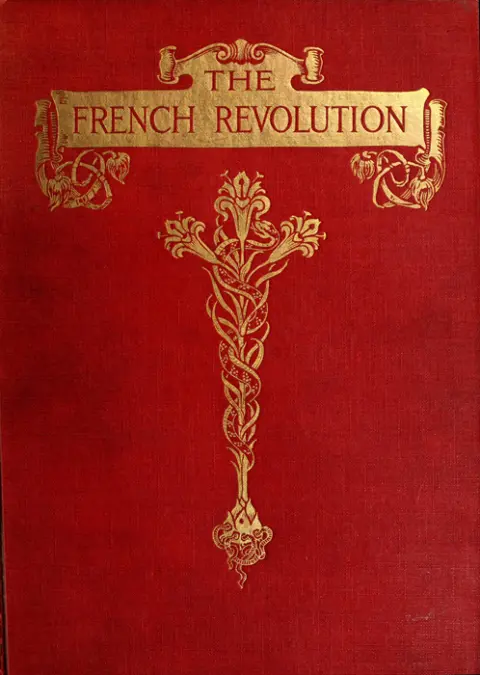
"The French Revolution: A History" by Thomas Carlyle is a three-volume work published in 1837. This dramatic chronicle traces the French Revolution from 1789 through the Reign of Terror to 1795. Written in an unprecedented style that places readers directly into revolutionary Paris, Carlyle employs present-tense narration and poetic prose to transform historical events into visceral experience. The work broke from traditional historiography, treating history as epic poetry rather than detached analysis, and profoundly influenced figures from Dickens to Wilde.
Introduction adapted from the source catalogue; source summaries may be automatically generated.
Free to read · English · 306,557 words · No account needed
MAKE TIME FOR A GOOD BOOK
On by default. Untick to stop anonymous reading totals. Each page counts after 10 seconds in view. How this works.
Anonymous counting is on unless you have switched it off.
In such succession of singular prismatic tints, flush after flush suffusing our horizon, does the Era of Hope dawn on towards fulfilment. Questionable! As indeed, with an Era of Hope that rests on mere universal Benevolence, victorious Analysis, Vice cured of its deformity; and, in the long run, on Twenty-five dark savage Millions, looking up, in hunger and weariness, to that Ecce-signum of theirs “forty feet high,”—how could it but be questionable?
Through all time, if we read aright, sin was, is, will be, the parent of misery. This land calls itself most Christian, and has crosses and cathedrals; but its High-priest is some Roche-Aymon, some Necklace-Cardinal Louis de Rohan. The voice of the poor, through long years, ascends inarticulate, in Jacqueries, meal-mobs; low-whimpering of infinite moan: unheeded of the Earth; not unheeded of Heaven. Always moreover where the Millions are wretched, there are the Thousands straitened, unhappy; only the Units can flourish; or say rather, be ruined the last. Industry, all noosed and haltered, as if it too were some beast of chase for the mighty hunters of this world to bait, and cut slices from,—cries passionately to these its well-paid guides and watchers, not, Guide me; but, Laissez faire, Leave me alone of your guidance! What market has Industry in this France? For two things there may be market and demand: for the coarser kind of field-fruits, since the Millions will live: for the fine kinds of luxury and spicery,—of multiform taste, from opera-melodies down to racers and courtesans; since the Units will be amused. It is at bottom but a mad state of things.
To mend and remake all which we have, indeed, victorious Analysis. Honour to victorious Analysis; nevertheless, out of the Workshop and Laboratory, what thing was victorious Analysis yet known to make? Detection of incoherences, mainly; destruction of the incoherent. From of old, Doubt was but half a magician; she evokes the spectres which she cannot quell. We shall have “endless vortices of froth-logic;” whereon first words, and then things, are whirled and swallowed. Remark, accordingly, as acknowledged grounds of Hope, at bottom mere precursors of Despair, this perpetual theorising about Man, the Mind of Man, Philosophy of Government, Progress of the Species and such-like; the main thinking furniture of every head. Time, and so many Montesquieus, Mablys, spokesmen of Time, have discovered innumerable things: and now has not Jean Jacques promulgated his new Evangel of a Contrat Social; explaining the whole mystery of Government, and how it is contracted and bargained for,—to universal satisfaction? Theories of Government! Such have been, and will be; in ages of decadence. Acknowledge them in their degree; as processes of Nature, who does nothing in vain; as steps in her great process. Meanwhile, what theory is so certain as this, That all theories, were they never so earnest, painfully elaborated, are, and, by the very conditions of them, must be incomplete, questionable, and even false? Thou shalt know that this Universe is, what it professes to be, an infinite one. Attempt not to swallow it, for thy logical digestion; be thankful, if skilfully planting down this and the other fixed pillar in the chaos, thou prevent its swallowing thee. That a new young generation has exchanged the Sceptic Creed, What shall I believe? for passionate Faith in this Gospel according to Jean Jacques is a further step in the business; and betokens much.
Your reading position is saved on this browser. Take it to another device with a library code. Reading pages adapt to text, rather than matching a printed edition.
Thomas Carlyle

Thomas Carlyle
Thomas Carlyle
Thomas Carlyle
BEHIND THE BOOK
This eBook is for the use of anyone anywhere in the United States and most other parts of the world at no cost and with almost no restrictions whatsoever. You may copy it, give it away or re-use it under the terms of the Project Gutenberg License included with this eBook or online at www.gutenberg.org. If you are not located in the United States, you will have to check the laws of the country where you are located before using this eBook. Read the source licence.
The original source file, including credits and licence, is retained by this library. Request an original-format copy at no charge. Please include the book title and Project Gutenberg identifier #1301.
KEEP YOUR CURIOSITY GOING
Cécile Tormay

Moritz Busch
John L. Ransom
Frances Wright
Cécile Tormay

Mabel Potter Daggett