THE CLASSIC COLLECTION✦Essay on BurnsCLASSIC FREE BOOKS
Essay on Burns
Thomas Carlyle
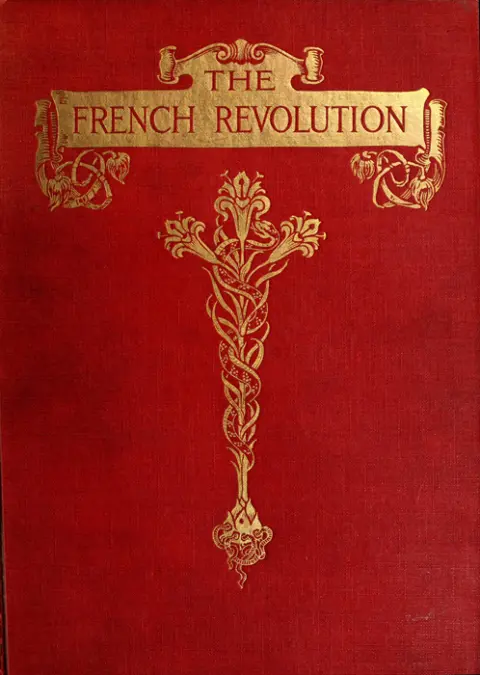
THE CLASSIC COLLECTION · 1837
"The French Revolution: A History" by Thomas Carlyle is a three-volume work published in 1837. This dramatic chronicle traces the French Revolution from 1789 through the Reign of Terror to 1795. Written in an unprecedented style that places readers directly into revolutionary Paris, Carlyle employs present-tense narration and poetic prose to transform historical events into visceral experience. The work broke from traditional historiography, treating history as epic poetry rather than detached analysis, and profoundly influenced figures from Dickens to Wilde.
Introduction adapted from the source catalogue; source summaries may be automatically generated.
Free to read · English · 306,557 words · No account needed
MAKE TIME FOR A GOOD BOOK
On by default. Untick to stop anonymous reading totals. Each page counts after 10 seconds in view. How this works.
Anonymous counting is on unless you have switched it off.
Where the heart is full, it seeks, for a thousand reasons, in a thousand ways, to impart itself. How sweet, indispensable, in such cases, is fellowship; soul mystically strengthening soul! The meditative Germans, some think, have been of opinion that Enthusiasm in the general means simply excessive Congregating—Schwärmerey, or Swarming. At any rate, do we not see glimmering half-red embers, if laid together, get into the brightest white glow?
In such a France, gregarious Reunions will needs multiply, intensify; French Life will step out of doors, and, from domestic, become a public Club Life. Old Clubs, which already germinated, grow and flourish; new every where bud forth. It is the sure symptom of Social Unrest: in such way, most infallibly of all, does Social Unrest exhibit itself; find solacement, and also nutriment. In every French head there hangs now, whether for terror or for hope, some prophetic picture of a New France: prophecy which brings, nay which almost is, its own fulfilment; and in all ways, consciously and unconsciously, works towards that.
Observe, moreover, how the Aggregative Principle, let it be but deep enough, goes on aggregating, and this even in a geometrical progression: how when the whole world, in such a plastic time, is forming itself into Clubs, some One Club, the strongest or luckiest, shall, by friendly attracting, by victorious compelling, grow ever stronger, till it become immeasurably strong; and all the others, with their strength, be either lovingly absorbed into it, or hostilely abolished by it! This if the Club-spirit is universal; if the time is plastic. Plastic enough is the time, universal the Club-spirit: such an all absorbing, paramount One Club cannot be wanting.
What a progress, since the first salient-point of the Breton Committee! It worked long in secret, not languidly; it has come with the National Assembly to Paris; calls itself Club; calls itself in imitation, as is thought, of those generous Price-Stanhope English, French Revolution Club; but soon, with more originality, Club of Friends of the Constitution. Moreover it has leased, for itself, at a fair rent, the Hall of the Jacobin’s Convent, one of our “superfluous edifices;” and does therefrom now, in these spring months, begin shining out on an admiring Paris. And so, by degrees, under the shorter popular title of Jacobins’ Club, it shall become memorable to all times and lands. Glance into the interior: strongly yet modestly benched and seated; as many as Thirteen Hundred chosen Patriots; Assembly Members not a few. Barnave, the two Lameths are seen there; occasionally Mirabeau, perpetually Robespierre; also the ferret-visage of Fouquier-Tinville with other attorneys; Anacharsis of Prussian Scythia, and miscellaneous Patriots,—though all is yet in the most perfectly clean-washed state; decent, nay dignified. President on platform, President’s bell are not wanting; oratorical Tribune high-raised; nor strangers’ galleries, wherein also sit women. Has any French Antiquarian Society preserved that written Lease of the Jacobins Convent Hall? Or was it, unluckier even than Magna Charta, clipt by sacrilegious Tailors? Universal History is not indifferent to it.
Your reading position is saved on this browser. Take it to another device with a library code. Reading pages adapt to text, rather than matching a printed edition.
Thomas Carlyle

Thomas Carlyle
Thomas Carlyle
Thomas Carlyle
BEHIND THE BOOK
This eBook is for the use of anyone anywhere in the United States and most other parts of the world at no cost and with almost no restrictions whatsoever. You may copy it, give it away or re-use it under the terms of the Project Gutenberg License included with this eBook or online at www.gutenberg.org. If you are not located in the United States, you will have to check the laws of the country where you are located before using this eBook. Read the source licence.
The original source file, including credits and licence, is retained by this library. Request an original-format copy at no charge. Please include the book title and Project Gutenberg identifier #1301.
KEEP YOUR CURIOSITY GOING
Cécile Tormay

Moritz Busch
John L. Ransom
Frances Wright
Cécile Tormay

Mabel Potter Daggett