THE CLASSIC COLLECTION✦Elbow-Room: A Novel Without a PlotCLASSIC FREE BOOKS
Elbow-Room: A Novel Without a Plot
Charles Heber Clark
THE CLASSIC COLLECTION · 1881
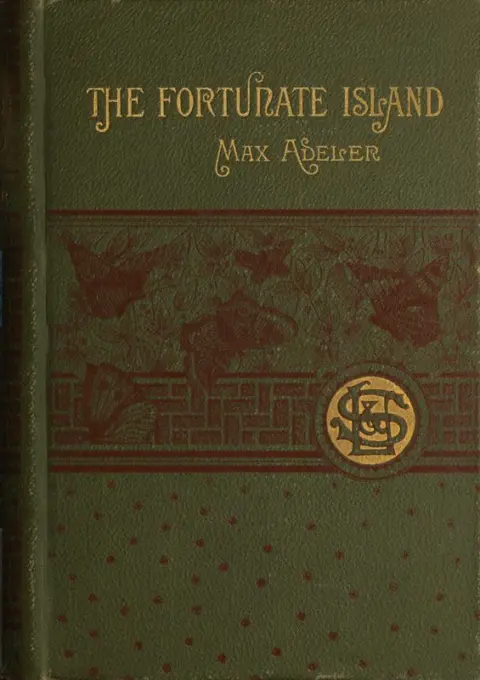
"The Fortunate Island, and Other Stories" by Charles Heber Clark is a collection of short stories written in the late 19th century. The book presents a blend of humor, adventure, and romance, with its opening tale focusing on the experiences of Professor E. L. Baffin and his daughter, Matilda, after they are shipwrecked and find themselves on a mysterious island harboring both natural beauty and unexpected inhabitants. As they navigate their new surroundings, themes of discovery and the clash between different cultures come to the fore. The opening of the book details the aftermath of the shipwreck of the "Morning Star," where Professor Baffin and Matilda manage to escape on a life-raft while the rest of the passengers are lost. As they drift towards a promising land, they wonder about what might await them—particularly whether it is inhabited by cannibals or features geological wonders. Their arrival on the island leads to an encounter with Father Anselm, a hermit who reveals that they have stumbled upon a lost civilization reminiscent of the time of King Arthur, setting the stage for the unique adventures and cultural encounters that follow, including humorous commentary on medieval customs and societal norms.
Introduction adapted from the source catalogue; source summaries may be automatically generated.
Free to read · English · 70,584 words · No account needed
MAKE TIME FOR A GOOD BOOK
On by default. Untick to stop anonymous reading totals. Each page counts after 10 seconds in view. How this works.
Anonymous counting is on unless you have switched it off.
“Haven’t heard anything from your father yet, I suppose?” said Mr. Weems, after a painful interval of silence.
“Nothing; absolutely nothing. Poor mother is nearly distracted. We are in great trouble. And I thought, Julius, you would have been with us more during this trial.”
“Well,” said Mr. Weems, “you see I have been so very busy, and I have had so many engagements, that I could not find time enough to call very frequently.”
“It looked almost like neglect,” said Leonie, sadly. “I could hardly bear it.” And she put her handkerchief to her eyes.
“Confound it!” said Mr. Weems to himself, “now there is going to be a
scene.”
“Mother said she could hardly believe that you really loved me,”
continued Leonie.
“She said that, did she?” asked Mr. Weems, somewhat bitterly. “Did she ask you if you really loved me?”
“No, Julius; she knows that I do. You know it, too.”
“Love,” said the artist, “means faith, trust, fair play, and candor, among other things, I have always thought.”
“What do you mean by that, Julius?”
“Well, I don’t want to be unkind, Leonie; but do you think that a woman who truly loved a man would misrepresent her age to him; or that she would be absolutely silent respecting previous engagements that she had contracted? How do I know that you care more for me than you did for Baxter and the others?”
“Mr. Weems,” exclaimed Leonie, indignantly, “this is cruel. It is worse,--it is shameful. You seem to have known all there was to know, without seeking information from me.”
“That is what made it so very painful,” replied Mr. Weems, trying to look as if his feelings had experienced a terrible wrench. “It was dreadful to learn from outside sources what I should have heard from your own lips. When a woman pretends to give me her heart, I expect her to give me her confidence also.”
“Pretends!” exclaimed Leonie, rising. “Pretends! What do you mean, sir, by ‘pretends’! Do you dare to insinuate that I deliberately deceived you?”
“Well,” said Mr. Weems, calmly, “that is perhaps a rather violent construction of my language; but we will not quarrel over phrases.”
“I did not think,” said Leonie, tearfully but vehemently, “that I should be insulted when I came here,--insulted in the midst of my grief. It is unmanly, sir! It is cowardly! It is infamous!”
Your reading position is saved on this browser. Take it to another device with a library code. Reading pages adapt to text, rather than matching a printed edition.
BEHIND THE BOOK
This eBook is for the use of anyone anywhere in the United States and most other parts of the world at no cost and with almost no restrictions whatsoever. You may copy it, give it away or re-use it under the terms of the Project Gutenberg License included with this eBook or online at www.gutenberg.org. If you are not located in the United States, you will have to check the laws of the country where you are located before using this eBook. Read the source licence.
The original source file, including credits and licence, is retained by this library. Request an original-format copy at no charge. Please include the book title and Project Gutenberg identifier #60632.
KEEP YOUR CURIOSITY GOING
Coulson Kernahan

Maurice Baring
Frances Wright
Cécile Tormay

Frederic Jesup Stimson

W. H. P. (William Henry Pope) Jarvis