THE CLASSIC COLLECTION✦Elbow-Room: A Novel Without a PlotCLASSIC FREE BOOKS
Elbow-Room: A Novel Without a Plot
Charles Heber Clark
THE CLASSIC COLLECTION · 1881
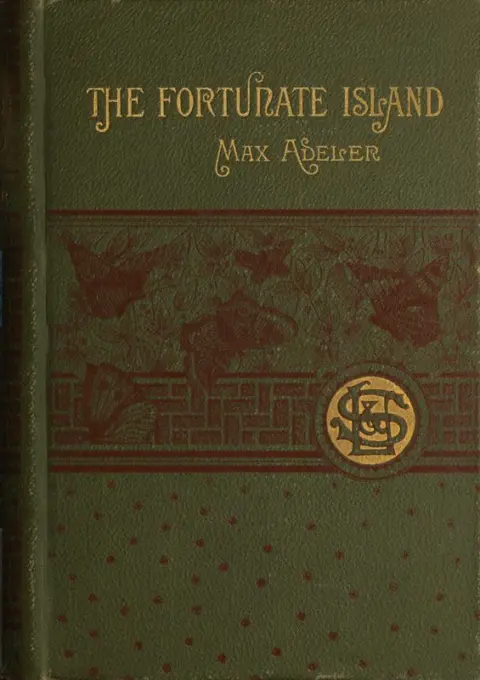
"The Fortunate Island, and Other Stories" by Charles Heber Clark is a collection of short stories written in the late 19th century. The book presents a blend of humor, adventure, and romance, with its opening tale focusing on the experiences of Professor E. L. Baffin and his daughter, Matilda, after they are shipwrecked and find themselves on a mysterious island harboring both natural beauty and unexpected inhabitants. As they navigate their new surroundings, themes of discovery and the clash between different cultures come to the fore. The opening of the book details the aftermath of the shipwreck of the "Morning Star," where Professor Baffin and Matilda manage to escape on a life-raft while the rest of the passengers are lost. As they drift towards a promising land, they wonder about what might await them—particularly whether it is inhabited by cannibals or features geological wonders. Their arrival on the island leads to an encounter with Father Anselm, a hermit who reveals that they have stumbled upon a lost civilization reminiscent of the time of King Arthur, setting the stage for the unique adventures and cultural encounters that follow, including humorous commentary on medieval customs and societal norms.
Introduction adapted from the source catalogue; source summaries may be automatically generated.
Free to read · English · 70,584 words · No account needed
MAKE TIME FOR A GOOD BOOK
On by default. Untick to stop anonymous reading totals. Each page counts after 10 seconds in view. How this works.
Anonymous counting is on unless you have switched it off.
He found that he could ride very comfortably with two in the saddle, but he felt that his attention could be given more effectively to the management of the horse if Bragwaine would stop turning her eyes up to his in that distracting manner so frequently.
They rode along in silence for awhile. Suddenly Bragwaine said:
“Sir Baffin?”
“Well; what?”
“Are you married?”
Professor Baffin hardly knew what answer he had better give. After hesitating for a moment, he said:
“I have been.”
“Then your wife is dead?”
The Professor could not lie. He had to say “Yes!”
“I am so glad,” murmured Bragwaine. “Not that she is dead, but that you
are free.”
Professor Baffin was afraid to ask why. He felt that matters were
becoming serious.
“And the reason is,” continued Bragwaine, “that I have learned to love you better than I love any other one on earth!”
She said this calmly, very modestly, and quite as if it were a matter
of course.
The Professor in astonishment looked at Sir Bleoberis, who had heard Bragwaine’s words. The Knight nodded to him pleasantly, and said, “I expected this.”
Evidently it was not an unusual thing for ladies so to express their
feelings.
The somewhat bewildered Sir Baffin then said, “Well, my dear child, it is very kind indeed for you to regard me in that manner. I have done nothing to deserve it.”
“You are my rescuer, my benefactor, my heart’s idol!”
“Persons at my time of life,” said the Professor, blushing, “have to be extremely careful. I will be a father to you, of course! Oh, certainly, you may count upon me being a father to you, right along.”
“I do not mean that I love you as a daughter. You must marry me; you dear Sir Baffin.” Then she actually patted his cheek.
Professor Baffin could feel the cold perspiration trickling down his
back.
“I think,” he said to Sir Bleoberis, “that this is, everything considered, altogether the most stupendous combination of circumstances that ever came within the range of my observation. It is positively distressing.”
“You will break my heart if you will not love me,” said Bragwaine, as if she were going to cry.
“Well, well,” replied the bewildered Professor, “we can consider the subject at some other time. Your father, you know, might have other views, and,--”
“The Prince, my father, will overwhelm you with gratitude for saving me. I know he will approve of our marriage. I will persuade him to have you knighted, and to secure for you some high place at court.”
“That,” said the Professor, “would probably make me acutely miserable
for life.”
Your reading position is saved on this browser. Take it to another device with a library code. Reading pages adapt to text, rather than matching a printed edition.
BEHIND THE BOOK
This eBook is for the use of anyone anywhere in the United States and most other parts of the world at no cost and with almost no restrictions whatsoever. You may copy it, give it away or re-use it under the terms of the Project Gutenberg License included with this eBook or online at www.gutenberg.org. If you are not located in the United States, you will have to check the laws of the country where you are located before using this eBook. Read the source licence.
The original source file, including credits and licence, is retained by this library. Request an original-format copy at no charge. Please include the book title and Project Gutenberg identifier #60632.
KEEP YOUR CURIOSITY GOING
Coulson Kernahan

Maurice Baring
Frances Wright
Cécile Tormay

Frederic Jesup Stimson

W. H. P. (William Henry Pope) Jarvis