THE CLASSIC COLLECTION✦Elbow-Room: A Novel Without a PlotCLASSIC FREE BOOKS
Elbow-Room: A Novel Without a Plot
Charles Heber Clark
THE CLASSIC COLLECTION · 1881
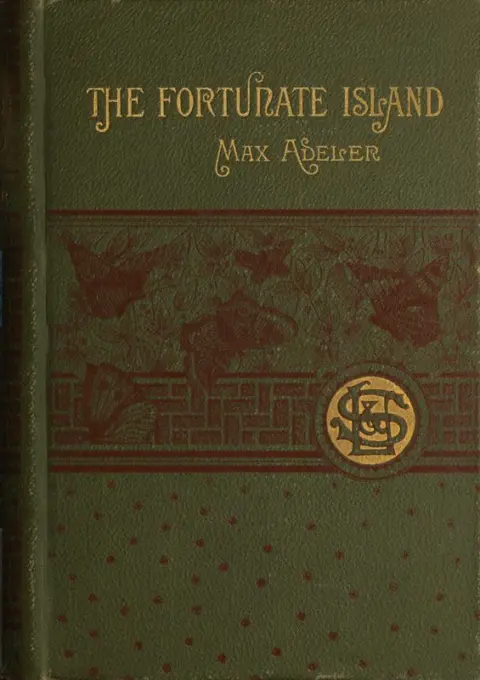
"The Fortunate Island, and Other Stories" by Charles Heber Clark is a collection of short stories written in the late 19th century. The book presents a blend of humor, adventure, and romance, with its opening tale focusing on the experiences of Professor E. L. Baffin and his daughter, Matilda, after they are shipwrecked and find themselves on a mysterious island harboring both natural beauty and unexpected inhabitants. As they navigate their new surroundings, themes of discovery and the clash between different cultures come to the fore. The opening of the book details the aftermath of the shipwreck of the "Morning Star," where Professor Baffin and Matilda manage to escape on a life-raft while the rest of the passengers are lost. As they drift towards a promising land, they wonder about what might await them—particularly whether it is inhabited by cannibals or features geological wonders. Their arrival on the island leads to an encounter with Father Anselm, a hermit who reveals that they have stumbled upon a lost civilization reminiscent of the time of King Arthur, setting the stage for the unique adventures and cultural encounters that follow, including humorous commentary on medieval customs and societal norms.
Introduction adapted from the source catalogue; source summaries may be automatically generated.
Free to read · English · 70,584 words · No account needed
MAKE TIME FOR A GOOD BOOK
On by default. Untick to stop anonymous reading totals. Each page counts after 10 seconds in view. How this works.
Anonymous counting is on unless you have switched it off.
But the Baron, mortified because of the alarm that he had manifested, rushed savagely at the Professor, and would have felled him to the earth had not Matilda sprung forward and placed herself, shrieking, between the Baron and her father.
At this precise juncture, also, a young man entered the cell, and, seeing the Baron apparently about to strike a woman, seized his sword-arm and held it. The Baron turned sharply about. Recognizing the youth as his son, he simply looked at him angrily, and then, while Miss Baffin clung to the Professor, the Baron seized Ysolt by the arm and led her weeping away.
The Professor, after freeing himself from Miss Baffin’s embrace, extended his hand to the youth, and said,--
“I have not the honor of knowing you, sir, but you have behaved handsomely. Permit me to inquire your name?”
“Sir Dinadan; the son of the Baron,” said the youth, taking hold of the Professor’s hand, as if he were somewhat uncertain what he had better do with it.
“No last name?” asked the Professor.
“That is all. And you are?--”
“I am Everett L. Baffin, a Professor in the Wingohocking University. I was cast ashore down here with my daughter. Tilly, let me introduce to you Sir Dinadan.”
Sir Dinadan colored, and dropping upon his knee he seized Miss Baffin’s hand and kissed it. Rising, he said:
“What, Sir Baffin, is the name of the sweet lady?”
“Matilda.”
“How lovely!” exclaimed Sir Dinadan.
“It is abbreviated sometimes to Tilly, by her friends.”
“It is too beautiful,” said the youth, gazing at Miss Baffin with unconcealed admiration. “I trust, Sir Baffin, I may be able to serve in some manner you and the Lady Tilly.”
“Professor Baffin, my dear sir; not Sir Baffin. Permit me to offer you
my card.”
Sir Dinadan took the card, and seemed perplexed as to its meaning. He turned it over and over in a despairing sort of way in his fingers.
“If you will read it,” said the Professor, “you will find my name upon
it.”
“But, Sir Baffin, I cannot read.”
“Can’t read!” exclaimed the Professor, in amazement. “You don’t mean to say that you have never learned to read!”
“High-born people,” replied Sir Dinadan, with an air of indifference, “care nothing for learning. We leave that to the monks.”
“This,” said the Professor to Miss Baffin, “is one of the most extraordinary circumstances that has yet come under my observation. Tilly, mention in your journal that the members of the upper classes are wholly illiterate.”
Your reading position is saved on this browser. Take it to another device with a library code. Reading pages adapt to text, rather than matching a printed edition.
BEHIND THE BOOK
This eBook is for the use of anyone anywhere in the United States and most other parts of the world at no cost and with almost no restrictions whatsoever. You may copy it, give it away or re-use it under the terms of the Project Gutenberg License included with this eBook or online at www.gutenberg.org. If you are not located in the United States, you will have to check the laws of the country where you are located before using this eBook. Read the source licence.
The original source file, including credits and licence, is retained by this library. Request an original-format copy at no charge. Please include the book title and Project Gutenberg identifier #60632.
KEEP YOUR CURIOSITY GOING
Coulson Kernahan

Maurice Baring
Frances Wright
Cécile Tormay

Frederic Jesup Stimson

W. H. P. (William Henry Pope) Jarvis