THE CLASSIC COLLECTION✦Elbow-Room: A Novel Without a PlotCLASSIC FREE BOOKS
Elbow-Room: A Novel Without a Plot
Charles Heber Clark
THE CLASSIC COLLECTION · 1881
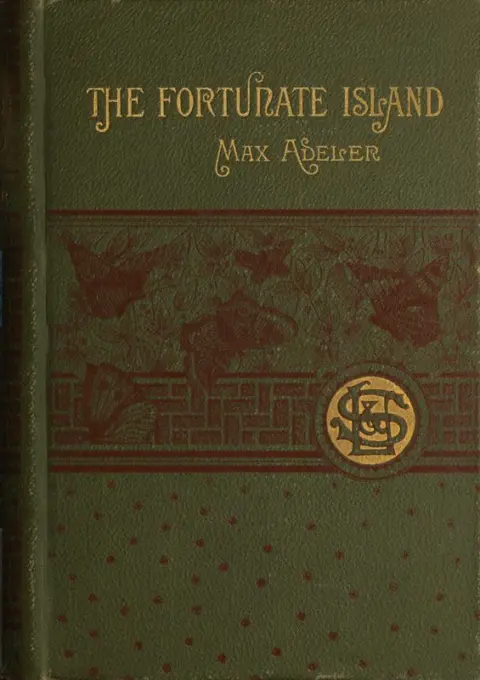
"The Fortunate Island, and Other Stories" by Charles Heber Clark is a collection of short stories written in the late 19th century. The book presents a blend of humor, adventure, and romance, with its opening tale focusing on the experiences of Professor E. L. Baffin and his daughter, Matilda, after they are shipwrecked and find themselves on a mysterious island harboring both natural beauty and unexpected inhabitants. As they navigate their new surroundings, themes of discovery and the clash between different cultures come to the fore. The opening of the book details the aftermath of the shipwreck of the "Morning Star," where Professor Baffin and Matilda manage to escape on a life-raft while the rest of the passengers are lost. As they drift towards a promising land, they wonder about what might await them—particularly whether it is inhabited by cannibals or features geological wonders. Their arrival on the island leads to an encounter with Father Anselm, a hermit who reveals that they have stumbled upon a lost civilization reminiscent of the time of King Arthur, setting the stage for the unique adventures and cultural encounters that follow, including humorous commentary on medieval customs and societal norms.
Introduction adapted from the source catalogue; source summaries may be automatically generated.
Free to read · English · 70,584 words · No account needed
MAKE TIME FOR A GOOD BOOK
On by default. Untick to stop anonymous reading totals. Each page counts after 10 seconds in view. How this works.
Anonymous counting is on unless you have switched it off.
About three weeks later another bill passed the House without opposition, General Belcher being absent in New York upon a Committee of Inquiry. While the measure was pending in the Senate, Achilles Smith, one morning, at an early hour, entered a rear door of the Museum with a key which he had obtained by bribing the charwoman, and proceeding to Case 1236, he removed the leg from the jar No. 11, and put it in another jar in another case, replacing it with the leg that had been in the latter jar.
He went down-stairs chuckling. “You mutilated outcast, you,” he said, addressing the Major in imagination; “we’ll see who’ll beat at this game!”
When the Act had been signed by the President, the Major drove with Pandora to the Museum a second time. Upon reaching Case 1236 he was for a moment stricken dumb with amazement. Presently he said,--
“Why, Pandora, my dear, do you see? It’s the leg of a colored man!”
“Ye--e--es, it seems to be, Henry. But perhaps mortification or
something has set in.”
“It is very mysterious. I can’t account for it.”
“One of your legs was not colored, was it, my love?”
“Oh, no, of course not!”
“Perhaps the janitor here has tarred it over, to preserve it better?”
“No, ma’am; that’s not allowed in this institution.”
“You’ll take it anyhow; won’t you, Henry?”
“Oh, my dear, be reasonable. Take the leg of a negro for mine!”
“Well, but, Henry, I can paint it white in my picture.”
“Yes; but, Pandora, you know we won’t care to have particles of fractured Africans scattered about our house. We can have no cherished memories associated with a leg like this.”
“I suppose not; but it seems rather hard that my Washington should have to stand upon that one leg at least a month longer.”
“He won’t mind it. He was heroic. He would have stood upon a solitary leg for centuries rather than have robbed another man of his members.”
Pandora sighed deeply, and made up her mind to try to be resigned; and so they went downstairs, and drove away to state the case to Colonel Dabney.
The Colonel, after hearing the story, distinctly affirmed the opinion that there had been foul play. The Major jumped at the suggestion, and told him of General Belcher and Achilles Smith, and their designs respecting Pandora.
“Never mind; I will defeat their plans,” said the Colonel. “You shall have the leg next time, if it is still in existence, no matter who meddles with it.”
Your reading position is saved on this browser. Take it to another device with a library code. Reading pages adapt to text, rather than matching a printed edition.
BEHIND THE BOOK
This eBook is for the use of anyone anywhere in the United States and most other parts of the world at no cost and with almost no restrictions whatsoever. You may copy it, give it away or re-use it under the terms of the Project Gutenberg License included with this eBook or online at www.gutenberg.org. If you are not located in the United States, you will have to check the laws of the country where you are located before using this eBook. Read the source licence.
The original source file, including credits and licence, is retained by this library. Request an original-format copy at no charge. Please include the book title and Project Gutenberg identifier #60632.
KEEP YOUR CURIOSITY GOING
Coulson Kernahan

Maurice Baring
Frances Wright
Cécile Tormay

Frederic Jesup Stimson

W. H. P. (William Henry Pope) Jarvis