THE CLASSIC COLLECTION✦Elbow-Room: A Novel Without a PlotCLASSIC FREE BOOKS
Elbow-Room: A Novel Without a Plot
Charles Heber Clark
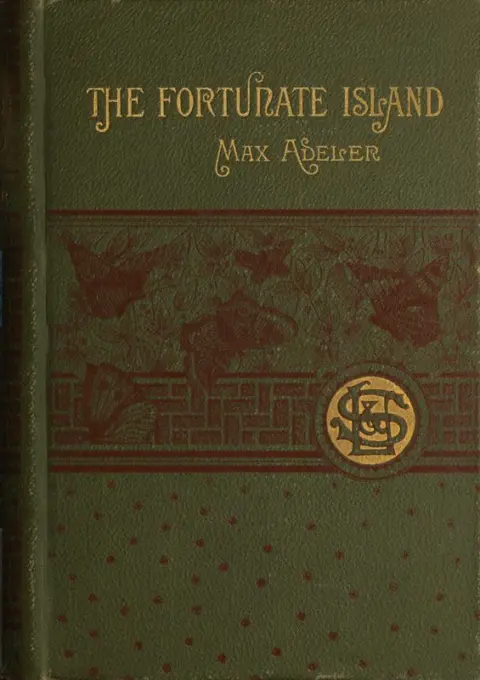
THE CLASSIC COLLECTION · 1881
"The Fortunate Island, and Other Stories" by Charles Heber Clark is a collection of short stories written in the late 19th century. The book presents a blend of humor, adventure, and romance, with its opening tale focusing on the experiences of Professor E. L. Baffin and his daughter, Matilda, after they are shipwrecked and find themselves on a mysterious island harboring both natural beauty and unexpected inhabitants. As they navigate their new surroundings, themes of discovery and the clash between different cultures come to the fore. The opening of the book details the aftermath of the shipwreck of the "Morning Star," where Professor Baffin and Matilda manage to escape on a life-raft while the rest of the passengers are lost. As they drift towards a promising land, they wonder about what might await them—particularly whether it is inhabited by cannibals or features geological wonders. Their arrival on the island leads to an encounter with Father Anselm, a hermit who reveals that they have stumbled upon a lost civilization reminiscent of the time of King Arthur, setting the stage for the unique adventures and cultural encounters that follow, including humorous commentary on medieval customs and societal norms.
Introduction adapted from the source catalogue; source summaries may be automatically generated.
Free to read · English · 70,584 words · No account needed
MAKE TIME FOR A GOOD BOOK
On by default. Untick to stop anonymous reading totals. Each page counts after 10 seconds in view. How this works.
Anonymous counting is on unless you have switched it off.
When the Major let go his hold of the leg it bounced up again, and performed the most eccentric movements upon the back of the pew. Pandora could not suppress a faint scream; and the entire congregation stared at the miserable Major as he seized the leg and thrust it down into the pew. He held it down firmly, but the springs were strong, and they forced the toes to beat a wild tattoo upon the wooden partition in front of them.
In an agony of mortification, the Major rose, with the intention to leave the building. The sexton, who had approached him to ascertain the cause of the disturbance, gave him his arm, and the Major hopped down the aisle with his horrible leg flying out behind and before in a convulsive manner, kicking the sexton, banging pew-doors, and behaving generally in a most sensational and exciting manner.
Pandora followed her lover at a short distance. When the porch of the church was reached, the leg was still in a condition of violent agitation, and the Major, wild with shame and rage, said to the sexton,--
“Take it off! Unbuckle it! Take it off quick!”
The sexton bravely approached, fumbled about for a moment in search of the strap, and an instant later the Major’s imported leg lay upon the carpet squirming about, kicking viciously, and leaping hither and thither like a wounded and desperate animal.
“Call a carriage,” gasped the Major, as he leaned against the wall.
The sexton dispatched a boy for a vehicle, and when it came he placed the Major within, helped Pandora to a seat, and the party moved toward home.
For a little while neither the Major nor Pandora spoke. The situation seemed too awful for words. The silence was becoming embarrassing, when suddenly Pandora said,--
“Poor man!”
“What, are you sorry for me?” asked the Major eagerly.
“Indeed I am. How you must have suffered!”
“I thought you would hate me for subjecting you to such mortification.”
“But you couldn’t help it. I would be very unjust to blame you.”
“And you do not dislike me because I am so crippled?”
“How could I? You are a soldier. You lost your leg honorably, did you
not?”
“It was shot away at Gettysburg.”
“You lost it to save my country, and you think I would not honor you
for such a sacrifice?”
“Your kind words make me brave. If I might dare--”
“Such a hero as you may dare anything,” she said.
“May I dare to ask if, while you honor me, you can also love me?”
“You may; and if you do, I will answer ‘Yes.’”
Your reading position is saved on this browser. Take it to another device with a library code. Reading pages adapt to text, rather than matching a printed edition.
BEHIND THE BOOK
This eBook is for the use of anyone anywhere in the United States and most other parts of the world at no cost and with almost no restrictions whatsoever. You may copy it, give it away or re-use it under the terms of the Project Gutenberg License included with this eBook or online at www.gutenberg.org. If you are not located in the United States, you will have to check the laws of the country where you are located before using this eBook. Read the source licence.
The original source file, including credits and licence, is retained by this library. Request an original-format copy at no charge. Please include the book title and Project Gutenberg identifier #60632.
KEEP YOUR CURIOSITY GOING
Coulson Kernahan

Maurice Baring
Frances Wright
Cécile Tormay

Frederic Jesup Stimson

W. H. P. (William Henry Pope) Jarvis