THE CLASSIC COLLECTION✦Elbow-Room: A Novel Without a PlotCLASSIC FREE BOOKS
Elbow-Room: A Novel Without a Plot
Charles Heber Clark
THE CLASSIC COLLECTION · 1881
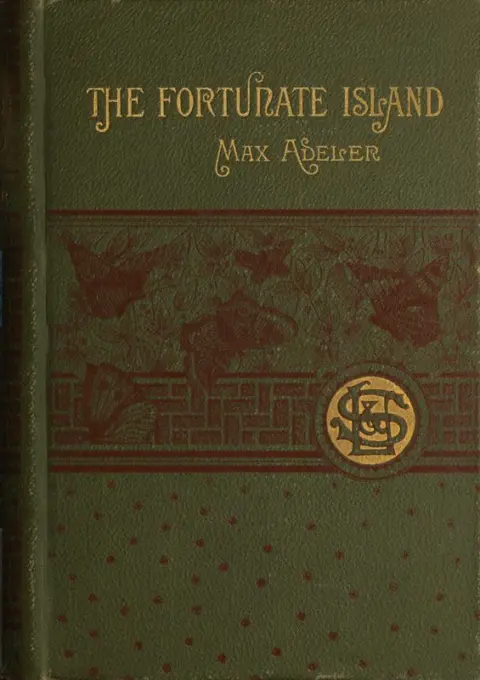
"The Fortunate Island, and Other Stories" by Charles Heber Clark is a collection of short stories written in the late 19th century. The book presents a blend of humor, adventure, and romance, with its opening tale focusing on the experiences of Professor E. L. Baffin and his daughter, Matilda, after they are shipwrecked and find themselves on a mysterious island harboring both natural beauty and unexpected inhabitants. As they navigate their new surroundings, themes of discovery and the clash between different cultures come to the fore. The opening of the book details the aftermath of the shipwreck of the "Morning Star," where Professor Baffin and Matilda manage to escape on a life-raft while the rest of the passengers are lost. As they drift towards a promising land, they wonder about what might await them—particularly whether it is inhabited by cannibals or features geological wonders. Their arrival on the island leads to an encounter with Father Anselm, a hermit who reveals that they have stumbled upon a lost civilization reminiscent of the time of King Arthur, setting the stage for the unique adventures and cultural encounters that follow, including humorous commentary on medieval customs and societal norms.
Introduction adapted from the source catalogue; source summaries may be automatically generated.
Free to read · English · 70,584 words · No account needed
MAKE TIME FOR A GOOD BOOK
On by default. Untick to stop anonymous reading totals. Each page counts after 10 seconds in view. How this works.
Anonymous counting is on unless you have switched it off.
While he spoke, the bells of the city rang out an alarm of fire with furious clangor, and in a few moments he saw, dashing past him, an old-fashioned hand-engine, pulled by a score or two of men who held a rope. The burning building was not many hundred yards distant from Ephraim, and he felt an inclination to see it. When he reached the scene, men with leathern buckets were pouring water into the engine, while other men were forcing the handles up and down, with the result that a thin stream fell upon the mass of flame.
He had an impulse to ask somebody why the steam fire-engines were not used, but every one seemed to be excited and busy, and he remembered what his friend had said to him about steamers.
So he expressed his disgust for the stupidity of these people in a
few muttered ejaculations; and then, suddenly, bethought him of his
business.
He resolved to go down to the wharf where he had expected to ship his cargo, and to ascertain what the situation was there.
As he came near to the place, he saw that it had changed since he last saw it, but a handsome ship lay in the dock, and men were carrying bags of grain aboard of her.
“That must be my cargo,” he said; “but what on earth do they mean by loading it in that manner, and upon a sailing vessel?”
He approached the man who seemed to be superintending the work, and
said,--
“Is this Ephraim Batterby’s wheat?”
The man looked at him in surprise for a moment, and then, smiling,
said,--
“No, sir; it is Brown and Martin’s.”
“When did it arrive?”
“Yesterday.”
“By rail?”
“By rail! What do you mean by that?”
“I say, did it come by rail?”
“Well, old man, I haven’t the least idea what you mean by ‘rail,’ but if you want to know, I’ll tell you the grain came by canal-boat.”
“From Chicago?”
“Never heard of Chicago. The wheat came from Pittsburg. What are you
asking for, any way?”
“Why, I’m expecting some myself, by rail from Chicago, and I intend to ship it to Liverpool in a steamer--that is,” added Ephraim, hesitatingly, “if I can find one.”
“Chicago! rail! steamer! Old chap, I’m afraid you’re a little weak in the top story. What do you mean by Chicago?”
“Chicago! Why, it’s a city three or four hundred miles west of Pittsburg; a great centre for the western grain traffic. Certainly you must have heard of it.”
Your reading position is saved on this browser. Take it to another device with a library code. Reading pages adapt to text, rather than matching a printed edition.
BEHIND THE BOOK
This eBook is for the use of anyone anywhere in the United States and most other parts of the world at no cost and with almost no restrictions whatsoever. You may copy it, give it away or re-use it under the terms of the Project Gutenberg License included with this eBook or online at www.gutenberg.org. If you are not located in the United States, you will have to check the laws of the country where you are located before using this eBook. Read the source licence.
The original source file, including credits and licence, is retained by this library. Request an original-format copy at no charge. Please include the book title and Project Gutenberg identifier #60632.
KEEP YOUR CURIOSITY GOING
Coulson Kernahan

Maurice Baring
Frances Wright
Cécile Tormay

Frederic Jesup Stimson

W. H. P. (William Henry Pope) Jarvis