THE CLASSIC COLLECTION✦Elbow-Room: A Novel Without a PlotCLASSIC FREE BOOKS
Elbow-Room: A Novel Without a Plot
Charles Heber Clark
THE CLASSIC COLLECTION · 1881
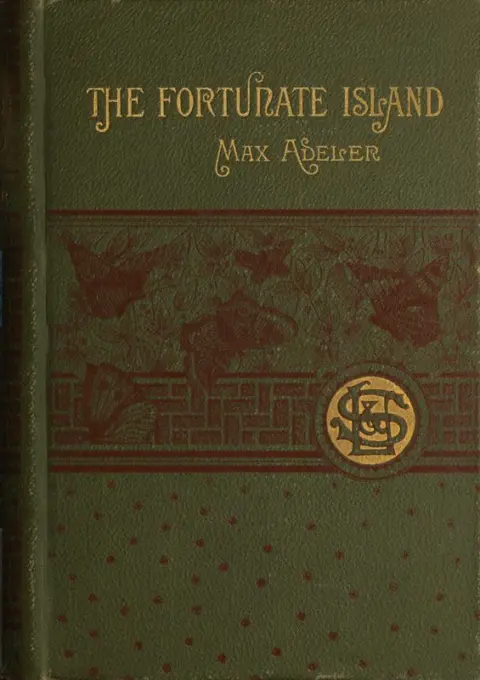
"The Fortunate Island, and Other Stories" by Charles Heber Clark is a collection of short stories written in the late 19th century. The book presents a blend of humor, adventure, and romance, with its opening tale focusing on the experiences of Professor E. L. Baffin and his daughter, Matilda, after they are shipwrecked and find themselves on a mysterious island harboring both natural beauty and unexpected inhabitants. As they navigate their new surroundings, themes of discovery and the clash between different cultures come to the fore. The opening of the book details the aftermath of the shipwreck of the "Morning Star," where Professor Baffin and Matilda manage to escape on a life-raft while the rest of the passengers are lost. As they drift towards a promising land, they wonder about what might await them—particularly whether it is inhabited by cannibals or features geological wonders. Their arrival on the island leads to an encounter with Father Anselm, a hermit who reveals that they have stumbled upon a lost civilization reminiscent of the time of King Arthur, setting the stage for the unique adventures and cultural encounters that follow, including humorous commentary on medieval customs and societal norms.
Introduction adapted from the source catalogue; source summaries may be automatically generated.
Free to read · English · 70,584 words · No account needed
MAKE TIME FOR A GOOD BOOK
On by default. Untick to stop anonymous reading totals. Each page counts after 10 seconds in view. How this works.
Anonymous counting is on unless you have switched it off.
He felt, too, that the change, whatever it was, had brought a loss with it. The buildings that lined the street now he thought very ugly. They were old, misshapen, having pent-roofs with absurdly high gables, and the shop-windows were small, dingy, and set with small panes of glass. He had known it as a handsome street, edged with noble edifices, and offering to the gaze of the pedestrian a succession of splendid windows filled with merchandise of the most brilliant description.
But Ephraim pressed on with a determination to seek his favorite restaurant, for he began to feel very hungry. In a little while he reached the corner where the restaurant should have been, but to his vexation he saw that the building there was a coffee-house of mean appearance, in front of which swung a blurred and faded sign.
He resolved to enter, for he could get a breakfast here, at least. He pushed through the low doorway and over the sanded floor into a narrow sort of box, where a table was spread; and, as he did so, he had a hazy feeling that this, too, was something that he was familiar with.
“It must be,” he said, “that my brain is producing a succession of those sensations that I have had sometimes before, which persuade the credulous that we move continually in a circle, and forever live our lives over again.”
As he took his seat a waiter approached him.
“Give me a bill of fare,” said Ephraim.
“Bill of fare, sir? Have no bill of fare, sir. Never have them, sir; no coffee-house has them, sir. Get you up a nice breakfast though, sir.”
“What have you got?”
“Ham, sir; steak, sir; boiled egg, sir; coffee, tea, muffins. Just in from furrin countries, sir, are you?”
“Never mind where I am from,” said Ephraim, testily. “Bring me a broiled steak, and egg, and some muffins and coffee, and bring them quickly.”
“Yes, sir; half a minute, sir. Anything else, sir?”
“Bring me a newspaper.”
“Yes, sir; here it is, sir, the very latest, sir.”
Ephraim took the paper, and glanced at it. It was the Weekly Gazette, four days old; a little sheet of yellow-brown paper, poorly printed, containing some fragments of news, and nothing later from Europe than November 6, although the Gazette bore date December 19. So soon as Ephraim comprehended its worthlessness, he tossed it contemptuously upon the floor, and waited, almost sullenly, for his breakfast.
Your reading position is saved on this browser. Take it to another device with a library code. Reading pages adapt to text, rather than matching a printed edition.
BEHIND THE BOOK
This eBook is for the use of anyone anywhere in the United States and most other parts of the world at no cost and with almost no restrictions whatsoever. You may copy it, give it away or re-use it under the terms of the Project Gutenberg License included with this eBook or online at www.gutenberg.org. If you are not located in the United States, you will have to check the laws of the country where you are located before using this eBook. Read the source licence.
The original source file, including credits and licence, is retained by this library. Request an original-format copy at no charge. Please include the book title and Project Gutenberg identifier #60632.
KEEP YOUR CURIOSITY GOING
Coulson Kernahan

Maurice Baring
Frances Wright
Cécile Tormay

Frederic Jesup Stimson

W. H. P. (William Henry Pope) Jarvis