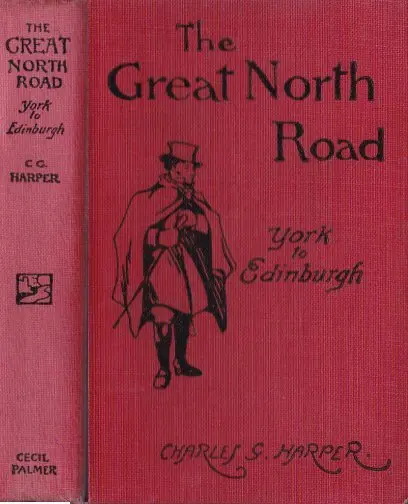
The Great North Road, the Old Mail Road to Scotland: York to Edinburgh
Charles G. (Charles George) Harper
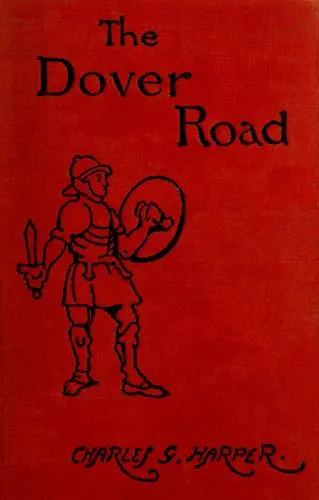
THE CLASSIC COLLECTION · 1895
"The Dover Road: Annals of an Ancient Turnpike" by Charles G. Harper is a historical account written in the early 20th century. The book explores the significant history and cultural importance of the Dover Road, one of England's oldest highways that connects London to Dover. The author reflects on the various historical events and notable figures associated with the road, aiming to capture its rich tapestry of life over centuries. The opening of this work sets the stage for a thorough exploration of the Dover Road's fascinating past. Harper introduces it as a highway laden with historical significance, referencing ancient Roman paths and the legendary figures who traversed its course. He vividly evokes the presence of historical actors, from legionaries of Rome to figures from the medieval period, emphasizing the continuous human drama played out along its stretch. The text promises a compelling combination of vivid storytelling and historical detail, making it a valuable resource for readers interested in England’s transportation history and its societal implications.
Introduction adapted from the source catalogue; source summaries may be automatically generated.
Free to read · English · 74,618 words · No account needed
MAKE TIME FOR A GOOD BOOK
On by default. Untick to stop anonymous reading totals. Each page counts after 10 seconds in view. How this works.
Anonymous counting is on unless you have switched it off.
By daylight the traveller can see that the barren chalk of Barham Downs, although left so long in repose, has been lately cut up into golf links. A racecourse, little frequented now, also stands on the ridge. Bourne Park skirts the road for some distance on the right, and the spire of Barham Church, rising from behind a thick clump of trees in a little valley, shows where the village of Barham lies secluded, some three hundred yards down a country lane.
[Sidenote: THE BARHAM FAMILY]
How few the wayfarers who either notice where Barham stands or who visit it even when they know its situation! And yet that place, together with its hamlet of Denton, is full of memories of one of the best and most genial among the humorists of the nineteenth century. There is a great deal of history, ancient and modern, genealogical and literary, about Denton and Barham, and the genealogical part of it commences in the reign of Henry the Second. At that time, the manor, including Denton and a great number of other hamlets round about, belonged to that Sir Randal, or Reginald, Fitzurse, who has come down through the ages as one of the murderers of Becket. Immediately after their crime, the murderers fled, Fitzurse escaping to Ireland, where he is said to have taken the name of MacMahon, which, meaning "Bear's son," was an Irish form of his original patronymic. He died an exile, leaving the Manor of Barham to his brother, who, so odious had the name of Fitzurse now become, changed it for that of his estate, and called himself De Bearham. His successors clipped and cut their name about until it became plain "Barham," and the manor finally descended to one Thomas Barham, who, in the reign of James the First, alienated it to the Rev. Charles Fotherby, Archdeacon of Canterbury. Thus were the Barhams torn from their native soil and rendered landless, for already they had sold their adjacent manor of Tappington Everard situated at Denton. Some improvident Barham had done this deed in the reign of Henry the Eighth, and the property passed through a number of hands until it was bought from Colonel Thomas Marsh by a wealthy hop-factor of Canterbury, Thomas Harris. The hop-factor died in 1726, leaving as sole heir his daughter, married to a Mr. John Barham. In this manner the Barhams became once more owners of a portion of their ancient heritage, and from this John Barham was descended that witty Minor Canon of St. Paul's, Richard Harris Barham, author of the Ingoldsby Legends. To one who knows his Ingoldsby well, and is possessed, moreover, of some antiquarian fervour, the neighbourhood of Denton and Barham must needs be of the greatest interest. Fact and fiction are so inextricably mixed up in those delightful tales of mirth and marvels that it would require all the knowledge of an expert in local and family history to disentangle them. The countryside appears in those pages under fictitious names, and the deeds or misdeeds of local families are decently veiled under many an alias; and yet here and there are real names, and actual facts are cited, leaving the stranger in a delightful uncertainty what to accept for truth and what to disbelieve. The manor-house of Tappington, where Barham spent his youth, would seem to readers of the Legends to be a grand Elizabethan mansion, approached by a long avenue and guarded by gates bearing "the saltire of the Ingoldsbys." Indeed, Barham's fertile imagination led him to picture such a place on the frontispiece of the Legends; but the stranger would seek for it in vain. Instead, he would find an ancient farmhouse, standing in a meadow skirting the road to Folkestone, a mile from the place where it branches from the Dover Road. An ancient farmhouse, its roof bent and bowed with age, and the greater part of it shrouded in ivy, from which Tudor chimneys peep picturesquely. In the meadow are traces of walls and an old well which before the greater part of Tappington Manor-house was destroyed stood in a quadrangle formed by the great range of buildings. Within the farmhouse there remains much that is quaint and interesting. The chief feature is a grand oak staircase of Elizabethan or Jacobean period, with the merchant's mark of that "Thomas Marsh of Marston," familiar to readers of that fine legend The Leech of Folkestone, carved on the newel. On the whitewashed walls, crossed here and there by beams of black oak, hang portraits of half-real, half-legendary Ingoldsbys, and on the staircase landing, outside the bedroom of the "bad Sir Giles," are still shown bloodstains, relics of an extraordinary fratricide that was committed here while the war between Charles and the Parliament was raging.
Your reading position is saved on this browser. Take it to another device with a library code. Reading pages adapt to text, rather than matching a printed edition.
Charles G. (Charles George) Harper
Charles G. (Charles George) Harper
Charles G. (Charles George) Harper
BEHIND THE BOOK
This eBook is for the use of anyone anywhere in the United States and most other parts of the world at no cost and with almost no restrictions whatsoever. You may copy it, give it away or re-use it under the terms of the Project Gutenberg License included with this eBook or online at www.gutenberg.org. If you are not located in the United States, you will have to check the laws of the country where you are located before using this eBook. Read the source licence.
The original source file, including credits and licence, is retained by this library. Request an original-format copy at no charge. Please include the book title and Project Gutenberg identifier #36589.
KEEP YOUR CURIOSITY GOING
Wilfrid Scawen Blunt
Wilfrid Scawen Blunt

E. W. (Edgar Watson) Howe
Cécile Tormay

Moritz Busch
John L. Ransom