THE CLASSIC COLLECTION✦The childrenCLASSIC FREE BOOKS
The children
Edith Wharton
THE CLASSIC COLLECTION · 1904
"The Descent of Man and Other Stories" by Edith Wharton is a collection of short stories written during the late 19th century. The opening story, "The Descent of Man," introduces Professor Linyard, a biologist returning from a holiday in the Maine woods, who is enlivened not by nature alone but by an exhilarating new idea he has embraced. This collection explores themes of societal norms, personal relationships, and the tension between scientific thought and popular misconceptions. At the start of the text, Professor Linyard's character unfolds, revealing his complex domestic life, including a doting wife and children, as well as his internal struggle with the constraints of marriage and the vibrant ideas that inspire him. After his return from vacation, he contemplates a satirical work aimed at critiquing the pseudoscientific literature that has captivated the public. Linyard is drawn into a world where his intellectual pursuits clash with the mundane expectations of society, setting the stage for the tension between his domestic obligations and creative ambitions as he prepares to navigate the publishing landscape. His idea serves as both a comedic outlet and a serious critique, highlighting Wharton's deft handling of irony and social commentary.
Introduction adapted from the source catalogue; source summaries may be automatically generated.
Free to read · English · 69,329 words · No account needed
MAKE TIME FOR A GOOD BOOK
On by default. Untick to stop anonymous reading totals. Each page counts after 10 seconds in view. How this works.
Anonymous counting is on unless you have switched it off.
Mrs. Fetherel, driving up to the Grand Central Station one morning about five months later, caught sight of the distinguished novelist, Archer Hynes, hurrying into the waiting-room ahead of her. Hynes, on his side, recognizing her brougham, turned back to greet her as the footman opened the carriage-door.
"My dear colleague! Is it possible that we are traveling together?"
Mrs. Fetherel blushed with pleasure. Hynes had given her two columns of praise in the Sunday "Meteor," and she had not yet learned to disguise her gratitude.
"I am going to Ossining," she said, smilingly.
"So am I. Why, this is almost as good as an elopement."
"And it will end where elopements ought to--in church."
"In church? You're not going to Ossining to go to church?"
"Why not? There's a special ceremony in the cathedral--the chantry
window is to be unveiled."
"The chantry window? How picturesque! What is a chantry? And why do you want to see it unveiled? Are you after copy--doing something in the Huysmans manner? 'La Cathedrale,' eh?"
"Oh, no." Mrs. Fetherel hesitated. "I'm going simply to please my
uncle," she said, at last.
"Your uncle?"
"The Bishop, you know." She smiled.
"The Bishop--the Bishop of Ossining? Why, wasn't he the chap who made that ridiculous attack on your book? Is that prehistoric ass your uncle? Upon my soul, I think you're mighty forgiving to travel all the way to Ossining for one of his stained-glass sociables!"
Mrs. Fetherel's smile flowed into a gentle laugh. "Oh, I've never allowed that to interfere with our friendship. My uncle felt dreadfully about having to speak publicly against my book--it was a great deal harder for him than for me--but he thought it his duty to do so. He has the very highest sense of duty."
"Well," said Hynes, with a shrug, "I don't know that he didn't do you a good turn. Look at that!"
They were standing near the book-stall, and he pointed to a placard surmounting the counter and emblazoned with the conspicuous announcement: "Fast and Loose. New Edition with Author's Portrait. Hundred and Fiftieth Thousand."
Mrs. Fetherel frowned impatiently. "How absurd! They've no right to use
my picture as a poster!"
"There's our train," said Hynes; and they began to push their way through the crowd surging toward one of the inner doors.
As they stood wedged between circumferent shoulders, Mrs. Fetherel became conscious of the fixed stare of a pretty girl who whispered eagerly to her companion: "Look Myrtle! That's Paula Fetherel right behind us--I knew her in a minute!"
"Gracious--where?" cried the other girl, giving her head a twist which swept her Gainsborough plumes across Mrs. Fetherel's face.
Your reading position is saved on this browser. Take it to another device with a library code. Reading pages adapt to text, rather than matching a printed edition.
Edith Wharton
Edith Wharton
Annie Eliot Trumbull & George A. (George Abiah) Hibbard & Bliss Perry & Edith Wharton & John Seymour Wood
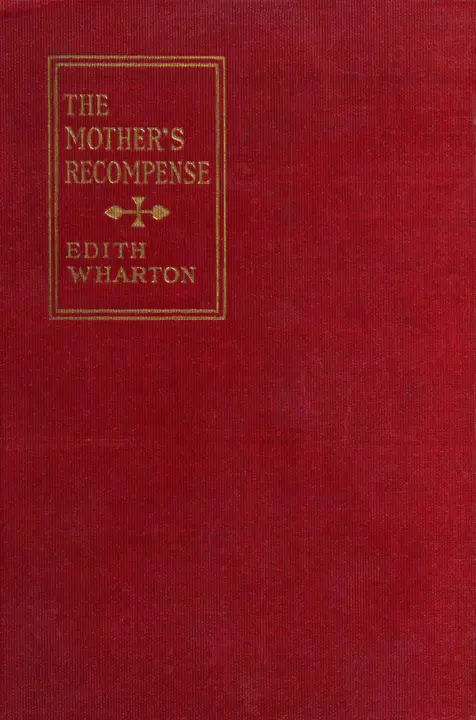
Edith Wharton
BEHIND THE BOOK
This eBook is for the use of anyone anywhere in the United States and most other parts of the world at no cost and with almost no restrictions whatsoever. You may copy it, give it away or re-use it under the terms of the Project Gutenberg License included with this eBook or online at www.gutenberg.org. If you are not located in the United States, you will have to check the laws of the country where you are located before using this eBook. Read the source licence.
The original source file, including credits and licence, is retained by this library. Request an original-format copy at no charge. Please include the book title and Project Gutenberg identifier #4519.
KEEP YOUR CURIOSITY GOING
Coulson Kernahan

Maurice Baring
Frances Wright
Cécile Tormay

Frederic Jesup Stimson

W. H. P. (William Henry Pope) Jarvis