THE CLASSIC COLLECTION✦The childrenCLASSIC FREE BOOKS
The children
Edith Wharton
THE CLASSIC COLLECTION · 1904
"The Descent of Man and Other Stories" by Edith Wharton is a collection of short stories written during the late 19th century. The opening story, "The Descent of Man," introduces Professor Linyard, a biologist returning from a holiday in the Maine woods, who is enlivened not by nature alone but by an exhilarating new idea he has embraced. This collection explores themes of societal norms, personal relationships, and the tension between scientific thought and popular misconceptions. At the start of the text, Professor Linyard's character unfolds, revealing his complex domestic life, including a doting wife and children, as well as his internal struggle with the constraints of marriage and the vibrant ideas that inspire him. After his return from vacation, he contemplates a satirical work aimed at critiquing the pseudoscientific literature that has captivated the public. Linyard is drawn into a world where his intellectual pursuits clash with the mundane expectations of society, setting the stage for the tension between his domestic obligations and creative ambitions as he prepares to navigate the publishing landscape. His idea serves as both a comedic outlet and a serious critique, highlighting Wharton's deft handling of irony and social commentary.
Introduction adapted from the source catalogue; source summaries may be automatically generated.
Free to read · English · 69,329 words · No account needed
MAKE TIME FOR A GOOD BOOK
On by default. Untick to stop anonymous reading totals. Each page counts after 10 seconds in view. How this works.
Anonymous counting is on unless you have switched it off.
It was several weeks later that Mrs. Clinch once more brought the plebeian aroma of heated tram-cars and muddy street-crossings into the violet-scented atmosphere of her cousin's drawing-room.
"Well," she said, tossing a damp bundle of proof into the corner of a silk-cushioned bergere, "I've read it at last and I'm not so awfully shocked!"
Mrs. Fetherel, who sat near the fire with her head propped on a languid hand, looked up without speaking.
"Mercy, Paula," said her visitor, "you're ill."
Mrs. Fetherel shook her head. "I was never better," she said,
mournfully.
"Then may I help myself to tea? Thanks."
Mrs. Clinch carefully removed her mended glove before taking a buttered tea-cake; then she glanced again at her cousin.
"It's not what I said just now--?" she ventured.
"Just now?"
"About 'Fast and Loose'? I came to talk it over."
Mrs. Fetherel sprang to her feet. "I never," she cried dramatically, "want to hear it mentioned again!"
"Paula!" exclaimed Mrs. Clinch, setting down her cup.
Mrs. Fetherel slowly turned on her an eye brimming with the incommunicable; then, dropping into her seat again, she added, with a tragic laugh, "There's nothing left to say."
"Nothing--?" faltered Mrs. Clinch, longing for another tea-cake, but feeling the inappropriateness of the impulse in an atmosphere so charged with the portentous. "Do you mean that everything has been said?" She looked tentatively at her cousin. "Haven't they been nice?"
"They've been odious--odious--" Mrs. Fetherel burst out, with an
ineffectual clutch at her handkerchief. "It's been perfectly
intolerable!"
Mrs. Clinch, philosophically resigning herself to the propriety of taking no more tea, crossed over to her cousin and laid a sympathizing hand on that lady's agitated shoulder.
"It is a bore at first," she conceded; "but you'll be surprised to see how soon one gets used to it."
"I shall--never--get--used to it--" Mrs. Fetherel brokenly declared.
"Have they been so very nasty--all of them?"
"Every one of them!" the novelist sobbed.
"I'm so sorry, dear; it does hurt, I know--but hadn't you rather
expected it?"
"Expected it?" cried Mrs. Fetherel, sitting up.
Mrs. Clinch felt her way warily. "I only mean, dear, that I fancied from what you said before the book came out--that you rather expected--that you'd rather discounted--"
"Their recommending it to everybody as a perfectly harmless story?"
"Good gracious! Is that what they've done?"
Mrs. Fetherel speechlessly nodded.
"Every one of them?"
"Every one--"
"Whew!" said Mrs. Clinch, with an incipient whistle.
"Why, you've just said it yourself!" her cousin suddenly reproached her.
"Said what?"
"That you weren't so awfully shocked--"
"I? Oh, well--you see, you'd keyed me up to such a pitch that it wasn't quite as bad as I expected--"
Your reading position is saved on this browser. Take it to another device with a library code. Reading pages adapt to text, rather than matching a printed edition.
Edith Wharton
Edith Wharton
Annie Eliot Trumbull & George A. (George Abiah) Hibbard & Bliss Perry & Edith Wharton & John Seymour Wood
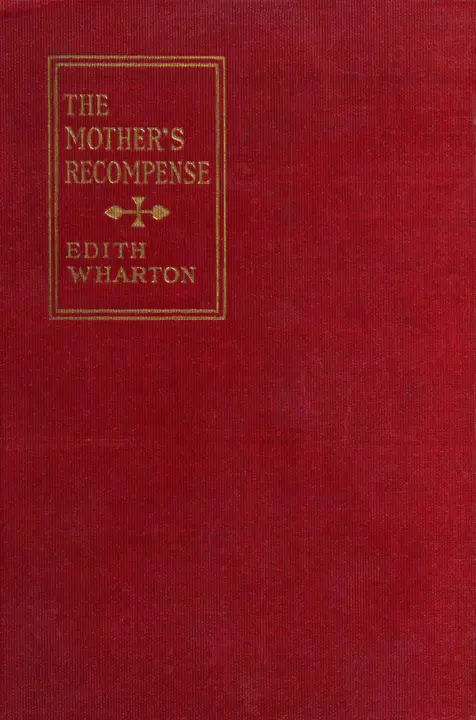
Edith Wharton
BEHIND THE BOOK
This eBook is for the use of anyone anywhere in the United States and most other parts of the world at no cost and with almost no restrictions whatsoever. You may copy it, give it away or re-use it under the terms of the Project Gutenberg License included with this eBook or online at www.gutenberg.org. If you are not located in the United States, you will have to check the laws of the country where you are located before using this eBook. Read the source licence.
The original source file, including credits and licence, is retained by this library. Request an original-format copy at no charge. Please include the book title and Project Gutenberg identifier #4519.
KEEP YOUR CURIOSITY GOING
Coulson Kernahan

Maurice Baring
Frances Wright
Cécile Tormay

Frederic Jesup Stimson

W. H. P. (William Henry Pope) Jarvis