THE CLASSIC COLLECTION✦An outlaw’s diary: the CommuneCLASSIC FREE BOOKS
An outlaw’s diary: the Commune
Cécile Tormay
THE CLASSIC COLLECTION · 1845
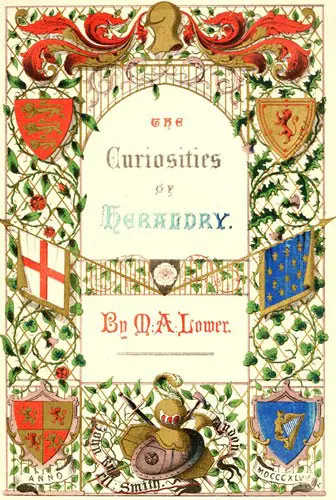
"The Curiosities of Heraldry" by Mark Antony Lower is a historical account written in the mid-19th century. This work delves into the principles and practices of heraldry, a system that denotes family lineage and nobility through intricate symbols and designs. The book aims to shed light on the often-overlooked significance and utility of heraldic study, enlivened by historical anecdotes and examples. The opening of the text presents a preface where Lower establishes the value of heraldry as an essential study for understanding not only genealogy but also the broader historical context of the Middle Ages. He reflects on the misconceptions surrounding heraldry, countering the view that it is merely an outdated collection of symbols. He emphasizes the poetic and practical aspects of heraldry, asserting that it is a rich field worthy of attention. The introduction sets the stage for a detailed exploration of the science of heraldry, hinting at its deep historical roots and its role in the social fabric of medieval society, ultimately preparing the reader for a thorough investigation into the subject throughout the subsequent chapters.
Introduction adapted from the source catalogue; source summaries may be automatically generated.
Free to read · English · 86,967 words · No account needed
MAKE TIME FOR A GOOD BOOK
On by default. Untick to stop anonymous reading totals. Each page counts after 10 seconds in view. How this works.
Anonymous counting is on unless you have switched it off.
[199] Archaeologia, xxix.
[200] Harl. MS. 2035.
[201] "Arthgal, the first Earl of Warwick, in the days of King Arture, and was one of the Round Table; this Arthgal took a bere in his arms, for that, in Britisch, soundeth a bere in English." (Leland's Collect.)
[202] A very similar coat of arms, borne by the Lloyds of Denbighshire, Barts., is said to have originated under similar circumstances in 1256.
[203] Hist. and Allusive Arms.
[204] Ibid.
[205] Fun. Mon., p. 629.
[206] Vide 'English Surnames,' 2d edit. p. 100.
[207] Vol. ii, p. 87, edit. 1768.
[208] Enumerated at p. 146.
[209] The vignette at the head of the present chapter was copied from a brick at Laughton Place. The inscription, which is in relievo, is W. P. (William Pelham) LAN DE GRACE 1534 FVT CEST MAYSON FAICTE.
[210] The painting is upon panel. An engraving of it is given in Bigland's Gloucester, vol. i, p. 312. Hist. and Allus. Arms, p. 52.
[211] Hist. and Allus. Arms, p. 60.
[212] I use the present tense bear, although in many cases the families may have become extinct.
[213] Gough's Camden, vol. i, p. 89.
[214] Bowles--'Azure, a crescent argent, in chief the sun or.' Smith--'Vert a cheveron gules between three Turks' heads couped in profile proper, their turbans or.' This was an augmentation borne quarterly with the antient arms of Smith.
[215] Supporters of Sir William Draper, K. B. (Hist. and Allus. Arms, p.
227.)
[216] Vide Robertson, Smollet, Stewart, &c. in loco; Grose's Antiq. of
Scotland, &c.
[217] Hist. and Allus. Arms, pp. 316-18.
[218] The name of Carlos is presumed to have become extinct; that of Penderell is by no means so. The representative of the family still continues to receive the pension of 100 marks originally granted to Richard Penderell. Several members of the family, in various conditions in life, have been connected for some generations with the county of Sussex. One of them, a few years since, kept an inn at Lewes, bearing the sign of the Royal Oak.
[219] A lion rampant within a double tressure, &c.
[220] A unicorn.
[221] Sable, a cheveron between three astroits, or mullets, argent. (Historical and Allusive Arms.)
[222] Ibid.
[223] Hist. and Allus. Arms, p. 400.
[224] Hist. and Allus. Arms. (1803.)
[225] "Over against the parish church [of St. Olave, Southwark] on the south side of the streete was sometime one great house builded of stone, with arched gates, which pertained to the Prior of Lewes in Sussex, and was his lodging when he came to London: it is now a common hostelry for travellers, and hath to sign the Walnut-Tree." (Stowe, p. 340.) The last remains of this inn were destroyed in making the approach to the new London Bridge. For an account of them, see 'Archaeologia,' vol. xxv, p. 601.
[226] The supporters of this family are 'two leopards argent, spotted
sable.'
[227] Page 437.
Your reading position is saved on this browser. Take it to another device with a library code. Reading pages adapt to text, rather than matching a printed edition.
BEHIND THE BOOK
This eBook is for the use of anyone anywhere in the United States and most other parts of the world at no cost and with almost no restrictions whatsoever. You may copy it, give it away or re-use it under the terms of the Project Gutenberg License included with this eBook or online at www.gutenberg.org. If you are not located in the United States, you will have to check the laws of the country where you are located before using this eBook. Read the source licence.
The original source file, including credits and licence, is retained by this library. Request an original-format copy at no charge. Please include the book title and Project Gutenberg identifier #38951.
KEEP YOUR CURIOSITY GOING
Cécile Tormay

Moritz Busch
John L. Ransom
Frances Wright
Cécile Tormay

Mabel Potter Daggett