THE CLASSIC COLLECTION✦An outlaw’s diary: the CommuneCLASSIC FREE BOOKS
An outlaw’s diary: the Commune
Cécile Tormay
THE CLASSIC COLLECTION · 1845
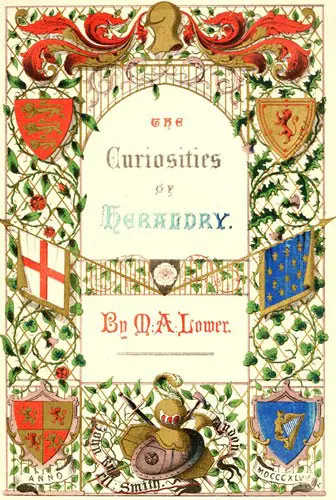
"The Curiosities of Heraldry" by Mark Antony Lower is a historical account written in the mid-19th century. This work delves into the principles and practices of heraldry, a system that denotes family lineage and nobility through intricate symbols and designs. The book aims to shed light on the often-overlooked significance and utility of heraldic study, enlivened by historical anecdotes and examples. The opening of the text presents a preface where Lower establishes the value of heraldry as an essential study for understanding not only genealogy but also the broader historical context of the Middle Ages. He reflects on the misconceptions surrounding heraldry, countering the view that it is merely an outdated collection of symbols. He emphasizes the poetic and practical aspects of heraldry, asserting that it is a rich field worthy of attention. The introduction sets the stage for a detailed exploration of the science of heraldry, hinting at its deep historical roots and its role in the social fabric of medieval society, ultimately preparing the reader for a thorough investigation into the subject throughout the subsequent chapters.
Introduction adapted from the source catalogue; source summaries may be automatically generated.
Free to read · English · 86,967 words · No account needed
MAKE TIME FOR A GOOD BOOK
On by default. Untick to stop anonymous reading totals. Each page counts after 10 seconds in view. How this works.
Anonymous counting is on unless you have switched it off.
[228] Peerage, II, 486.
[229] In the History of Birds, by the Rev. Edward Stanley (now Bishop of Norwich), vol. i, 119, are some interesting anecdotes of the asportation of infants by eagles, illustrative of the family crest, and the corresponding story of King Alfred's peer, "Nestingum," who received that name from his having been found, in infancy, in the nest of an eagle. For further remarks, vide Mr. Ormerod's interesting paper on the "Stanley Legend," in the Collect. Topog. et Geneal. vol. vii, which has been reprinted in the form of a private tract.
[230] Penes Rev. Henry Latham, M. A., Rector of Selmeston, &c. &c., to whose kindness I am much indebted.
[231] Vide notice of Rebuses, at p. 125.
[232] C. S. Gilbert's Cornwall, vol. i.
[233] The earldom of Oxford continued in this family during the unprecedented period of five centuries and a half.
[234] Itin. vol. vi, p. 37.
[235] Leland, Collect. vol. ii, p. 504.
[236] Or, a fesse chequy argent and azure.
[237] Anonymous Paragraph.
[238] It is not unworthy of remark that among the North American Indians, symbols are employed for the purpose of distinguishing their tribes. The Shawanese nation, for example, was originally divided into twelve tribes, which were subdivided into septs or clans, recognized by the appellations of the Bear, the Turtle, the Eagle, &c. In some cases individuals, particularly the more eminent warriors, formerly assumed similar devices, commemorative of their prowess. "And this," says Mr. R. C. Taylor, an American antiquary, "is Indian Heraldry, as useful, as commemorative, as inspiriting to the red warrior and his race, as that when, in the days of the Crusades, the banner and the pennon, the device and the motto, the crest and the war-cry exercised their potent influence on European chivalry."
[239] Reflections on the Revolution in France.
[240] Blackstone, Rights of Persons, ch. xii.
[241] Cited in Nares's Herald. Anom.
[242] History of Knighthood, quoted by Nares.
[243] Vide pp. 34, 35.
[244] A military expedition.
[245] The Tanner.
[246] There are two other expressions applied to this respectable class which are extremely incorrect, namely, gentlemen-farmers and tenant-farmers. A person who by birth, education, and wealth, is entitled to the distinction of gentleman, and who chooses to devote his capital to agriculture may be properly designated a farming-gentleman, though the occupation of a large estate without those qualifications can never constitute a gentleman-farmer. Tenant-farmer, a phrase which has lately been in the mouth of every politician, is as fine a piece of tautology as 'coat-making tailor' or 'shoe-mending cobbler' would be.
"It maketh me laugh to see," says Sir John Ferne's Columel, "a jolly peece of worke it were, to see plow-men made Gentle-men!"
[247] Quoted by Blackstone.
[248] Page 89 et seq.
Your reading position is saved on this browser. Take it to another device with a library code. Reading pages adapt to text, rather than matching a printed edition.
BEHIND THE BOOK
This eBook is for the use of anyone anywhere in the United States and most other parts of the world at no cost and with almost no restrictions whatsoever. You may copy it, give it away or re-use it under the terms of the Project Gutenberg License included with this eBook or online at www.gutenberg.org. If you are not located in the United States, you will have to check the laws of the country where you are located before using this eBook. Read the source licence.
The original source file, including credits and licence, is retained by this library. Request an original-format copy at no charge. Please include the book title and Project Gutenberg identifier #38951.
KEEP YOUR CURIOSITY GOING
Cécile Tormay

Moritz Busch
John L. Ransom
Frances Wright
Cécile Tormay

Mabel Potter Daggett