THE CLASSIC COLLECTION✦An outlaw’s diary: the CommuneCLASSIC FREE BOOKS
An outlaw’s diary: the Commune
Cécile Tormay
THE CLASSIC COLLECTION · 1845
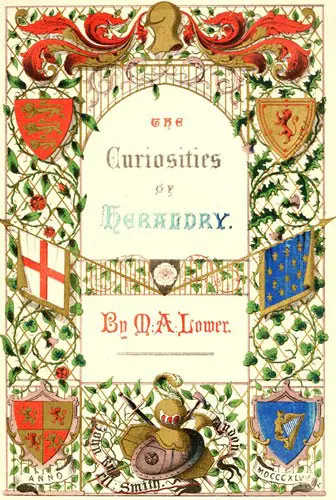
"The Curiosities of Heraldry" by Mark Antony Lower is a historical account written in the mid-19th century. This work delves into the principles and practices of heraldry, a system that denotes family lineage and nobility through intricate symbols and designs. The book aims to shed light on the often-overlooked significance and utility of heraldic study, enlivened by historical anecdotes and examples. The opening of the text presents a preface where Lower establishes the value of heraldry as an essential study for understanding not only genealogy but also the broader historical context of the Middle Ages. He reflects on the misconceptions surrounding heraldry, countering the view that it is merely an outdated collection of symbols. He emphasizes the poetic and practical aspects of heraldry, asserting that it is a rich field worthy of attention. The introduction sets the stage for a detailed exploration of the science of heraldry, hinting at its deep historical roots and its role in the social fabric of medieval society, ultimately preparing the reader for a thorough investigation into the subject throughout the subsequent chapters.
Introduction adapted from the source catalogue; source summaries may be automatically generated.
Free to read · English · 86,967 words · No account needed
MAKE TIME FOR A GOOD BOOK
On by default. Untick to stop anonymous reading totals. Each page counts after 10 seconds in view. How this works.
Anonymous counting is on unless you have switched it off.
[173] According to Nisbet, the earliest royal supporters of England were two angels. The transition from one angel to two, and from two angels to two quadrupeds is very natural.
[174] C. S. Gilbert's Cornwall, pl. 3.
[175] Ormerod's Cheshire.
[176] Archaeologia, vol. xxx.
[177] Hone's Table Book.
[178] In the above sketch I have ventured to supply the head which in the
original is wanting.
[179] Montagu, Guide, p. 48.
[180] The coat-armour of a great family was of too sacred a character to be used as the personal ornament or distinction of their retainers, the private herald only excepted; and it was long ere this functionary was allowed to invest himself in his master's armorials.
[181] Vide Chapter IX.
[182] Viz. Warbleton Priory, Robertsbridge Abbey, and the churches of Thundridge, (co. Herts.), Crowhurst, Burwash, Laughton, Chiddingly, Ripe, East Hothly, Wartling, and Dallington. As a proof of the value of heraldric insignia in ascertaining the founders of antient buildings, it may be remarked that, so far as I am aware, the Buckles which adorn the whole of the churches here enumerated, furnish the only evidence (and most irrefragable evidence it must certainly be admitted to be) that the family of Pelham were concerned in their erection or enlargement. There are histories as well as 'sermons' 'in stones!'
[183] From a Paper on the 'Pelham Buckle' read before the first meeting of the Archaeological Association at Canterbury, 11th September, 1844.
[184] Montagu.
[185] The dogs here alluded to were greyhounds, a Yorkist badge.
[186] Guide, p. 59.
[187] Still retained in the collar of SS.
[188] Vide Chapter XI.
[189] The 'Hawthorn' is probably the 'crown in a bush,' used in conjunction with the letters =H. R.= as the badge of Henry VII. This badge originated in the finding of the crown of Richard III in a bush after the battle of Bosworth-Field. (Vide Fosbroke's Encycl. of Antiq. p. 757.)
[190] Montagu, p. 75, from a MS. in the Pepys. Lib. Cambridge.
[191] Vide Exodus, iii, 14.
[192] Vide Judges, vii, 18.
[193] By Montjoye is supposed to be intended the national banner, on which the figure of some saint was embroidered.
[194] The motto of the royal arms, 'Dieu et mon droit,' is older, and is
ascribed to Richard I.
[195] Guide, p. 56.
[196] The modern motto of the family is 'Crede Biron.'
[197] 'Per linguam bos inambulat.' Ant. proverb.
[198] Vide 'The Principal Historical and Allusive Arms borne by Families of the United Kingdom; collected by an Antiquary,' quarto, Lond. 1803. Moule says, "But few copies of the work were sold, and the remaining impressions were destroyed in the fire at the printing-office, which has rendered it a particularly scarce book." (Bibl. Herald., p. 497.) On this account I am induced to make extensive use of the volume, and to carry this chapter much beyond my original intention.
Your reading position is saved on this browser. Take it to another device with a library code. Reading pages adapt to text, rather than matching a printed edition.
BEHIND THE BOOK
This eBook is for the use of anyone anywhere in the United States and most other parts of the world at no cost and with almost no restrictions whatsoever. You may copy it, give it away or re-use it under the terms of the Project Gutenberg License included with this eBook or online at www.gutenberg.org. If you are not located in the United States, you will have to check the laws of the country where you are located before using this eBook. Read the source licence.
The original source file, including credits and licence, is retained by this library. Request an original-format copy at no charge. Please include the book title and Project Gutenberg identifier #38951.
KEEP YOUR CURIOSITY GOING
Cécile Tormay

Moritz Busch
John L. Ransom
Frances Wright
Cécile Tormay

Mabel Potter Daggett