THE CLASSIC COLLECTION✦An outlaw’s diary: the CommuneCLASSIC FREE BOOKS
An outlaw’s diary: the Commune
Cécile Tormay
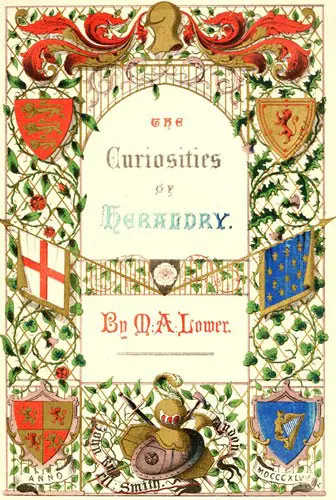
THE CLASSIC COLLECTION · 1845
"The Curiosities of Heraldry" by Mark Antony Lower is a historical account written in the mid-19th century. This work delves into the principles and practices of heraldry, a system that denotes family lineage and nobility through intricate symbols and designs. The book aims to shed light on the often-overlooked significance and utility of heraldic study, enlivened by historical anecdotes and examples. The opening of the text presents a preface where Lower establishes the value of heraldry as an essential study for understanding not only genealogy but also the broader historical context of the Middle Ages. He reflects on the misconceptions surrounding heraldry, countering the view that it is merely an outdated collection of symbols. He emphasizes the poetic and practical aspects of heraldry, asserting that it is a rich field worthy of attention. The introduction sets the stage for a detailed exploration of the science of heraldry, hinting at its deep historical roots and its role in the social fabric of medieval society, ultimately preparing the reader for a thorough investigation into the subject throughout the subsequent chapters.
Introduction adapted from the source catalogue; source summaries may be automatically generated.
Free to read · English · 86,967 words · No account needed
MAKE TIME FOR A GOOD BOOK
On by default. Untick to stop anonymous reading totals. Each page counts after 10 seconds in view. How this works.
Anonymous counting is on unless you have switched it off.
[112] Essay on Armories, p. 10.
[113] Chevaux-de-frise (in fortification), large joists of wood stuck full of wooden spikes, armed with iron, to stop breaches, or to secure the passes of a camp.--Bailey's Dict.
[114] Heywood's Epigrams and Prov. 1566. No. 13.
[115] Wende, thought; mulne, mill.
[116] Modern naturalists place it in the class cryptogamia, and give it the name of Tremella nostoc.
[117] In reading this list it will be seen that it contains several monsters not of the 'Gothick' but of the Classical era, as the chimera, harpy, and sagittary; but it is a curious and characteristic fact that the purely classical monsters were never great favourites in heraldry.
[118] Nisbet on Armories, edit. 1718; pp. 12-13.
[119] Workes of Armorie, folio 66.
[120] Cocatryse, basilicus, cocodrillus! Prompt. Parv. Camd. Soc.
[121] Hence sometimes called the basilisk, from the Greek [Greek:
basiliskos].
[122] Mallet (Northern Antiquities, ch. ix) says, "The thick misshapen walls winding round a rude fortress, on the summit of a rock, were often called by a name signifying SERPENT or DRAGON. Women of distinction were commonly placed in such castles for security. Thence the romancers invented so many fables, concerning princesses of great beauty guarded by dragons and afterwards delivered by young heroes, who could not achieve their rescue till they had overcome those terrible guards."
[123] Anon, Parag.
[124] Brydson's Summary View.
[125] Probably, also, by frightening their horses, to throw their ranks
into confusion.
[126] By an oversight in the drawing some small vestiges of wings have
been omitted.
[127] Barons' War, p. 168.
[128] 'Sir Degore.' Warton's Hist. Poet., p. 180, ibid.
[129] Barons' War, p. 169.
[130] "Regius locus fuit inter draconem et standardum."
[131] Barnes's Hist. Edw. III.
[132] Vide Promptorium Parvulorum, Camd. Soc. voc. griffown. Leigh's
Accedens, &c.
[133] AEn. iii, 212, &c.
[134] Vide Vignette at the head of this Chapter for Maundevile's
representation of an Ipotayne.
[135] Kitto's Pictorial Bible, Job xxxix.
[136] Vide Congregational Mag. 1842 or 43.
[137] Kitto, ut sup.
[138] "What reason," asks Morgan, "can be given why the three brothers, Warren, Gourney, and Mortimer, should every one bear a severall coat, and derive (hand down) their sirnames to posterity, all of them yet retaining the metal and colour of or and azure, the one checky, the other pally, and the other barry?" Armilogia, p. 41.
[139] Huge.
[140] Accedens, fol. 194 et seq.
[141] Heralds.
[142] Accedens, fol. 7.
[143] Sphere, Nobility Native, p. 101.
[144] Ibid.
[145] Bibl. Herald, p. 168.
[146] Accedens, fol. 90.
[147] Ib. fol. 92.
[148] Accedens, fol. 98.
[149] Display, p. 230.
[150] Ibid. p. 203.
[151] Ibid. p. 215.
[152] These seem originally to have been arms of office. Their "character was strictly emblematical, and their import obvious, consisting, as they generally did, of a representation of the various official implements or ensigns." "Little doubt can be entertained but that much of our personal heraldry is derived from such a source." (Woodham's Application of Heraldry to the Illustration of Collegiate Antiquities, p. 79.)
Your reading position is saved on this browser. Take it to another device with a library code. Reading pages adapt to text, rather than matching a printed edition.
BEHIND THE BOOK
This eBook is for the use of anyone anywhere in the United States and most other parts of the world at no cost and with almost no restrictions whatsoever. You may copy it, give it away or re-use it under the terms of the Project Gutenberg License included with this eBook or online at www.gutenberg.org. If you are not located in the United States, you will have to check the laws of the country where you are located before using this eBook. Read the source licence.
The original source file, including credits and licence, is retained by this library. Request an original-format copy at no charge. Please include the book title and Project Gutenberg identifier #38951.
KEEP YOUR CURIOSITY GOING
Cécile Tormay

Moritz Busch
John L. Ransom
Frances Wright
Cécile Tormay

Mabel Potter Daggett