THE CLASSIC COLLECTION✦An outlaw’s diary: the CommuneCLASSIC FREE BOOKS
An outlaw’s diary: the Commune
Cécile Tormay
THE CLASSIC COLLECTION · 1845
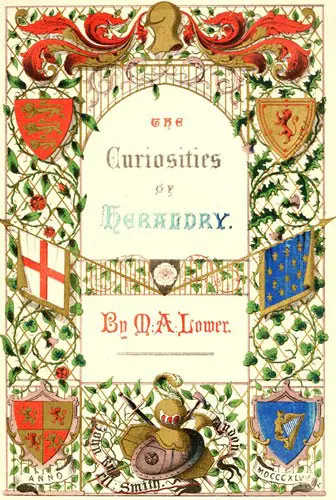
"The Curiosities of Heraldry" by Mark Antony Lower is a historical account written in the mid-19th century. This work delves into the principles and practices of heraldry, a system that denotes family lineage and nobility through intricate symbols and designs. The book aims to shed light on the often-overlooked significance and utility of heraldic study, enlivened by historical anecdotes and examples. The opening of the text presents a preface where Lower establishes the value of heraldry as an essential study for understanding not only genealogy but also the broader historical context of the Middle Ages. He reflects on the misconceptions surrounding heraldry, countering the view that it is merely an outdated collection of symbols. He emphasizes the poetic and practical aspects of heraldry, asserting that it is a rich field worthy of attention. The introduction sets the stage for a detailed exploration of the science of heraldry, hinting at its deep historical roots and its role in the social fabric of medieval society, ultimately preparing the reader for a thorough investigation into the subject throughout the subsequent chapters.
Introduction adapted from the source catalogue; source summaries may be automatically generated.
Free to read · English · 86,967 words · No account needed
MAKE TIME FOR A GOOD BOOK
On by default. Untick to stop anonymous reading totals. Each page counts after 10 seconds in view. How this works.
Anonymous counting is on unless you have switched it off.
[97] Nisbet.
[98] Vide p. 47, Arms of Echingham, &c.
[99] 'Gules, a tri-corporated lyon issuant out of the three corners of the field, and meeting under one head in fesse, or,' was the coat-armour of Edmund Crouchback, second son of Henry III. This is the earliest specimen of differencing I have met with.
[100] This is the usual notion of the old armorists, but Bossewell gives a different statement: "The pellicane feruently loueth her [young] byrdes. Yet when thei ben haughtie, and beginne to waxe hote, they smite her in the face and wounde her, and she smiteth them againe and sleaeth (kills) them. And after three daies she mourneth for them, and then striking herself in the side till the bloude runne out, she sparpleth it upon theire bodyes, and by vertue thereof they quicken againe."--Armorie of Honour, fol. 69. On the brass of Wm. Prestwick, dean of Hastings, in Warbleton church, co. Sussex, there is a representation of a pelican feeding her young with her blood, and the motto on a scroll above,
'=Sic Epus dilerit nos=,'--'Thus hath Christ loved us.'
[101] The Heraldry of Fish, by Thomas Moule, Esq. London, 1842.
[102] Vide cut at the head of this chapter.
[103] Loadstone.
[104] Op. Maj. edit. Jebb. 232.
[105] Halliwell's Sir John Maundevile, p. 319.
[106] Succinct Account of Religions and Sects, sect. 4, No. 42.
[107] Some of the Greek coins of Sicily bear an impress of three legs conjoined, exactly similar to this fanciful charge, except that they are naked, and have at the point of conjunction a Mercury's head.
[108] Dallaway.
[109] The flower of the 'sword-grass, a kind of sedge.' Dict.
[110] A work on the Fleur-de-Lis, in 2 vols. 8vo (!), was published in
France in 1837.
[111] The following jest on the fleur-de-lis may amuse some readers. Sir William Wise "having lente to the King (Henry VIII) his signet to seale a letter, who having powdred eremites engrayl'd in the seale, [qy. ermine?--Several families of Wise bear this fur:] 'Why, how now, Wise,' quoth the King, 'What? hast thou lice here?' 'And if it like your Majestie,' quoth Sir William, 'a louse is a rich coate, for, by giving the louse, I part armes with the French King, in that he giveth the floure de lice.' Whereat the king heartily laugh'd, to heare how pretily so byting a taunt (namely, proceeding from a Prince,) was so sodaynely turned to so pleasaunte a conceyte." (Stanihurst's Hist. of Ireland in Holinshed's Chron.) Nares thinks that Shakspeare, who is known to have been a reader of Holinshed, took his conceit of the 'white lowses,' which 'do become an old coat well,' in the Merry Wives of Windsor, from this anecdote. (Heraldic Anom. vol. i, p. 204.)
Your reading position is saved on this browser. Take it to another device with a library code. Reading pages adapt to text, rather than matching a printed edition.
BEHIND THE BOOK
This eBook is for the use of anyone anywhere in the United States and most other parts of the world at no cost and with almost no restrictions whatsoever. You may copy it, give it away or re-use it under the terms of the Project Gutenberg License included with this eBook or online at www.gutenberg.org. If you are not located in the United States, you will have to check the laws of the country where you are located before using this eBook. Read the source licence.
The original source file, including credits and licence, is retained by this library. Request an original-format copy at no charge. Please include the book title and Project Gutenberg identifier #38951.
KEEP YOUR CURIOSITY GOING
Cécile Tormay

Moritz Busch
John L. Ransom
Frances Wright
Cécile Tormay

Mabel Potter Daggett