THE CLASSIC COLLECTION✦An outlaw’s diary: the CommuneCLASSIC FREE BOOKS
An outlaw’s diary: the Commune
Cécile Tormay
THE CLASSIC COLLECTION · 1845
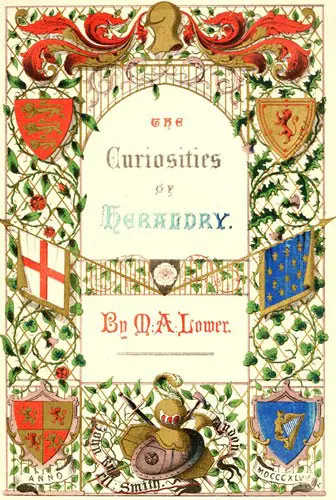
"The Curiosities of Heraldry" by Mark Antony Lower is a historical account written in the mid-19th century. This work delves into the principles and practices of heraldry, a system that denotes family lineage and nobility through intricate symbols and designs. The book aims to shed light on the often-overlooked significance and utility of heraldic study, enlivened by historical anecdotes and examples. The opening of the text presents a preface where Lower establishes the value of heraldry as an essential study for understanding not only genealogy but also the broader historical context of the Middle Ages. He reflects on the misconceptions surrounding heraldry, countering the view that it is merely an outdated collection of symbols. He emphasizes the poetic and practical aspects of heraldry, asserting that it is a rich field worthy of attention. The introduction sets the stage for a detailed exploration of the science of heraldry, hinting at its deep historical roots and its role in the social fabric of medieval society, ultimately preparing the reader for a thorough investigation into the subject throughout the subsequent chapters.
Introduction adapted from the source catalogue; source summaries may be automatically generated.
Free to read · English · 86,967 words · No account needed
MAKE TIME FOR A GOOD BOOK
On by default. Untick to stop anonymous reading totals. Each page counts after 10 seconds in view. How this works.
Anonymous counting is on unless you have switched it off.
[65] Query--Might not some of our English maidens, who are verging somewhat on the antique, resort to this mode of advertising for a husband with advantage? The odious appellation of "old maids" would then give place to the more courteous one of "Ladies of the half-blank shield."
[66] Nisbet's Essay on Armories, p. 70.
[67] A lineal ancestor of Sir John Shelley, Bart. The date of the lady's
death is 1513.
[68] In the great hall at Fawsley, co. Northampton, the seat of Sir Charles Knightly, Bart., is a shield containing the unprecedented number of 334 quarterings. Vide Baker's Northampton, vol. i, p. 386.
[69] Vide Appendix.
[70] In the Temple Church, London. Tomb of Sir Geoffrey de Magnaville. Vide woodcut at the head of the Preface.
[71] Boke of St. A. and Dall.
[72] The arms of the See of Hereford at this day are identical with those of Thomas Cantilupe, who held the episcopate in the thirteenth century, and was canonized as St. Thomas of Hereford, 34{o} Edward I.
[73] It is almost unnecessary to observe that the expression 'a merchant's mark' is by no means appropriate; for such devices were employed in a great variety of ways. They appear, primarily, to have been used as signatures by illiterate though wealthy merchants, who could not write their names. At a later date they were employed for marking bales of goods. Within the last century, many flockmasters in the South of England used them for marking sheep. Although the illiterate of our own times substitute a + for their proper names, it was far otherwise two centuries ago, when they generally made a rude monogram, or peculiar mark, analogous to the merchant's mark of earlier date.
[74] Dallaway.
[75] C. S. Gilbert's Hist. Cornw. vol. i, Introd. to Herald.
[76] Historical and Allusive Arms, p. 347.
[77] Montagu, Study of Heraldry. But this is, perhaps, an isolated instance of such early date, for Dame Julyan Berners, more than a century later, says, "There be vi differences in armys; ij for the excellent and iiij for the nobles; Labelle and Enborduryng for lordis; Jemews, Mollettys, Flowre delyce and Quintfoyles for the nobles," (i. e. gentry).
[78] Cited by Dall. p. 127.
[79] Memoirs, p. 287. Cott. MS., Calig. A. xviii.
[80] Vide my English Surnames, 2d edition, p. 194 et seq.
[81] Montagu, p. 42.
[82] If Heraldry had to be established de novo, something of the sort might be done, by giving each family a patent right to a particular ordinary, provided the ordinaries were much more numerous than they are. But as nearly every ordinary and charge is common to many families, Dugdale's system cannot possibly be carried out.
[83] Hugh Clark's 'Introduction to Heraldry,' which may be purchased for a few shillings, contains everything necessary to a thorough knowledge of the art of blazon.
Your reading position is saved on this browser. Take it to another device with a library code. Reading pages adapt to text, rather than matching a printed edition.
BEHIND THE BOOK
This eBook is for the use of anyone anywhere in the United States and most other parts of the world at no cost and with almost no restrictions whatsoever. You may copy it, give it away or re-use it under the terms of the Project Gutenberg License included with this eBook or online at www.gutenberg.org. If you are not located in the United States, you will have to check the laws of the country where you are located before using this eBook. Read the source licence.
The original source file, including credits and licence, is retained by this library. Request an original-format copy at no charge. Please include the book title and Project Gutenberg identifier #38951.
KEEP YOUR CURIOSITY GOING
Cécile Tormay

Moritz Busch
John L. Ransom
Frances Wright
Cécile Tormay

Mabel Potter Daggett