THE CLASSIC COLLECTION✦A dead man’s diaryCLASSIC FREE BOOKS
A dead man’s diary
Coulson Kernahan
THE CLASSIC COLLECTION · 1910
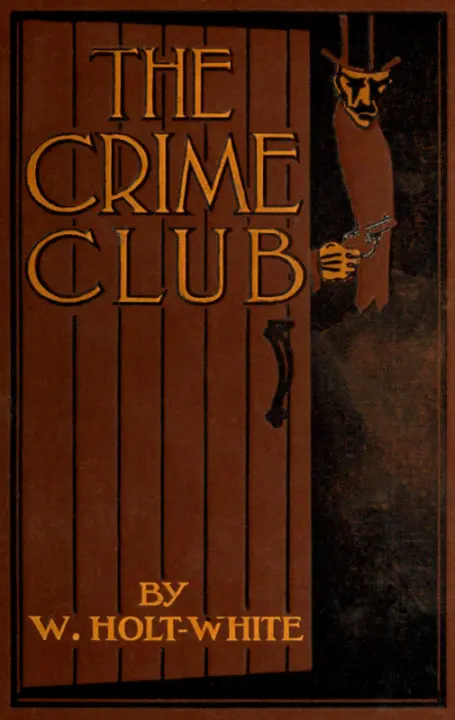
"The Crime Club" by W. Holt-White is a novel written in the early 20th century. The plot revolves around Captain Melun and Sir Paul Westerham, who find themselves embroiled in a complex web of crime, blackmail, and intrigue as they navigate their relationship with Lady Kathleen Carfax, the daughter of the Prime Minister of England. The novel presents a world of deception and moral ambiguity as characters grapple with their motives and the consequences of their actions. At the start of the narrative, Captain Melun confronts Sir Paul Westerham on board the "Gigantic", leading to a tense exchange that reveals their complicated pasts and ambitions. Sir Paul, having inherited immense wealth and a title, is determined to pursue Lady Kathleen, whom he has seen only in a picture. Meanwhile, Melun expresses his own desire to marry her, hinting at a darker intention. The ensuing dialogue exposes themes of blackmail and manipulation, setting the stage for the deeper conspiracies that will unfold as Sir Paul seeks to protect Lady Kathleen from the dangers tied to Melun and the secretive crime syndicate they are both drawn into.
Introduction adapted from the source catalogue; source summaries may be automatically generated.
Free to read · English · 86,385 words · No account needed
MAKE TIME FOR A GOOD BOOK
On by default. Untick to stop anonymous reading totals. Each page counts after 10 seconds in view. How this works.
Anonymous counting is on unless you have switched it off.
The Premier glanced at him quickly and then turned to his daughter.
“Thank heaven!” he cried.
“Hush,” said Kathleen, gently, and taking her father by the arm she
pointed to Mme. Estelle.
Mendip had done what he could, and the unhappy woman had, to some extent, come back to consciousness.
She was indeed sufficiently alive to catch Westerham's words. She brought her fast fading eyes down from the ceiling and searched Westerham's face.
“Melun!” she muttered to herself: “Melun!”
Westerham drew near and knelt down by the couch. He took one of her hands, which was even then growing cold.
“Melun?” she asked again in a voice scarcely above a whisper.
Westerham put his mouth down to her ear and said slowly, “He is dead.”
The shock of the news acted on the woman in a most extraordinary way. With a convulsive movement she suddenly gathered herself together and sat bolt upright on the couch. She would have fallen back again had not Westerham caught her in his arms.
“The papers!” she gasped.
“Yes?” said Westerham, kindly and soothingly. “Where are they?”
With a faint movement she pointed towards Westerham's feet. “There!”
she gasped.
To Westerham it seemed as if she were already beginning to wander in her mind, but he said still kindly and soothingly, “Yes, yes, I know! But where?”
The woman opened her mouth and made two or three efforts before she spoke again, and then she only breathed the word “Boots!”
Westerham's gaze wandered over the sideboard.
“See if you can find any brandy,” he said to Mendip.
Mendip could find no brandy, but brought some almost neat whisky over
in a glass.
Westerham took the glass from Mendip's hand and pressed it to Mme. Estelle's lips. She revived a little, and suddenly spoke clearly and in almost her normal voice.
“Sir Paul,” she said, “the papers are in your boots!”
For a moment Westerham stared into the dying woman's face, under the impression that her reason had departed from her. But with a start he remembered how he had awoke in St. John's Wood, after being drugged, to find himself dressed in strange clothes and in new footgear. And for the first time the real significance of the removal of all his apparel from his rooms in Bruton Street struck him with full force. He remembered, too, that from the night he had left Mme. Estelle, Melun, by one swift action after another, had kept him constantly on the move, so that it had been impossible for him so much as to order fresh clothes.
Your reading position is saved on this browser. Take it to another device with a library code. Reading pages adapt to text, rather than matching a printed edition.
BEHIND THE BOOK
This eBook is for the use of anyone anywhere in the United States and most other parts of the world at no cost and with almost no restrictions whatsoever. You may copy it, give it away or re-use it under the terms of the Project Gutenberg License included with this eBook or online at www.gutenberg.org. If you are not located in the United States, you will have to check the laws of the country where you are located before using this eBook. Read the source licence.
The original source file, including credits and licence, is retained by this library. Request an original-format copy at no charge. Please include the book title and Project Gutenberg identifier #46566.
KEEP YOUR CURIOSITY GOING
Coulson Kernahan

Maurice Baring
Frances Wright
Cécile Tormay

Frederic Jesup Stimson

W. H. P. (William Henry Pope) Jarvis