THE CLASSIC COLLECTION✦Quincy Adams Sawyer and Mason’s Corner Folks A Picture of New England Home LifeCLASSIC FREE BOOKS
Quincy Adams Sawyer and Mason’s Corner Folks A Picture of New England Home Life
Charles Felton Pidgin
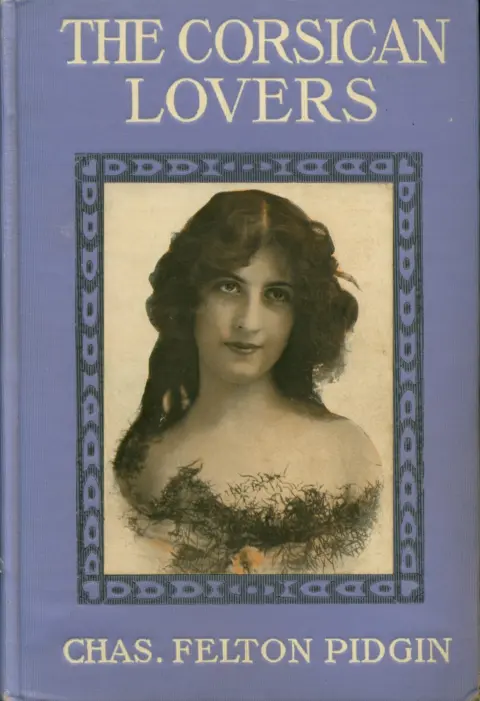
THE CLASSIC COLLECTION · 1906
"The Corsican Lovers" by Charles Felton Pidgin is a historical novel written in the early 20th century. The story centers around the passionate and tumultuous lives of the Batistelli family, particularly focusing on Vivienne, a young woman grappling with the demands of a loveless marriage arranged by her brother Pascal, as she yearns for autonomy and true love amidst the shadow of her father’s vengeful legacy. At the start of the novel, we are introduced to Vivienne Batistelli, who fiercely opposes her brother Pascal's insistence that she marry Count Mont d'Oro's son, Napier. Vivienne is haunted by the memory of her father’s murder, and as she asserts her refusal to enter into a loveless union meant to appease family honor, her determination becomes palpable. The conflict escalates as Pascal reveals that their father's dying wish was for Vivienne to marry Napier, invoking a familial vendetta that looms over their lives. This opening sets the stage for not only personal dilemmas of love and duty but also a broader commentary on the intricacies of honor, revenge, and the expectations placed on women within their family and society.
Introduction adapted from the source catalogue; source summaries may be automatically generated.
Free to read · English · 104,285 words · No account needed
MAKE TIME FOR A GOOD BOOK
On by default. Untick to stop anonymous reading totals. Each page counts after 10 seconds in view. How this works.
Anonymous counting is on unless you have switched it off.
“I invited him,” said Pascal, “out of compliment to the Admiral, but did not suppose that he would accept, nor would he have done so if he had not met you that day in the garden.”
“I am ashamed of you, Pascal,” cried Vivienne. “You have no right to speak to me in that way, even if you are my brother. You have no right to assume that Lieutenant Duquesne and I are anything more to each other than acquaintances--no, that is not quite honest--I mean good friends.”
“If you do not invite Count Mont d’Oro,” said Pascal, “I shall. But, considering their enmity to each other, it would be the height of incivility to ask both the Count and the Lieutenant. I will tell the Englishman that his invitation has expired by limitation, or better still, I will ask the Admiral to send him back to his ship.”
“I have invited Admiral Enright and his daughter. It would be the height of incivility, as you term it, not to ask Lieutenant Duquesne. You can tell both the Count and Lieutenant Duquesne that the other is coming and, if they do not wish to meet, both can stay away.”
“Is that the proper way for a young lady to treat her betrothed lover?” asked Pascal, indignantly.
“Pascal, you have no right to dispose of my hand without consulting my wishes, and I will not submit to it. I do not love the Count and I will not marry him.”
“No, no!” cried Clarine. “She shall not be compelled to marry a man whom she does not love.”
The interposition of Vivienne’s ally raised Pascal’s latent anger to a
high pitch.
“Clarine,” he cried, “I command you not to meddle with matters which do not concern you! I act in her father’s stead, and it is my right and my duty to see her properly married and settled in life. For that reason, I have decided that Count Mont d’Oro shall be a guest, but I will not allow Lieutenant Duquesne to be present.”
“You have no right, Pascal,” cried Vivienne, “to take such a course.”
She raised her voice and cried, with all the decision of her impetuous
nature:
“I say that Lieutenant Duquesne shall come!”
“And I say he shall not!” thundered Pascal.
Old Manassa, awakened by the loud voices, started to his feet.
“What is the matter, Clarine?” he cried. “What is all this loud talk
about?”
“Why,” said Clarine, “Vivienne has asked Lieutenant Duquesne to come to her birthday party and Pascal says that he shall not.”
Your reading position is saved on this browser. Take it to another device with a library code. Reading pages adapt to text, rather than matching a printed edition.
BEHIND THE BOOK
This eBook is for the use of anyone anywhere in the United States and most other parts of the world at no cost and with almost no restrictions whatsoever. You may copy it, give it away or re-use it under the terms of the Project Gutenberg License included with this eBook or online at www.gutenberg.org. If you are not located in the United States, you will have to check the laws of the country where you are located before using this eBook. Read the source licence.
The original source file, including credits and licence, is retained by this library. Request an original-format copy at no charge. Please include the book title and Project Gutenberg identifier #67412.
KEEP YOUR CURIOSITY GOING
Cécile Tormay

Moritz Busch
Coulson Kernahan
John L. Ransom

Maurice Baring
Frances Wright