THE CLASSIC COLLECTION✦The wolves and the lambCLASSIC FREE BOOKS
The wolves and the lamb
J. S. (Joseph Smith) Fletcher
THE CLASSIC COLLECTION · 1923
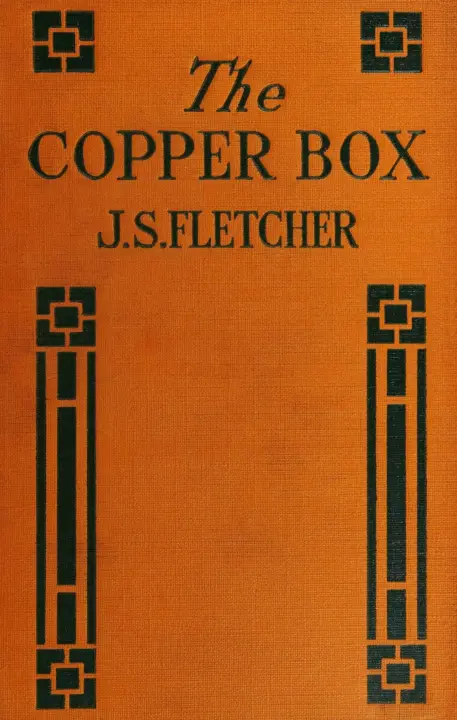
"The Copper Box" by J. S. Fletcher is a novel written in the early 20th century. The story is set in a wild Border country in northern England, and introduces the protagonist, Alvery Craye, who becomes entangled in a mysterious adventure after getting lost in a snowstorm and seeking refuge in an unusual old house called Kelpieshaw. There, he meets the enchanting Madrasia Durham and her guardian, Mr. Parslewe, but soon finds himself caught up in a web of intrigue surrounding a peculiar copper box that holds more significance than it appears. The opening of the book sets the stage for a classic mystery. Alvery Craye embarks on a challenging trek through harsh weather conditions, ultimately leading him to the doors of Kelpieshaw, an ancient and peculiar dwelling. There, he encounters a stern housekeeper and a radiant young woman, Madrasia, who invites him to stay. As Alvery warms up in the cozy parlour, he learns about the curious dynamics between the characters—particularly the eccentric guardian and the mysterious box, which seems to draw attention from various visitors, including the ominous Mr. Pawley and a figure he later discovers to be Sir Charles Sperrigoe. The narrative captures the tension and foreboding surrounding the box, promising readers an engaging journey into a world of secrets and suspense.
Introduction adapted from the source catalogue; source summaries may be automatically generated.
Free to read · English · 36,883 words · No account needed
MAKE TIME FOR A GOOD BOOK
On by default. Untick to stop anonymous reading totals. Each page counts after 10 seconds in view. How this works.
Anonymous counting is on unless you have switched it off.
Anyway, we remained in that express until, after we had had lunch, it ran into Peterborough. There Parslewe, without notice, bundled us out. He treated us to one of his sardonic grins when he had shepherded us on to the platform.
“This is where we begin to travel,” he remarked, drily. “That was a preliminary--no bother about that--all straight running. But now----”
He broke off abruptly, and left us; presently we saw him in close conversation with an official. Madrasia turned to me.
“Of course, you haven’t the least idea where we’re going,” she
suggested.
“If you mean, do I know exactly and precisely, no!” I answered. “If you mean, do I know to within fifty or a hundred miles, yes!”
“Well?” she demanded.
“I think we’re going into one of the Midland counties,” I said, resignedly. “There are several of them. I remember sufficient geography to repeat their names if you want to hear them.”
“I don’t!” she answered. “But I wish we were there, wherever it is. Where are we now? I mean, in relation to where we’re going?”
“A long way off,” I replied, consolingly. “That’s what he means when he says we’re about to travel. The fact is, we’ve so far been on a straight line; now, I suppose, we’ve got to cut across country. We’re in the east, and we’ve got to go west.”
There was a clock over our heads, and Madrasia looked at it. We were half-way through the afternoon.
“I suppose we shall land somewhere about midnight,” she said. “But it’s just what I expected.”
She was wrong. We travelled a long way, to be sure, after leaving Peterborough, and I knew, by passing such places as Rugby and Warwick, that we were making into the heart of mid-England. But at eight o’clock, and at a small station, Parslewe had us out of our carriage and into a cab; within a few minutes we were in the quaint old streets of what looked like a mediæval town. And even then we did not know its name; all we knew was that he had ordered our driver to carry us to the Crown. Presently we were there, and saw an old-world hostelry, out of which came a very modern hall-porter, who, at sight of Parslewe, smiled widely and touched his forehead.
“Glad to see you again, sir!” said this functionary. “Rooms, sir?”
Parslewe looked at the man with a quizzical, inquiring glance.
“So you remember me, do you?” he asked. “Eh?”
“Never forget a face, sir,” replied the hall-porter. “This way, sir!”
Your reading position is saved on this browser. Take it to another device with a library code. Reading pages adapt to text, rather than matching a printed edition.
J. S. (Joseph Smith) Fletcher
J. S. (Joseph Smith) Fletcher
J. S. (Joseph Smith) Fletcher
J. S. (Joseph Smith) Fletcher
BEHIND THE BOOK
This eBook is for the use of anyone anywhere in the United States and most other parts of the world at no cost and with almost no restrictions whatsoever. You may copy it, give it away or re-use it under the terms of the Project Gutenberg License included with this eBook or online at www.gutenberg.org. If you are not located in the United States, you will have to check the laws of the country where you are located before using this eBook. Read the source licence.
The original source file, including credits and licence, is retained by this library. Request an original-format copy at no charge. Please include the book title and Project Gutenberg identifier #73344.
KEEP YOUR CURIOSITY GOING
Coulson Kernahan

Maurice Baring
Frances Wright
Cécile Tormay

Frederic Jesup Stimson

W. H. P. (William Henry Pope) Jarvis