THE CLASSIC COLLECTION✦The wolves and the lambCLASSIC FREE BOOKS
The wolves and the lamb
J. S. (Joseph Smith) Fletcher
THE CLASSIC COLLECTION · 1923
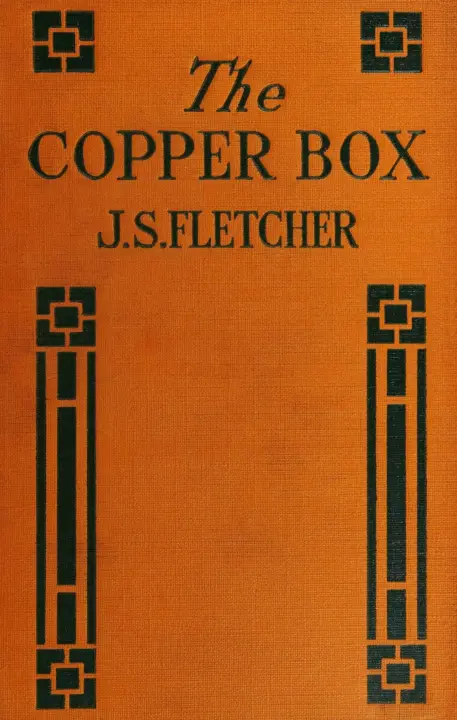
"The Copper Box" by J. S. Fletcher is a novel written in the early 20th century. The story is set in a wild Border country in northern England, and introduces the protagonist, Alvery Craye, who becomes entangled in a mysterious adventure after getting lost in a snowstorm and seeking refuge in an unusual old house called Kelpieshaw. There, he meets the enchanting Madrasia Durham and her guardian, Mr. Parslewe, but soon finds himself caught up in a web of intrigue surrounding a peculiar copper box that holds more significance than it appears. The opening of the book sets the stage for a classic mystery. Alvery Craye embarks on a challenging trek through harsh weather conditions, ultimately leading him to the doors of Kelpieshaw, an ancient and peculiar dwelling. There, he encounters a stern housekeeper and a radiant young woman, Madrasia, who invites him to stay. As Alvery warms up in the cozy parlour, he learns about the curious dynamics between the characters—particularly the eccentric guardian and the mysterious box, which seems to draw attention from various visitors, including the ominous Mr. Pawley and a figure he later discovers to be Sir Charles Sperrigoe. The narrative captures the tension and foreboding surrounding the box, promising readers an engaging journey into a world of secrets and suspense.
Introduction adapted from the source catalogue; source summaries may be automatically generated.
Free to read · English · 36,883 words · No account needed
MAKE TIME FOR A GOOD BOOK
On by default. Untick to stop anonymous reading totals. Each page counts after 10 seconds in view. How this works.
Anonymous counting is on unless you have switched it off.
Mr. Pawley, who looked very comfortable in an easy chair, with a glass of whisky and soda conveniently at hand, smiled upon us as if we were old acquaintances. He was clearly one of those gentlemen who speedily make themselves at home anywhere, and, as it presently appeared, are by no means backward in the art of finding things out. Indeed, he at once began to put leading questions.
“Your daughter, I presume, sir?” he suggested, with a glance at
Madrasia.
“Not a bit of it!” answered Parslewe, in his most off-hand manner. “My
ward.”
“Dear me, sir! now I could have thought that I saw a distinct family resemblance,” said Mr. Pawley. “This young gentleman, perhaps----”
“Visitor of mine,” replied Parslewe. “Mr. Craye--a well-known artist.”
“Pleased to meet you, sir,” murmured Mr. Pawley. “I observed that you were doing something in your line when I saw you and Miss--I didn’t catch the young lady’s name, I think--Miss----?”
“Durham!” said Parslewe. “Durham!”
“Just so, sir--Miss Durham. Ah!--and a very pleasant country this is, Mr. Craye, for your form of art--and very delightful quarters, I’m sure,” added Mr. Pawley, with a bow towards our host. “And you were saying, Mr. Parslewe----?”
Madrasia, with an odd glance at me, went out of the room, and Parslewe, who, I thought, already looked bored to death by his visitor, turned to him.
“I was saying that if you’re really interested in that sort of thing--barrows and stone circles and so on, I’m scarcely the man to come to,” he said. “My tastes lie more chiefly in books. If you’re going to stay in the district a while, I can give you a list of titles of books--local and otherwise--that you can read up. I think you’d find all of them in the various libraries at Newcastle.”
“That’s very kind of you, Mr. Parslewe, I’m sure,” replied Mr. Pawley. “I should value that, sir.”
Parslewe rose from his chair and left the room. I heard him climb the stair to his library on the next floor of the tower. Mr. Pawley looked at me. It was a peculiarly scrutinising, appraising glance--it gave me an idea that the man was wondering how much he could get out of me in the way of information.
“A very clever and learned gentleman, Mr. Parslewe,” he observed.
“Uncommon!”
“I agree!” said I.
“Makes a man like me--just beginning to take an interest in these things, do you see--feel that he knows--ah, nothing!” he said.
“I quite understand you,” I assented.
Your reading position is saved on this browser. Take it to another device with a library code. Reading pages adapt to text, rather than matching a printed edition.
J. S. (Joseph Smith) Fletcher
J. S. (Joseph Smith) Fletcher
J. S. (Joseph Smith) Fletcher
J. S. (Joseph Smith) Fletcher
BEHIND THE BOOK
This eBook is for the use of anyone anywhere in the United States and most other parts of the world at no cost and with almost no restrictions whatsoever. You may copy it, give it away or re-use it under the terms of the Project Gutenberg License included with this eBook or online at www.gutenberg.org. If you are not located in the United States, you will have to check the laws of the country where you are located before using this eBook. Read the source licence.
The original source file, including credits and licence, is retained by this library. Request an original-format copy at no charge. Please include the book title and Project Gutenberg identifier #73344.
KEEP YOUR CURIOSITY GOING
Coulson Kernahan

Maurice Baring
Frances Wright
Cécile Tormay

Frederic Jesup Stimson

W. H. P. (William Henry Pope) Jarvis