THE CLASSIC COLLECTION✦The wolves and the lambCLASSIC FREE BOOKS
The wolves and the lamb
J. S. (Joseph Smith) Fletcher
THE CLASSIC COLLECTION · 1923
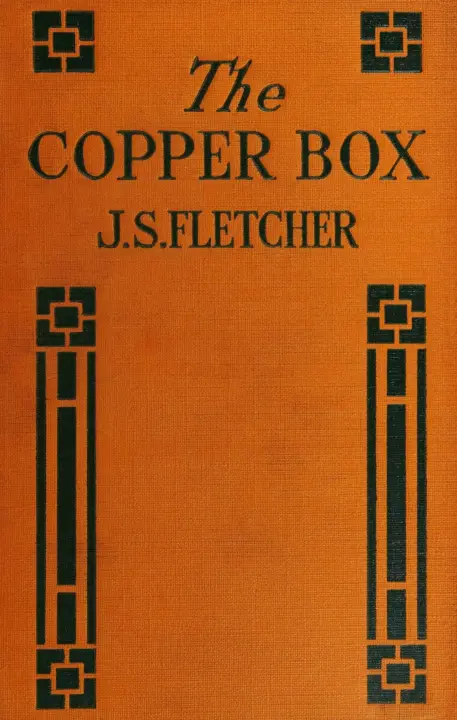
"The Copper Box" by J. S. Fletcher is a novel written in the early 20th century. The story is set in a wild Border country in northern England, and introduces the protagonist, Alvery Craye, who becomes entangled in a mysterious adventure after getting lost in a snowstorm and seeking refuge in an unusual old house called Kelpieshaw. There, he meets the enchanting Madrasia Durham and her guardian, Mr. Parslewe, but soon finds himself caught up in a web of intrigue surrounding a peculiar copper box that holds more significance than it appears. The opening of the book sets the stage for a classic mystery. Alvery Craye embarks on a challenging trek through harsh weather conditions, ultimately leading him to the doors of Kelpieshaw, an ancient and peculiar dwelling. There, he encounters a stern housekeeper and a radiant young woman, Madrasia, who invites him to stay. As Alvery warms up in the cozy parlour, he learns about the curious dynamics between the characters—particularly the eccentric guardian and the mysterious box, which seems to draw attention from various visitors, including the ominous Mr. Pawley and a figure he later discovers to be Sir Charles Sperrigoe. The narrative captures the tension and foreboding surrounding the box, promising readers an engaging journey into a world of secrets and suspense.
Introduction adapted from the source catalogue; source summaries may be automatically generated.
Free to read · English · 36,883 words · No account needed
MAKE TIME FOR A GOOD BOOK
On by default. Untick to stop anonymous reading totals. Each page counts after 10 seconds in view. How this works.
Anonymous counting is on unless you have switched it off.
We followed Parslewe’s messenger across the platform to the hotel in a state of mute obedience, being, as Madrasia remarked afterwards, resigned by that time to anything that Parslewe did or commanded. But I think hunger had something to do with our meekness; we had breakfasted early, and had had nothing since, and as far as I was concerned the thought of this hotel and its excellent fare--already known to me--was by no means unwelcome. I turned instinctively towards the coffee-room as we entered, already anticipating its pleasures more than my meeting with Parslewe. But our guide steered us away from it; he took us upstairs, along corridors, down passages, finally opened a door. And there was a private sitting-room, and a table laid for lunch, and on the hearth, warming his coat-tails at a blazing fire, his saturnine countenance wearing a more cynical grin than ever, Parslewe.
He greeted us as coolly and unconcernedly as if we were in his own parlour at Kelpieshaw and had just come down to breakfast; indeed, he scarcely did more than give us a careless good morning, his chief concern just then seemed to be to catch the porter’s attention before he closed the door on us.
“Hi, you!” he called. “Just tell that waiter to bring up lunch, will you?--there’s a good fellow! Well,” he went on, regarding us speculatively as the man went off. “I suppose you’re hungry, eh?”
“Very!” said I.
“Famishing!” declared Madrasia.
He inspected her critically, rubbed his chin, and pointed to a side
table.
“Take your things off and throw ’em on there, my dear,” he said. “You can take ’em to your own room afterwards.”
Madrasia, in the act of divesting herself, turned on him.
“Room?” she exclaimed.
“Number 186, yours,” he answered, calmly. “Yours, Craye, is 95--next mine. Don’t forget the numbers--however, if you do, they’ll tell you at the office. They’re booked in your respective names.”
“Do you mean that we’ve got to stay the night here?” demanded Madrasia.
“Precisely,” replied Parslewe, in his most laconic manner. “Two, maybe.”
“I haven’t come prepared to stay any nights,” said Madrasia. “I haven’t brought even a toothbrush!”
“Buy one!” he retorted. “Excellent shops in the place, my dear.”
Madrasia stared at him harder than ever.
“You’re developing a very extraordinary habit of ordering people about, Jimmie!” she exclaimed at last. “Why all this insistence?”
“Needs must where the devil drives!” he answered with a cynical laugh.
“Are you the devil?” she asked.
Your reading position is saved on this browser. Take it to another device with a library code. Reading pages adapt to text, rather than matching a printed edition.
J. S. (Joseph Smith) Fletcher
J. S. (Joseph Smith) Fletcher
J. S. (Joseph Smith) Fletcher
J. S. (Joseph Smith) Fletcher
BEHIND THE BOOK
This eBook is for the use of anyone anywhere in the United States and most other parts of the world at no cost and with almost no restrictions whatsoever. You may copy it, give it away or re-use it under the terms of the Project Gutenberg License included with this eBook or online at www.gutenberg.org. If you are not located in the United States, you will have to check the laws of the country where you are located before using this eBook. Read the source licence.
The original source file, including credits and licence, is retained by this library. Request an original-format copy at no charge. Please include the book title and Project Gutenberg identifier #73344.
KEEP YOUR CURIOSITY GOING
Coulson Kernahan

Maurice Baring
Frances Wright
Cécile Tormay

Frederic Jesup Stimson

W. H. P. (William Henry Pope) Jarvis