THE CLASSIC COLLECTION✦The wolves and the lambCLASSIC FREE BOOKS
The wolves and the lamb
J. S. (Joseph Smith) Fletcher
THE CLASSIC COLLECTION · 1923
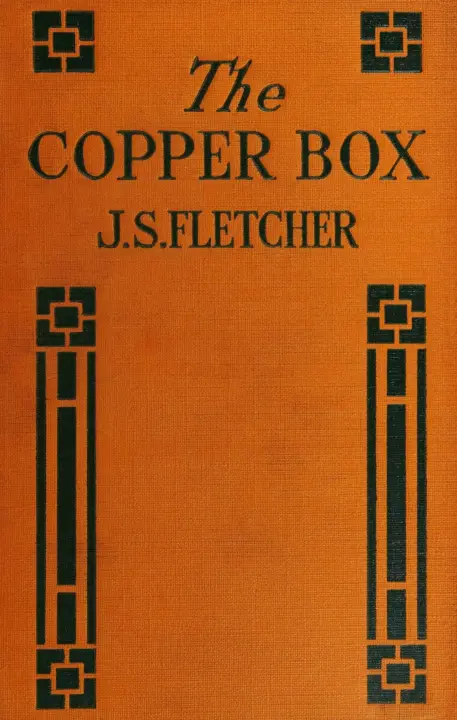
"The Copper Box" by J. S. Fletcher is a novel written in the early 20th century. The story is set in a wild Border country in northern England, and introduces the protagonist, Alvery Craye, who becomes entangled in a mysterious adventure after getting lost in a snowstorm and seeking refuge in an unusual old house called Kelpieshaw. There, he meets the enchanting Madrasia Durham and her guardian, Mr. Parslewe, but soon finds himself caught up in a web of intrigue surrounding a peculiar copper box that holds more significance than it appears. The opening of the book sets the stage for a classic mystery. Alvery Craye embarks on a challenging trek through harsh weather conditions, ultimately leading him to the doors of Kelpieshaw, an ancient and peculiar dwelling. There, he encounters a stern housekeeper and a radiant young woman, Madrasia, who invites him to stay. As Alvery warms up in the cozy parlour, he learns about the curious dynamics between the characters—particularly the eccentric guardian and the mysterious box, which seems to draw attention from various visitors, including the ominous Mr. Pawley and a figure he later discovers to be Sir Charles Sperrigoe. The narrative captures the tension and foreboding surrounding the box, promising readers an engaging journey into a world of secrets and suspense.
Introduction adapted from the source catalogue; source summaries may be automatically generated.
Free to read · English · 36,883 words · No account needed
MAKE TIME FOR A GOOD BOOK
On by default. Untick to stop anonymous reading totals. Each page counts after 10 seconds in view. How this works.
Anonymous counting is on unless you have switched it off.
“And I suppose you couldn’t,” she retorted imperatively. “As for Mr. Parslewe, he’ll be delighted to see you. If you can talk to him about anything old--old books, or pictures, old pots, pans, and plates, he’ll be more than delighted.”
I glanced round the room. It was one of those rooms which are difficult to light--there were dark and shadowy places and recesses. But I could see cabinets and presses, shelves and cases, evidently full of the sort of things of which Miss Durham had just spoken; there was also, on my left hand, a massive sideboard, covered with what looked to me like old silver.
“Is Mr. Parslewe a collector, then?” I asked. “Or is he an antiquary?”
“A bit of both, I think,” she answered, as she handed me a tea-cup. “Anyway, he’s always bringing home some curiosity or other that he’s picked up. And he spends most of his time reading his old books--there’s a room higher in the tower full of books--big things that one can scarcely lift.”
“And how do you spend your time?” I inquired. “Not that way?”
She shook her head, laughing.
“That way?” she said. “No!--not yet, anyway; I’ll leave that sort of thing till I’m old and frumpy. No, I spend my time out of doors mostly. A bit of fishing, a bit of running after the beagles, and a good bit of shooting. We have the shooting round about; it’s rough shooting, but good.”
“You’re a regular Diana,” I remarked. “And Mr. Parslewe, does he go in
for sport?”
“Not much,” she replied. “Sometimes he goes fishing, and now and then he’ll carry a gun. But he usually becomes meditative over a stream, and is generally looking somewhere else if anything gets up in front of his gun, so his performances don’t amount to much.” She laughed again, and then looked half-archly, half-inquisitively at me.
“I’m wondering what you do with yourself,” she said.
“I? Oh! I paint a bit,” I answered.
“So, sometimes, does my guardian,” she remarked. “He calls it daubing, but they aren’t bad. There are two of his works of art on that panel.”
She pointed to two small water-colour sketches which, framed in gilt, hung in a recess near the hearth. I rose and looked at them. One was of the house, the other a view of the Cheviot. There was some feeling of performance in both.
“What do you think of them?” she asked. “Perhaps you’re a swell hand at that sort of thing?”
Your reading position is saved on this browser. Take it to another device with a library code. Reading pages adapt to text, rather than matching a printed edition.
J. S. (Joseph Smith) Fletcher
J. S. (Joseph Smith) Fletcher
J. S. (Joseph Smith) Fletcher
J. S. (Joseph Smith) Fletcher
BEHIND THE BOOK
This eBook is for the use of anyone anywhere in the United States and most other parts of the world at no cost and with almost no restrictions whatsoever. You may copy it, give it away or re-use it under the terms of the Project Gutenberg License included with this eBook or online at www.gutenberg.org. If you are not located in the United States, you will have to check the laws of the country where you are located before using this eBook. Read the source licence.
The original source file, including credits and licence, is retained by this library. Request an original-format copy at no charge. Please include the book title and Project Gutenberg identifier #73344.
KEEP YOUR CURIOSITY GOING
Coulson Kernahan

Maurice Baring
Frances Wright
Cécile Tormay

Frederic Jesup Stimson

W. H. P. (William Henry Pope) Jarvis