THE CLASSIC COLLECTION✦The wolves and the lambCLASSIC FREE BOOKS
The wolves and the lamb
J. S. (Joseph Smith) Fletcher
THE CLASSIC COLLECTION · 1923
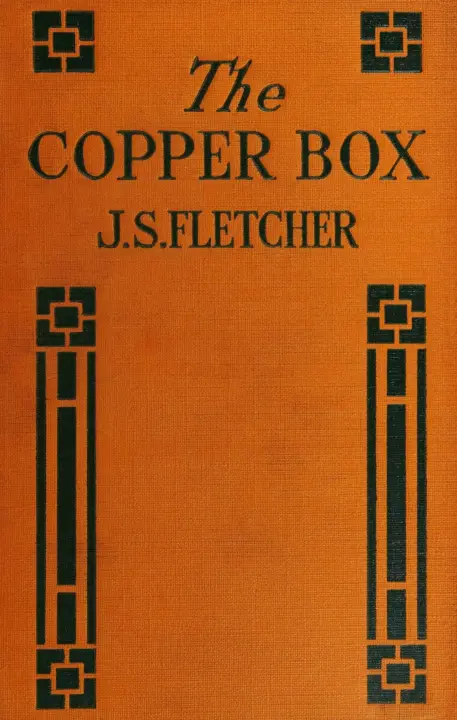
"The Copper Box" by J. S. Fletcher is a novel written in the early 20th century. The story is set in a wild Border country in northern England, and introduces the protagonist, Alvery Craye, who becomes entangled in a mysterious adventure after getting lost in a snowstorm and seeking refuge in an unusual old house called Kelpieshaw. There, he meets the enchanting Madrasia Durham and her guardian, Mr. Parslewe, but soon finds himself caught up in a web of intrigue surrounding a peculiar copper box that holds more significance than it appears. The opening of the book sets the stage for a classic mystery. Alvery Craye embarks on a challenging trek through harsh weather conditions, ultimately leading him to the doors of Kelpieshaw, an ancient and peculiar dwelling. There, he encounters a stern housekeeper and a radiant young woman, Madrasia, who invites him to stay. As Alvery warms up in the cozy parlour, he learns about the curious dynamics between the characters—particularly the eccentric guardian and the mysterious box, which seems to draw attention from various visitors, including the ominous Mr. Pawley and a figure he later discovers to be Sir Charles Sperrigoe. The narrative captures the tension and foreboding surrounding the box, promising readers an engaging journey into a world of secrets and suspense.
Introduction adapted from the source catalogue; source summaries may be automatically generated.
Free to read · English · 36,883 words · No account needed
MAKE TIME FOR A GOOD BOOK
On by default. Untick to stop anonymous reading totals. Each page counts after 10 seconds in view. How this works.
Anonymous counting is on unless you have switched it off.
Sir Charles looked at me. I was purposely keeping myself in the shadowy part of the old room; it was darkish there, and I saw that he did not recognise me, though he had certainly set eyes on me at Newcastle and at Wooler.
“This young gentleman,” he suggested. “Mr. Parslewe’s son, perhaps?”
“No!” said Madrasia. “A visitor.”
Sir Charles looked sorry and discomfited. He fidgeted a little,
nervously.
“Will you sit down, Sir Charles?” asked Madrasia.
He sat down. He took a chair between the centre table and the sideboard. He looked at Madrasia with interest--and, I thought, with decided admiration.
“Thank you!” he said. “I--ah, deeply regret Mr. Parslewe’s absence. I have heard of Mr. Parslewe--as a distinguished antiquary.”
“Oh!” said Madrasia. “Distinguished?”
“Distinguished!” cooed Sir Charles. “Distinguished!”
“Odd!” remarked Madrasia. “I thought he was only a dabbler. That’s what he considers himself to be, I’m sure.”
Sir Charles waved a fat, white hand.
“Prophets, my dear young lady, are said to have no honour in their own country,” he observed with a knowing smile. “And your truly learned man usually considers himself to be a novice. What says one of my favourite poets?
“‘Knowledge is proud that he has learned so much; Wisdom is humble that he knows no more.’
--Just so--precisely!”
“You are fond of poetry, Sir Charles?” suggested Madrasia.
“Eminently so! And of antiquities,” assented our caller. “And being in the neighbourhood, and hearing of Mr. Parslewe, I did myself the honour of waiting upon him in the hope of being able to pay him my respects, and to----”
“Just so!” broke in Madrasia. “So very kind of you! I don’t think we were quite aware that my guardian’s fame as an antiquary had spread, but he appears to be getting celebrated. You are the second person who has called to see him, on the same errand, within the last few days. The other,” she continued, “was a gentleman named--er--Pawley. Mr. Pawley.”
“Ah!” said Sir Charles. “Indeed!--I am not acquainted with many antiquaries; I am something of a recluse. And, perhaps, Mr.--ah--Crawley--oh, Pawley?--was fortunate enough to find Mr. Parslewe at home and to enjoy the benefit--just so, just so! And I--am unfortunate.”
“Mr. Parslewe went away this morning,” remarked Madrasia, in matter-of-fact tones. “He may return to-morrow; he mayn’t. He mayn’t return for a week; he may. He’s uncertain. But I’ll certainly tell him you’ve called, Sir Charles.”
“Thank you, thank you!” said Sir Charles. “Much regret--and I don’t know how long I shall remain in these parts. Delightful, romantic situation--most romantic! You have been here long?”
Your reading position is saved on this browser. Take it to another device with a library code. Reading pages adapt to text, rather than matching a printed edition.
J. S. (Joseph Smith) Fletcher
J. S. (Joseph Smith) Fletcher
J. S. (Joseph Smith) Fletcher
J. S. (Joseph Smith) Fletcher
BEHIND THE BOOK
This eBook is for the use of anyone anywhere in the United States and most other parts of the world at no cost and with almost no restrictions whatsoever. You may copy it, give it away or re-use it under the terms of the Project Gutenberg License included with this eBook or online at www.gutenberg.org. If you are not located in the United States, you will have to check the laws of the country where you are located before using this eBook. Read the source licence.
The original source file, including credits and licence, is retained by this library. Request an original-format copy at no charge. Please include the book title and Project Gutenberg identifier #73344.
KEEP YOUR CURIOSITY GOING
Coulson Kernahan

Maurice Baring
Frances Wright
Cécile Tormay

Frederic Jesup Stimson

W. H. P. (William Henry Pope) Jarvis