
The Flight of Georgiana: A Story of Love and Peril in England in 1746
Robert Neilson Stephens
THE CLASSIC COLLECTION · 1898
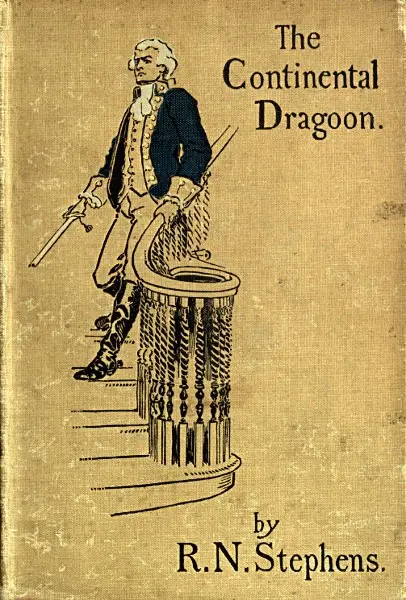
"The Continental Dragoon" by Robert Neilson Stephens is a historical novel written in the late 19th century. Set during the American Revolutionary War, specifically in the year 1778, the story revolves around Elizabeth Philipse, a young woman navigating the dangers of war as she embarks on a journey to the family manor house. Joined by Major John Colden and her young black servant Cuff, the characters must confront the perils that come with their quest for safety and familiarity in a war-torn landscape. The opening of the novel introduces the main characters as they travel northward along the Albany post-road in an autumn setting filled with tension and uncertainty. Elizabeth, defying her family's wishes, is determined to reach the manor, showcasing her strong will and independence. Major Colden, displaying a moody discontent, shadows her out of a mix of duty and affection, highlighting the dynamics of their relationship. As they ride, historical context is woven into the narrative, painting a vivid picture of the precarious situation in New York and the surrounding areas, where dangers from British forces and loyalist raiders loom. The initial chapter sets the stage for both the character-driven narrative and the broader themes of love, loyalty, and survival amidst the backdrop of an evolving nation.
Introduction adapted from the source catalogue; source summaries may be automatically generated.
Free to read · English · 65,127 words · No account needed
MAKE TIME FOR A GOOD BOOK
On by default. Untick to stop anonymous reading totals. Each page counts after 10 seconds in view. How this works.
Anonymous counting is on unless you have switched it off.
The silence of her entrance was from her having, a few minutes earlier, exchanged her riding-boots for satin slippers.
"I--I thank you for coming, madam," said Peyton, feeling the necessity of a prompt reply to her imperious look of inquiry, yet without a practicable idea in his head. "I had--that is--a request to make."
He was trembling violently, not from fear, but from that kind of agitation which often precedes the undertaking of a critical task, as when a suppliant awaits an important interview, or an actor assumes for the first time a new part.
"Mr. Valentine said a confession," said Elizabeth, holding him in a
coldly resentful gaze.
"Why, yes, a confession," said he, hopelessly.
"A plot to disclose," she added, with sharp impatience. "What is it?"
"You shall hear," he began, in gloomy desperation, without the faintest knowledge of how he should finish. "I--ah--it is this--" His wandering glance fell on the table and the writing materials she had left there. "I wish to write a letter--a last letter--to a friend." The vague general outline of a project arose in his mind.
Elizabeth was inclined to be as laconic as implacable. "Write it," said she. "There are pen and ink."
"But I can't write in this position," said Peyton, quickly, lest she might leave the room. "I fear I can't even hold a pen. Will you not write for me?"
"I? Secretary to a horse-thieving rebel!"
"It is a last request, madam. A last request is sacred,--even an
enemy's."
"I will send in some one to write for you." And she turned to go.
"But this letter will contain secrets."
"Secrets?" The very word is a charm to a woman. Elizabeth's curiosity was touched but slightly, yet sufficiently to stay her steps for the moment.
"Ay," said Peyton, lowering his tone and speaking quickly, "secrets not for every ear. Secrets of the heart, madam,--secrets so delicate that, to convey them truly, I need the aid of more than common tact and understanding."
He watched her eagerly, and tried to repress the signs of his
anxiety.
Elizabeth considered for a moment, then went to the table and sat down
by it.
"But," said she, regarding him with angry suspicion, "the confession,--the
plot?"
"Why, madam," said he, his heart hammering forcefully, "do you think I may communicate them to you directly? The letter shall relate them, too, and if the person who holds the pen for me pays heed to the letter's contents, is it my fault?"
"I understand," said the woman, entrapped, and she dipped the quill
into the ink.
Your reading position is saved on this browser. Take it to another device with a library code. Reading pages adapt to text, rather than matching a printed edition.
Robert Neilson Stephens
Robert Neilson Stephens
Robert Neilson Stephens
Robert Neilson Stephens
BEHIND THE BOOK
This eBook is for the use of anyone anywhere in the United States and most other parts of the world at no cost and with almost no restrictions whatsoever. You may copy it, give it away or re-use it under the terms of the Project Gutenberg License included with this eBook or online at www.gutenberg.org. If you are not located in the United States, you will have to check the laws of the country where you are located before using this eBook. Read the source licence.
The original source file, including credits and licence, is retained by this library. Request an original-format copy at no charge. Please include the book title and Project Gutenberg identifier #30589.
KEEP YOUR CURIOSITY GOING
Cécile Tormay

Moritz Busch
Coulson Kernahan
John L. Ransom

Maurice Baring
Frances Wright