The Flight of Georgiana: A Story of Love and Peril in England in 1746
Robert Neilson Stephens
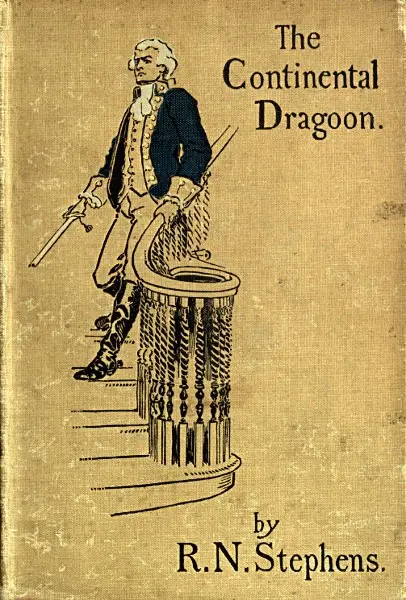
THE CLASSIC COLLECTION · 1898
"The Continental Dragoon" by Robert Neilson Stephens is a historical novel written in the late 19th century. Set during the American Revolutionary War, specifically in the year 1778, the story revolves around Elizabeth Philipse, a young woman navigating the dangers of war as she embarks on a journey to the family manor house. Joined by Major John Colden and her young black servant Cuff, the characters must confront the perils that come with their quest for safety and familiarity in a war-torn landscape. The opening of the novel introduces the main characters as they travel northward along the Albany post-road in an autumn setting filled with tension and uncertainty. Elizabeth, defying her family's wishes, is determined to reach the manor, showcasing her strong will and independence. Major Colden, displaying a moody discontent, shadows her out of a mix of duty and affection, highlighting the dynamics of their relationship. As they ride, historical context is woven into the narrative, painting a vivid picture of the precarious situation in New York and the surrounding areas, where dangers from British forces and loyalist raiders loom. The initial chapter sets the stage for both the character-driven narrative and the broader themes of love, loyalty, and survival amidst the backdrop of an evolving nation.
Introduction adapted from the source catalogue; source summaries may be automatically generated.
Free to read · English · 65,127 words · No account needed
MAKE TIME FOR A GOOD BOOK
On by default. Untick to stop anonymous reading totals. Each page counts after 10 seconds in view. How this works.
Anonymous counting is on unless you have switched it off.
"I dare say 'tis a wild, foolish, dangerous thing; but I do it, nevertheless! As for my reasons, they are the strongest. First, I wish to do it. Second, you've all opposed my doing it. So there's an end of the matter!"
It was, of course, a woman that spoke,--moreover, a young one.
And she added:
"Drat the wind! Can't we ride faster? 'Twill be dark before we reach the manor-house. Get along, Cato!"
She was one of three on horseback, who went northward on the Albany post-road late in the afternoon of a gray, chill, blowy day in November, in the war-scourged year 1778. Beside the girl rode a young gentleman, wrapped in a dark cloak. The third horse, which plodded a short distance in the rear, carried a small negro youth and two large portmanteaus. The three riders made a group that was, as far as could be seen from their view-point, alone on the highway.
There were reasons why such a group, on that road at that time, was an unusual sight,--reasons familiar to any one who is well informed in the history of the Revolution. Unfortunately, most good Americans are better acquainted with the French Revolution than with our own, know more about the state of affairs in Rome during the reign of Nero than about the condition of things in New York City during the British occupation, and compensate for their knowledge of Scotch-English border warfare in remote times by their ignorance of the border warfare that ravaged the vicinity of the island of Manhattan, for six years, little more than a century ago.
Our Revolutionary War had reached the respectable age of three and a half years. Lexington, Bunker Hill, Brooklyn, Harlem Heights, White Plains, Trenton, Princeton, the Brandywine, German-town, Bennington, Saratoga, and Monmouth--not to mention events in the South and in Canada and on the water--had taken their place in history. The army of the King of England had successively occupied Boston, New York, and Philadelphia; had been driven out of Boston by siege, and had left Philadelphia to return to the town more pivotal and nearer the sea,--New York. One British commander-in-chief had been recalled by the British ministry to explain why he had not crushed the rebellion, and one British major-general had surrendered an army, and was now back in England defending his course and pleading in Parliament the cause of the Americans, to whom he was still a prisoner on parole. Our Continental army--called Continental because, like the general Congress, it served the whole union of British-settled Colonies or States on this continent, and was thus distinguished from the militia, which served in each case its particular Colony or State only--had experienced both defeats and victories in encounters with the King's troops and his allies, German, Hessian, and American Tory. It had endured the winter at Valley Forge while the British had fed, drunk, gambled, danced, flirted, and wenched in Philadelphia. The French alliance had been sanctioned. Steuben, Lafayette, DeKalb, Pulaski, Kosciusko, Armand, and other Europeans, had taken service with us. One plot had been made in Congress and the army to supplant Washington in the chief command, and had failed. The treason of General Charles Lee had come to naught,--but was to wait for disclosure till many years after every person concerned should be graveyard dust. We had celebrated two anniversaries of the Fourth of July. The new free and independent States had organized local governments. The King's appointees still made a pretence of maintaining the royal provincial governments, but mostly abode under the protection of the King's troops in New York. There also many of those Americans in the North took refuge who distinctly professed loyalty to the King. New York was thus the chief lodging-place of all that embodied British sovereignty in America. Naturally the material tokens of British rule radiated from the town, covering all of the island of Manhattan, most of Long Island, and all of Staten Island, and retaining a clutch here and there on the mainland of New Jersey.
Your reading position is saved on this browser. Take it to another device with a library code. Reading pages adapt to text, rather than matching a printed edition.
Robert Neilson Stephens
Robert Neilson Stephens
Robert Neilson Stephens
Robert Neilson Stephens
BEHIND THE BOOK
This eBook is for the use of anyone anywhere in the United States and most other parts of the world at no cost and with almost no restrictions whatsoever. You may copy it, give it away or re-use it under the terms of the Project Gutenberg License included with this eBook or online at www.gutenberg.org. If you are not located in the United States, you will have to check the laws of the country where you are located before using this eBook. Read the source licence.
The original source file, including credits and licence, is retained by this library. Request an original-format copy at no charge. Please include the book title and Project Gutenberg identifier #30589.
KEEP YOUR CURIOSITY GOING
Cécile Tormay

Moritz Busch
Coulson Kernahan
John L. Ransom

Maurice Baring
Frances Wright