The Flight of Georgiana: A Story of Love and Peril in England in 1746
Robert Neilson Stephens
THE CLASSIC COLLECTION · 1898
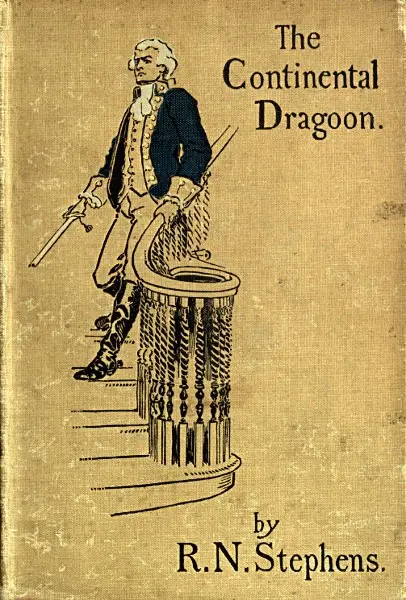
"The Continental Dragoon" by Robert Neilson Stephens is a historical novel written in the late 19th century. Set during the American Revolutionary War, specifically in the year 1778, the story revolves around Elizabeth Philipse, a young woman navigating the dangers of war as she embarks on a journey to the family manor house. Joined by Major John Colden and her young black servant Cuff, the characters must confront the perils that come with their quest for safety and familiarity in a war-torn landscape. The opening of the novel introduces the main characters as they travel northward along the Albany post-road in an autumn setting filled with tension and uncertainty. Elizabeth, defying her family's wishes, is determined to reach the manor, showcasing her strong will and independence. Major Colden, displaying a moody discontent, shadows her out of a mix of duty and affection, highlighting the dynamics of their relationship. As they ride, historical context is woven into the narrative, painting a vivid picture of the precarious situation in New York and the surrounding areas, where dangers from British forces and loyalist raiders loom. The initial chapter sets the stage for both the character-driven narrative and the broader themes of love, loyalty, and survival amidst the backdrop of an evolving nation.
Introduction adapted from the source catalogue; source summaries may be automatically generated.
Free to read · English · 65,127 words · No account needed
MAKE TIME FOR A GOOD BOOK
On by default. Untick to stop anonymous reading totals. Each page counts after 10 seconds in view. How this works.
Anonymous counting is on unless you have switched it off.
Elizabeth opened the door and looked out. Her aunt accompanied her. Old Valentine gazed with a sagely deploring expression at the torn-up bills on the floor. Colden stood where he had been, lest by some chance the enemy might return and discover his relief from straint.
"Oh," cried Elizabeth, at the door, as the light horsemen filed out the gate and up the branch road towards the highway, "to see the miserable rebel mounted on my Cato!"
"He looks well on him," said her aunt.
It was a brief flow of light from the fresh-risen moon, between wind-driven clouds, that enabled Miss Sally to make this observation.
"Looks well! The tatterdemalion!" And Elizabeth came from the door, as if loathing further sight of him.
But Miss Sally continued to look after the riders, as their dark forms were borne rapidly towards the post-road. "Nay, I think he is quite handsome."
"Pah! You think every man is handsome!" said the niece, curtly.
Miss Sally turned from the door, quite shocked.
"Why, Elizabeth, you know I'm the least susceptible of women!"
Old Mr. Valentine nodded sadly, as much as to say, "I know that, all
too well!"
As the racing clouds now rushed over the moon, and the horsemen's figures, having become more and more blurred, were lost in the blackness, Miss Sally closed and bolted the door. The horses were faintly heard coming to a halt, at about the junction of the branch road with the highway, then moving on again rapidly, not further towards the south, as might have been expected, but back northward, and finally towards the east. Meanwhile Elizabeth stood in the hall, her rage none the less that its object was no longer present to have it wreaked on him. Such hate, such passionate craving for revenge, had never theretofore been awakened in her. And when she realized the unlikelihood of any opportunity for satisfaction, she was exasperated to the limit of self-control.
"If you had only had some troops here!" she said to Colden.
"I know it! May the rascal perish for finding me at such a disadvantage! 'Twas my choice between denying my colors and becoming his prisoner."
This brought back to Elizabeth's mind the talk between Colden and Peyton, which her feelings had for the time driven from her thoughts. But now a natural curiosity asserted itself.
"So you knew the fellow before?"
"I met him in '75," said Colden, blurting awkwardly into the explanation that he knew had to be made, though little was his stomach for it. "He was passing through New York from Boston to his home in Virginia, after he had deserted from the King's army--"
Your reading position is saved on this browser. Take it to another device with a library code. Reading pages adapt to text, rather than matching a printed edition.
Robert Neilson Stephens
Robert Neilson Stephens
Robert Neilson Stephens
Robert Neilson Stephens
BEHIND THE BOOK
This eBook is for the use of anyone anywhere in the United States and most other parts of the world at no cost and with almost no restrictions whatsoever. You may copy it, give it away or re-use it under the terms of the Project Gutenberg License included with this eBook or online at www.gutenberg.org. If you are not located in the United States, you will have to check the laws of the country where you are located before using this eBook. Read the source licence.
The original source file, including credits and licence, is retained by this library. Request an original-format copy at no charge. Please include the book title and Project Gutenberg identifier #30589.
KEEP YOUR CURIOSITY GOING
Cécile Tormay

Moritz Busch
Coulson Kernahan
John L. Ransom

Maurice Baring
Frances Wright