
The Flight of Georgiana: A Story of Love and Peril in England in 1746
Robert Neilson Stephens
THE CLASSIC COLLECTION · 1898
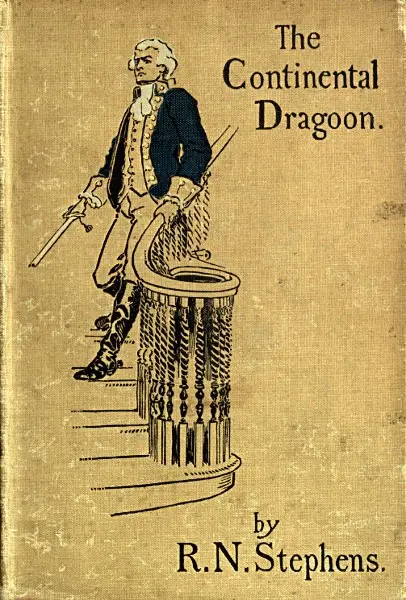
"The Continental Dragoon" by Robert Neilson Stephens is a historical novel written in the late 19th century. Set during the American Revolutionary War, specifically in the year 1778, the story revolves around Elizabeth Philipse, a young woman navigating the dangers of war as she embarks on a journey to the family manor house. Joined by Major John Colden and her young black servant Cuff, the characters must confront the perils that come with their quest for safety and familiarity in a war-torn landscape. The opening of the novel introduces the main characters as they travel northward along the Albany post-road in an autumn setting filled with tension and uncertainty. Elizabeth, defying her family's wishes, is determined to reach the manor, showcasing her strong will and independence. Major Colden, displaying a moody discontent, shadows her out of a mix of duty and affection, highlighting the dynamics of their relationship. As they ride, historical context is woven into the narrative, painting a vivid picture of the precarious situation in New York and the surrounding areas, where dangers from British forces and loyalist raiders loom. The initial chapter sets the stage for both the character-driven narrative and the broader themes of love, loyalty, and survival amidst the backdrop of an evolving nation.
Introduction adapted from the source catalogue; source summaries may be automatically generated.
Free to read · English · 65,127 words · No account needed
MAKE TIME FOR A GOOD BOOK
On by default. Untick to stop anonymous reading totals. Each page counts after 10 seconds in view. How this works.
Anonymous counting is on unless you have switched it off.
While she was looking at the book, Peyton took up the flowers. Elizabeth, as if thinking they were still where she had laid them, put out her hand to repossess them, keeping her eyes the while on the book. For a moment, her hand ranged the table in search, then she abandoned the attempt to regain them.
Peyton held them out to her.
"No, I thank you," she said, laying down the book, and went back to
the spinet.
"Ah, you give them to me!" cried Peyton, with sudden pleasure.
"Not at all! I merely do not wish to have them now."
"Oh," said he, thinking to make account by finding offence where none was really expressed, "has my touch contaminated them for you?"
"How can you talk so absurdly?" And she resumed her seat at the
spinet, and her playing.
Peyton stood holding the flowers, looking at her, and presently heaved a deep sigh. This not moving her, he suddenly had an access of pride, brought himself together, and saying, with quick resolution, "I bid you good-night and good-by, madam," went rapidly towards the door of the east hall. But his resolution weakened when his hand touched the knob, and, to make pretext for further sight of her, he turned and went to go out the other door.
Elizabeth had had a moment of alarm at his first sign of departure, but had not betrayed the feeling. Now when, from her seat at the spinet, she saw him actually crossing the threshold near her, she called out, gently, "A moment, captain."
The pleased look on his face, as he turned towards her inquiringly, betrayed his gratification at being called back.
"You are taking my flowers away," she said, in explanation.
He plainly showed his disappointment. "Your pardon. My thoughtlessness. But you said you didn't wish to keep them." He laid them on the spinet.
"I do not,--yet a woman must allow very few hands to carry off flowers
of her gathering."
She rose and took up the flowers and walked towards the fireplace.
"Then you at least take them back from my hands," said Peyton.
"Why, yes,--for this," and she tossed them into the fire.
He looked at them as they withered in the blaze, then said, "Have you any objection to my carrying away the ashes, Miss Philipse?"
She answered, considerately, "'Twill take you more time than you can
lose, to gather them up."
"Oh, I am in no haste."
"Oh, then, I ask your pardon. A moment since, you were about to go."
"But now I prefer to stay."
"Indeed? May I ask the reason--but no matter."
Your reading position is saved on this browser. Take it to another device with a library code. Reading pages adapt to text, rather than matching a printed edition.
Robert Neilson Stephens
Robert Neilson Stephens
Robert Neilson Stephens
Robert Neilson Stephens
BEHIND THE BOOK
This eBook is for the use of anyone anywhere in the United States and most other parts of the world at no cost and with almost no restrictions whatsoever. You may copy it, give it away or re-use it under the terms of the Project Gutenberg License included with this eBook or online at www.gutenberg.org. If you are not located in the United States, you will have to check the laws of the country where you are located before using this eBook. Read the source licence.
The original source file, including credits and licence, is retained by this library. Request an original-format copy at no charge. Please include the book title and Project Gutenberg identifier #30589.
KEEP YOUR CURIOSITY GOING
Cécile Tormay

Moritz Busch
Coulson Kernahan
John L. Ransom

Maurice Baring
Frances Wright