
A Son of Ishmael: A Novel
L. T. Meade
THE CLASSIC COLLECTION · 1891
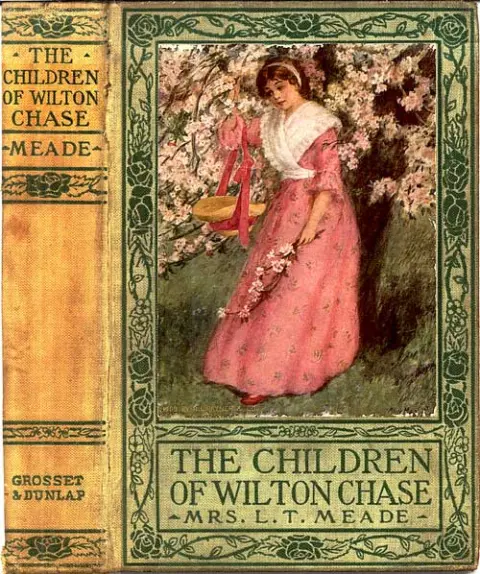
"The Children of Wilton Chase" by L. T. Meade is a novel written in the late 19th century. The story revolves around childhood and family dynamics set in the picturesque backdrop of Wilton Chase, where several children navigate their relationships and personal challenges. Key characters include the rebellious Ermengarde, her more thoughtful sister Marjorie, and the caring yet stern governess Miss Nelson, who grapples with her authority and attachments to the children. The opening of the narrative introduces us to Ermengarde's immediate defiance against the authority of Miss Nelson, illustrating her tumultuous feelings as she prepares to meet her brothers returning from school. Notably, Ermengarde is determined to assert her independence by disobeying the governess, while Marjorie exhibits a willingness to support her sister despite the consequences. The children of Wilton Chase are characterized by their lively interactions and conflicts, especially surrounding themes of obedience and rebellion, setting the tone for the unfolding drama and exploration of childhood ethics, loyalty, and personal growth. The beginning hints at deeper storylines involving friendship, disobedience, and the consequences of one's actions.
Introduction adapted from the source catalogue; source summaries may be automatically generated.
Free to read · English · 55,265 words · No account needed
MAKE TIME FOR A GOOD BOOK
On by default. Untick to stop anonymous reading totals. Each page counts after 10 seconds in view. How this works.
Anonymous counting is on unless you have switched it off.
"Oh, no, no; not that," said Ermengarde suddenly. "Not to-day, not the holiday! Let my punishment begin to-morrow, please, Miss Nelson. Do say yes, Miss Nelson. It would be terrible not to have the holiday with Basil, and for Basil to know the reason. Do yield on this point, please, Miss Nelson, please, please, and I'll try to be a better girl in future, I will truly."
"No, Ermengarde; the punishment, being merited and severe, must begin on the day you feel it most. I am sorry for you, but I cannot, I dare not yield. God help you, poor child, to a sorrow which leads to repentance."
The governess left the room, locking the door behind her.
Ermengarde stood quite still for a moment, as if she was stunned. Then she rushed to the door and tried to open it.
Miss Nelson went back to the schoolroom.
"You can have your holiday, children," she said. "Ermengarde cannot come, nor am I at liberty to explain her absence. No, Basil; you must not ask me. You must be happy without your sister to-day, and trust that what is right is being done for her. Now, about the picnic. Maggie, come here, my love. You shall take a message to cook."
"You'll come too, won't you, Miss Nelson?" asked Marjorie.
"I must, my dear. I could not allow wild young creatures like you to embark on such an expedition without me."
"And may all the babies come, Miss Nelson?"
"Yes, if nurse can accompany them."
"It seems a pity about poor Ermie."
"Do not speak of her, Marjorie. You must trust your governess to do
what is right."
Marjorie's round face looked full of concern. She had a way of putting her finger to her lip when she was harassed about anything. This trick gave her the appearance of a great overgrown baby.
"Go at once and see the cook, my dear," said the governess.
Marjorie turned and left the room. In the passage she met Basil.
"What is this about Ermie?" he said at once.
"I think I know," said Marjorie. "I think I can guess."
"You'll tell me, won't you, Maggie?"
"I don't think I can, Basil. Ermie is a little--little--headstrong, and Miss Nelson, sometimes Miss Nelson is severe to Ermie."
"I shan't like her if she is," said Basil. "I don't care a bit about the picnic without Ermengarde, and I do consider it provoking of Miss Nelson to keep Ermie at home on my very first holiday."
"Oh, but you know she must maintain discipline," said Marjorie, putting her finger to her lip again.
Basil burst out laughing.
Your reading position is saved on this browser. Take it to another device with a library code. Reading pages adapt to text, rather than matching a printed edition.
BEHIND THE BOOK
This eBook is for the use of anyone anywhere in the United States and most other parts of the world at no cost and with almost no restrictions whatsoever. You may copy it, give it away or re-use it under the terms of the Project Gutenberg License included with this eBook or online at www.gutenberg.org. If you are not located in the United States, you will have to check the laws of the country where you are located before using this eBook. Read the source licence.
The original source file, including credits and licence, is retained by this library. Request an original-format copy at no charge. Please include the book title and Project Gutenberg identifier #26409.
KEEP YOUR CURIOSITY GOING
Coulson Kernahan

Maurice Baring
Frances Wright
Cécile Tormay

Frederic Jesup Stimson

W. H. P. (William Henry Pope) Jarvis


