
A Son of Ishmael: A Novel
L. T. Meade
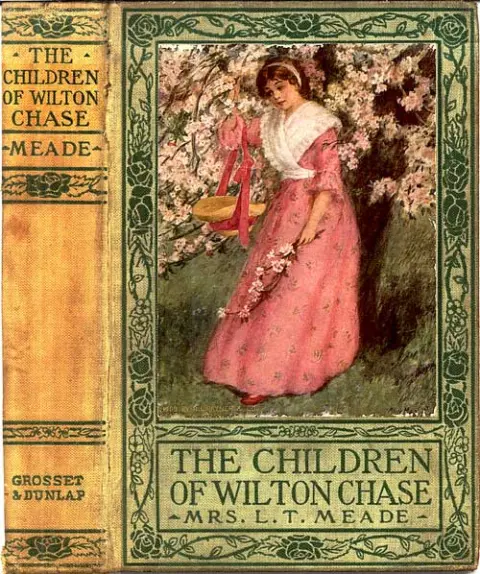
THE CLASSIC COLLECTION · 1891
"The Children of Wilton Chase" by L. T. Meade is a novel written in the late 19th century. The story revolves around childhood and family dynamics set in the picturesque backdrop of Wilton Chase, where several children navigate their relationships and personal challenges. Key characters include the rebellious Ermengarde, her more thoughtful sister Marjorie, and the caring yet stern governess Miss Nelson, who grapples with her authority and attachments to the children. The opening of the narrative introduces us to Ermengarde's immediate defiance against the authority of Miss Nelson, illustrating her tumultuous feelings as she prepares to meet her brothers returning from school. Notably, Ermengarde is determined to assert her independence by disobeying the governess, while Marjorie exhibits a willingness to support her sister despite the consequences. The children of Wilton Chase are characterized by their lively interactions and conflicts, especially surrounding themes of obedience and rebellion, setting the tone for the unfolding drama and exploration of childhood ethics, loyalty, and personal growth. The beginning hints at deeper storylines involving friendship, disobedience, and the consequences of one's actions.
Introduction adapted from the source catalogue; source summaries may be automatically generated.
Free to read · English · 55,265 words · No account needed
MAKE TIME FOR A GOOD BOOK
On by default. Untick to stop anonymous reading totals. Each page counts after 10 seconds in view. How this works.
Anonymous counting is on unless you have switched it off.
"Hullo, here's Marjorie!" exclaimed Eric. He vaulted out of the carriage, and flung his arms round Marjorie's little squat figure, lifting her off the ground, and squeezing her in an ecstasy of delight. "Here I am, Mag, and there are two pouters in a cage, and four new fantails--they're coming with the luggage--and I've got a lop-eared rabbit with black spots, and my ferrets--there are two of them in the carriage. Wait until you see Shark's teeth--I call him Shark, he's such a good 'un at biting. We'll have some fun these holidays; don't you make any mistake!"
"Yes, yes, of course we will! I'm delighted, Eric, delighted! Where are the ferrets? When can I see them? Oh, how are you, Basil? Have you on a tight boot to-day? Does your corn pinch you?"
"No, I've got over those small ailments," said Basil. "What a roundabout you are, Marjorie," he continued, pinching her cheek. "Now, what's the matter? You are quite frowning."
Marjorie's round good-humored freckled face wore an expression of
consternation.
"I made some slippers during the term for you," she said. "They're large, and I wadded them so that they are most comfortable. But--it isn't that--the slippers are in your room, I put them there--Ermie, won't you get out?"
"No," said Ermengarde. "I'm going to drive down to the house."
Marjorie frowned more than ever.
"They are all coming up from the shore; Miss Nelson, and all of them; and they'll see the horses and they'll run. Even Miss Nelson will run, she's so fond of Basil, and----"
Mr. Wilton, who still remained in the carriage by Ermengarde's side,
now interposed.
"We won't wait for the small fry," he said. "We'll drive on to the house at once. Oh, yes, Eric, you can go to meet the party from the shore of course, if you like, and Basil too."
"I'll stay with Ermie," said Basil.
He jumped into the carriage again, and they drove down the long
winding avenue to the house.
Great elm trees shaded the avenue, and Basil pushed back his cap and looked up into the green. He was a dark and handsome lad, and his expression was unusually thoughtful for his years.
"How grand those old trees are!" he said. "Whenever I think of home while I'm away, I remember the old elm trees in the avenue, and the rooks' nests--I remember, too----" Here he stopped suddenly, and a wave of red mantled his cheeks. Ermengarde's bright eyes were fixed on him; she guessed his thoughts. Basil had often walked under those elm trees with his mother.
Mr. Wilton had opened the Times, and was not attending to the
chatter of the young folk.
Your reading position is saved on this browser. Take it to another device with a library code. Reading pages adapt to text, rather than matching a printed edition.
BEHIND THE BOOK
This eBook is for the use of anyone anywhere in the United States and most other parts of the world at no cost and with almost no restrictions whatsoever. You may copy it, give it away or re-use it under the terms of the Project Gutenberg License included with this eBook or online at www.gutenberg.org. If you are not located in the United States, you will have to check the laws of the country where you are located before using this eBook. Read the source licence.
The original source file, including credits and licence, is retained by this library. Request an original-format copy at no charge. Please include the book title and Project Gutenberg identifier #26409.
KEEP YOUR CURIOSITY GOING
Coulson Kernahan

Maurice Baring
Frances Wright
Cécile Tormay

Frederic Jesup Stimson

W. H. P. (William Henry Pope) Jarvis


