
A Son of Ishmael: A Novel
L. T. Meade
THE CLASSIC COLLECTION · 1891
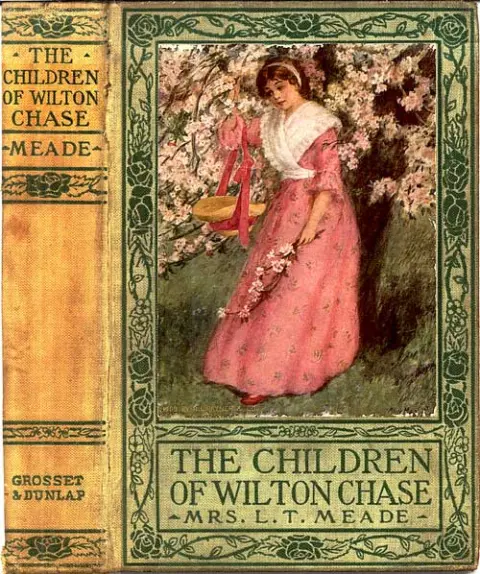
"The Children of Wilton Chase" by L. T. Meade is a novel written in the late 19th century. The story revolves around childhood and family dynamics set in the picturesque backdrop of Wilton Chase, where several children navigate their relationships and personal challenges. Key characters include the rebellious Ermengarde, her more thoughtful sister Marjorie, and the caring yet stern governess Miss Nelson, who grapples with her authority and attachments to the children. The opening of the narrative introduces us to Ermengarde's immediate defiance against the authority of Miss Nelson, illustrating her tumultuous feelings as she prepares to meet her brothers returning from school. Notably, Ermengarde is determined to assert her independence by disobeying the governess, while Marjorie exhibits a willingness to support her sister despite the consequences. The children of Wilton Chase are characterized by their lively interactions and conflicts, especially surrounding themes of obedience and rebellion, setting the tone for the unfolding drama and exploration of childhood ethics, loyalty, and personal growth. The beginning hints at deeper storylines involving friendship, disobedience, and the consequences of one's actions.
Introduction adapted from the source catalogue; source summaries may be automatically generated.
Free to read · English · 55,265 words · No account needed
MAKE TIME FOR A GOOD BOOK
On by default. Untick to stop anonymous reading totals. Each page counts after 10 seconds in view. How this works.
Anonymous counting is on unless you have switched it off.
"Shut the door," she said.
She sat down herself, and Ermengarde stood before her. Her face was
pale, her voice shook.
"Ermengarde, will you now repeat your imposition poem."
"Casabianca," said Ermengarde. She had felt a vague sense of uneasiness at Miss Nelson's manner. Now her brow cleared. She recited the whole poem with scarcely a mistake, and with some show of feeling.
"You have said it well," said the governess. "It relates the extraordinary exploit of a noble-hearted child. I grieve to say there are few such in the world. May I ask you when you learned this poem, Ermengarde?"
"Yesterday----" began Ermengarde.
"No, don't go on. I will save you, I must save you, poor child, from yourself. You would tell another lie. You would deceive again. Ermie, I have loved you. I--I--have suffered for you."
"I don't know what you mean," said Ermengarde, in a voice which shook with anger. "Am I to be--are dreadful things to be said of me? Why do you accuse me of telling lies? Why?"
"No more, my dear pupil. For, notwithstanding your refractory and rebellious state, you are still my dear pupil."
"You are not my dear teacher, there!"
"Hush, I cannot permit impertinence! Ermengarde, I did not look for open and direct disobedience from you. You are full of faults, but I did not think deceit was one of them. I have found out about your drive yesterday."
"Oh!" said Ermie. Her face grew very pale. "Did--did Marjorie tell
you? If I thought that----"
"No matter who told me. Don't blame your sister. She's worth twenty of you. Think of your own sin. Ermengarde, you have hurt me deeply."
"I don't care," said Ermengarde. "I said I'd go, and I went. I don't
care."
"Poor child! I can only be very sorry for you. I can only pray God to bring you to a different state of mind. You thought to hide your sin from me. God knew it all the time."
Ermengarde shuffled from one foot to another. There was not a trace of repentance about her face or manner.
"At one time I thought I must tell all to your father."
Ermengarde started at this.
"I resolved not to do so."
Her face grew relieved.
"But, Ermengarde," continued the governess, "it is my duty, my solemn duty, to punish you severely. The full extent of that punishment I have not yet determined on, but to-day you spend in this room, where your meals will be brought to you."
Your reading position is saved on this browser. Take it to another device with a library code. Reading pages adapt to text, rather than matching a printed edition.
BEHIND THE BOOK
This eBook is for the use of anyone anywhere in the United States and most other parts of the world at no cost and with almost no restrictions whatsoever. You may copy it, give it away or re-use it under the terms of the Project Gutenberg License included with this eBook or online at www.gutenberg.org. If you are not located in the United States, you will have to check the laws of the country where you are located before using this eBook. Read the source licence.
The original source file, including credits and licence, is retained by this library. Request an original-format copy at no charge. Please include the book title and Project Gutenberg identifier #26409.
KEEP YOUR CURIOSITY GOING
Coulson Kernahan

Maurice Baring
Frances Wright
Cécile Tormay

Frederic Jesup Stimson

W. H. P. (William Henry Pope) Jarvis


