
A Son of Ishmael: A Novel
L. T. Meade
THE CLASSIC COLLECTION · 1891
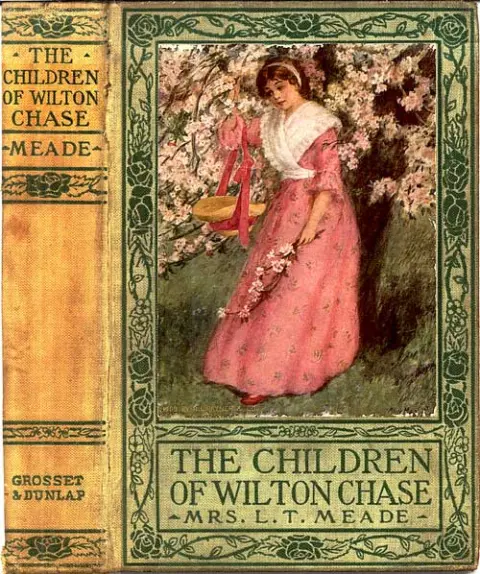
"The Children of Wilton Chase" by L. T. Meade is a novel written in the late 19th century. The story revolves around childhood and family dynamics set in the picturesque backdrop of Wilton Chase, where several children navigate their relationships and personal challenges. Key characters include the rebellious Ermengarde, her more thoughtful sister Marjorie, and the caring yet stern governess Miss Nelson, who grapples with her authority and attachments to the children. The opening of the narrative introduces us to Ermengarde's immediate defiance against the authority of Miss Nelson, illustrating her tumultuous feelings as she prepares to meet her brothers returning from school. Notably, Ermengarde is determined to assert her independence by disobeying the governess, while Marjorie exhibits a willingness to support her sister despite the consequences. The children of Wilton Chase are characterized by their lively interactions and conflicts, especially surrounding themes of obedience and rebellion, setting the tone for the unfolding drama and exploration of childhood ethics, loyalty, and personal growth. The beginning hints at deeper storylines involving friendship, disobedience, and the consequences of one's actions.
Introduction adapted from the source catalogue; source summaries may be automatically generated.
Free to read · English · 55,265 words · No account needed
MAKE TIME FOR A GOOD BOOK
On by default. Untick to stop anonymous reading totals. Each page counts after 10 seconds in view. How this works.
Anonymous counting is on unless you have switched it off.
She stole softly back to the house, and when Lilias found her lying on her bed, she certainly told no untruth when she said that her head ached, for both head and heart ached, and she hated herself for deceiving her sweet little friend.
The picnic people departed, quietness settled down over the house, and Ermie, who had cried with vexation at the thought of losing that delightful drive and day of pleasure, had dropped into a dull kind of dose, when a knock came to her room door, and Miss St. Leger entered.
"Now, little martyr," she said, in a cheerful voice, "jump up, make yourself smart, put on your best toggery, forget your headache, and come downstairs with me. We are going to have some fun on our own account, now, sweet."
"O Flora, what are you going to do?"
"First of all, we'll have some lunch, and afterward we'll stroll through some woods at the back of the house, and I'll tell you some of my adventures in London last season. Oh, my dear, I did have a time of it! Four entertainments often in one evening! That's what you'll be going through, Ermie, in a year or two."
"Is it?" said Ermengarde. Her eyes did not sparkle any more. Somehow Flora did not seem as fascinating to her as she had done an hour ago. Lilias's disappointed face would come back again and again to her memory. She rose, however, and under Flora's supervision put on the smartest of her morning frocks, and went downstairs to lunch.
When the meal had come to an end, and the servants had withdrawn, Ermie asked Flora another question.
"Are we only going to walk in the woods?" she said. "Is that all you asked me to stay at home for!"
"All, you silly puss? Well, no, it isn't quite all. We are going to have tea with some friends of mine. We are to meet them in the woods--very nice people--you'll be charmed with them. We're all going to have a gypsy tea together in the woods."
"But, Flora, I thought you hated picnics?"
"Oh, what a little innocent goose! I hate some kinds. Not the kind I'm going to take you to. Now run upstairs, and put on your hat. It is time for us to be strolling out."
"But, Flora----"
"No more of your 'buts'--go and get ready. Ah, my sweet child, frowns don't become that charming little face of yours. Now, off with you; put on your most becoming hat, and let us set forth."
Your reading position is saved on this browser. Take it to another device with a library code. Reading pages adapt to text, rather than matching a printed edition.
BEHIND THE BOOK
This eBook is for the use of anyone anywhere in the United States and most other parts of the world at no cost and with almost no restrictions whatsoever. You may copy it, give it away or re-use it under the terms of the Project Gutenberg License included with this eBook or online at www.gutenberg.org. If you are not located in the United States, you will have to check the laws of the country where you are located before using this eBook. Read the source licence.
The original source file, including credits and licence, is retained by this library. Request an original-format copy at no charge. Please include the book title and Project Gutenberg identifier #26409.
KEEP YOUR CURIOSITY GOING
Coulson Kernahan

Maurice Baring
Frances Wright
Cécile Tormay

Frederic Jesup Stimson

W. H. P. (William Henry Pope) Jarvis


