
A Son of Ishmael: A Novel
L. T. Meade
THE CLASSIC COLLECTION · 1891
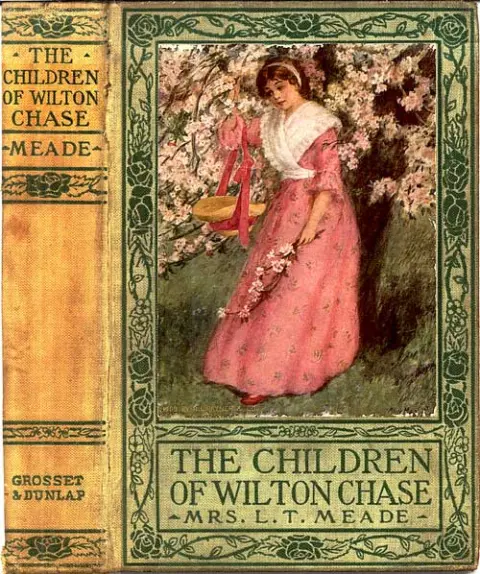
"The Children of Wilton Chase" by L. T. Meade is a novel written in the late 19th century. The story revolves around childhood and family dynamics set in the picturesque backdrop of Wilton Chase, where several children navigate their relationships and personal challenges. Key characters include the rebellious Ermengarde, her more thoughtful sister Marjorie, and the caring yet stern governess Miss Nelson, who grapples with her authority and attachments to the children. The opening of the narrative introduces us to Ermengarde's immediate defiance against the authority of Miss Nelson, illustrating her tumultuous feelings as she prepares to meet her brothers returning from school. Notably, Ermengarde is determined to assert her independence by disobeying the governess, while Marjorie exhibits a willingness to support her sister despite the consequences. The children of Wilton Chase are characterized by their lively interactions and conflicts, especially surrounding themes of obedience and rebellion, setting the tone for the unfolding drama and exploration of childhood ethics, loyalty, and personal growth. The beginning hints at deeper storylines involving friendship, disobedience, and the consequences of one's actions.
Introduction adapted from the source catalogue; source summaries may be automatically generated.
Free to read · English · 55,265 words · No account needed
MAKE TIME FOR A GOOD BOOK
On by default. Untick to stop anonymous reading totals. Each page counts after 10 seconds in view. How this works.
Anonymous counting is on unless you have switched it off.
"Well, do oblige me! Let us fly down this side-walk. There's a shrubbery at the farther end, where we shall be quite alone. Come, give me your hand."
Ermengarde could not resist. A moment later she and Flora were pacing up and down in the shrubbery.
"Ermengarde," said Miss St. Leger eagerly, "are you going to that stupid, stupid picnic to-day?"
"Why, of course," said Ermengarde, looking up in astonishment.
"You may call me Flora if you like, my dear love. What a sweet, pretty pet you are! Now that I look at you by daylight, I think it's a perfect sin that, with a face like yours, you should have to wear short frocks."
Ermie sighed. Miss St. Leger's tone was full of delicious sympathy, and when the next moment she slipped her arm round the little girl's waist, Ermie experienced quite a thrill of delight.
"I have fallen in love with you, that's a fact," said Miss St. Leger; "but now, about that picnic; you don't really want to go?"
"Oh, yes, Flora. Lilias is going to drive me in her pony-carriage."
"Lilias! Let her take a child like herself. You ought to be with the
grown-ups."
"Everyone treats me exactly as if I were a child," said Ermengarde. "I do think it's a great shame, for I don't feel in the least like one."
"Of course you don't, pet. Now listen to me. I'm not going to this
stupid, horrid picnic."
"Aren't you, Flora?"
"No, I'm going to stay at home, and I want you to stay with me. You won't be dull, I promise you."
"But what excuse can I give?"
"Oh, say you're tired, or have a headache, or something of that sort."
"But I'm not tired, and I haven't got a headache."
Flora pouted.
"After all, you are only a baby," she said. "I made a mistake; I
thought you were different."
Ermengarde colored all over her face.
"Do you really, really want me, Flora?" she asked timidly.
"Of course I do, sweet pet; now you will oblige me, won't you?"
"I'd certainly like to, Flora."
"That's a darling. Go back to the house, and lie down on your bed and, when Lilias calls you at the last moment, say you're tired, and you'd like to stay quiet. Of course you are tired, you know; you look it."
"I suppose I am a little bit," said Ermengarde. Her heart felt like lead. Her gayety had deserted her, but she was in the toils of a much older and cleverer girl than herself.
Your reading position is saved on this browser. Take it to another device with a library code. Reading pages adapt to text, rather than matching a printed edition.
BEHIND THE BOOK
This eBook is for the use of anyone anywhere in the United States and most other parts of the world at no cost and with almost no restrictions whatsoever. You may copy it, give it away or re-use it under the terms of the Project Gutenberg License included with this eBook or online at www.gutenberg.org. If you are not located in the United States, you will have to check the laws of the country where you are located before using this eBook. Read the source licence.
The original source file, including credits and licence, is retained by this library. Request an original-format copy at no charge. Please include the book title and Project Gutenberg identifier #26409.
KEEP YOUR CURIOSITY GOING
Coulson Kernahan

Maurice Baring
Frances Wright
Cécile Tormay

Frederic Jesup Stimson

W. H. P. (William Henry Pope) Jarvis


