
My study windows
James Russell Lowell
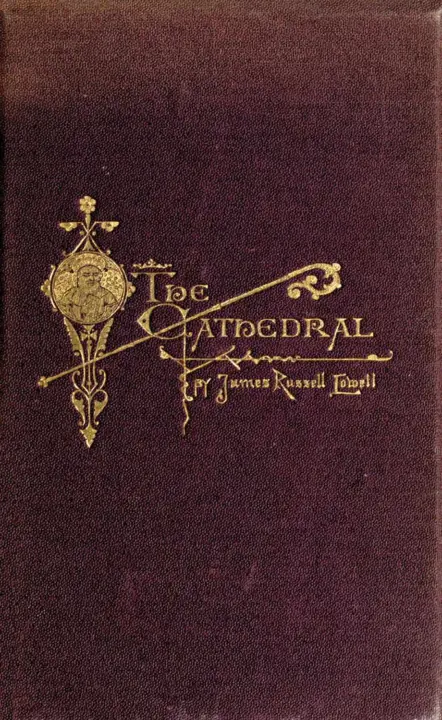
THE CLASSIC COLLECTION · 1870
"The Cathedral" by James Russell Lowell is a reflective poem written in the late 19th century. This work can be classified as a philosophical poem, exploring themes of memory, nature, and the relationship between faith and doubt. Through rich imagery and introspective narrative, it unfolds an examination of the human experience in the context of grand architectural structures, specifically cathedrals, symbolizing deeper spiritual and existential inquiries. In the poem, the speaker revisits his memories associated with cathedrals, inviting readers to reflect on moments of beauty and spiritual significance. He recounts his experiences and childhood reflections, mingling personal history with the awe inspired by monumental architecture. As he observes the cathedral's grandeur, he grapples with feelings of nostalgia, loss, and the tension between tradition and modernity. The poem reveals a deep yearning for the sacred amidst a rapidly changing world, culminating in an exploration of the nature of faith and the human spirit's search for meaning in a universe that often feels indifferent to individual existence. Ultimately, Lowell's work serves as a meditation on the interplay between the physical and the spiritual, celebrating the beauty of memory while acknowledging the complexities of contemporary belief.
Introduction adapted from the source catalogue; source summaries may be automatically generated.
Free to read · English · 6,113 words · No account needed
MAKE TIME FOR A GOOD BOOK
On by default. Untick to stop anonymous reading totals. Each page counts after 10 seconds in view. How this works.
Anonymous counting is on unless you have switched it off.
Where others worship I but look and long;
For, though not recreant to my fathers’ faith,
Its forms to me are weariness, and most
That drony vacuum of compulsory prayer,
Still pumping phrases for the Ineffable,
Though all the valves of memory gasp and wheeze.
Words that have drawn transcendent meanings up
From the best passion of all bygone time,
Steeped through with tears of triumph and remorse,
Sweet with all sainthood, cleansed in martyr-fires,
Can they, so consecrate and so inspired,
By repetition wane to vexing wind?
Alas! we cannot draw habitual breath
In the thin air of life’s supremer heights,
We cannot make each meal a sacrament,
Nor with our tailors be disbodied souls,--
We men, too conscious of earth’s comedy,
Who see two sides, with our posed selves debate,
And only for great stakes can be sublime!
Let us be thankful when, as I do here,
We can read Bethel on a pile of stones,
And, seeing where God has been, trust in Him.
Brave Peter Fischer there in Nuremberg,
Moulding Saint Sebald’s miracles in bronze,
Put saint and stander-by in that quaint garb
Familiar to him in his daily walk,
Not doubting God could grant a miracle
Then and in Nuremberg, if so He would;
But never artist for three hundred years
Hath dared the contradiction ludicrous
Of supernatural in modern clothes.
Perhaps the deeper faith that is to come
Will see God rather in the strenuous doubt,
Than in the creed held as an infant’s hand
Holds purposeless whatso is placed therein.
Say it is drift, not progress, none the less,
With the old sextant of the fathers’ creed,
We shape our courses by new-risen stars,
And, still lip-loyal to what once was truth,
Smuggle new meanings under ancient names,
Unconscious perverts of the Jesuit, Time.
Change is the mask that all Continuance wears
To keep us youngsters harmlessly amused;
Meanwhile some ailing or more watchful child,
Sitting apart, sees the old eyes gleam out,
Stern, and yet soft with humorous pity too.
Whilere, men burnt men for a doubtful point,
As if the mind were quenchable with fire,
And Faith danced round them with her war-paint on,
Devoutly savage as an Iroquois;
Now Calvin and Servetus at one board
Snuff in grave sympathy a milder roast,
And o’er their claret settle Comte unread.
Fagot and stake were desperately sincere:
Our cooler martyrdoms are done in types;
And flames that shine in controversial eyes
Burn out no brains but his who kindles them.
This is no age to get cathedrals built:
Did God, then, wait for one in Bethlehem?
Worst is not yet: lo, where his coming looms,
Of Earth’s anarchic children latest born,
Democracy, a Titan who hath learned
To laugh at Jove’s old-fashioned thunderbolts,--
Could he not also forge them, if he would?
He, better skilled, with solvents merciless,
Loosened in air and borne on every wind,
Saps unperceived: the calm Olympian height
Of ancient order feels its bases yield,
And pale gods glance for help to gods as pale.
What will be left of good or worshipful,
Of spiritual secrets, mysteries,
Of fair religion’s guarded heritage,
Heirlooms of soul, passed downward unprofaned
From eldest Ind? This Western giant coarse,
Scorning refinements which he lacks himself,
Loves not nor heeds the ancestral hierarchies,
Each rank dependent on the next above
In orderly gradation fixed as fate.
King by mere manhood, nor allowing aught
Of holier unction than the sweat of toil;
In his own strength sufficient; called to solve,
On the rough edges of society,
Problems long sacred to the choicer few,
And improvise what elsewhere men receive
As gifts of deity; tough foundling reared
Where every man’s his own Melchisedek,
How make him reverent of a King of kings?
Or Judge self-made, executor of laws
By him not first discussed and voted on?
For him no tree of knowledge is forbid,
Or sweeter if forbid. How save the ark,
Or holy of holies, unprofaned a day
From his unscrupulous curiosity
That handles everything as if to buy,
Tossing aside what fabrics delicate
Suit not the rough-and-tumble of his ways?
What hope for those fine-nerved humanities
That made earth gracious once with gentler arts,
Now the rude hands have caught the trick of thought
And claim an equal suffrage with the brain?
Your reading position is saved on this browser. Take it to another device with a library code. Reading pages adapt to text, rather than matching a printed edition.
James Russell Lowell
James Russell Lowell
James Russell Lowell

James Russell Lowell
BEHIND THE BOOK
This eBook is for the use of anyone anywhere in the United States and most other parts of the world at no cost and with almost no restrictions whatsoever. You may copy it, give it away or re-use it under the terms of the Project Gutenberg License included with this eBook or online at www.gutenberg.org. If you are not located in the United States, you will have to check the laws of the country where you are located before using this eBook. Read the source licence.
The original source file, including credits and licence, is retained by this library. Request an original-format copy at no charge. Please include the book title and Project Gutenberg identifier #65136.
KEEP YOUR CURIOSITY GOING

David Patterson (Spirit) Hatch
Coulson Kernahan

Ralph Waldo Emerson
Frances Wright

Edwin Abbott Abbott

Joseph Droz