
My study windows
James Russell Lowell
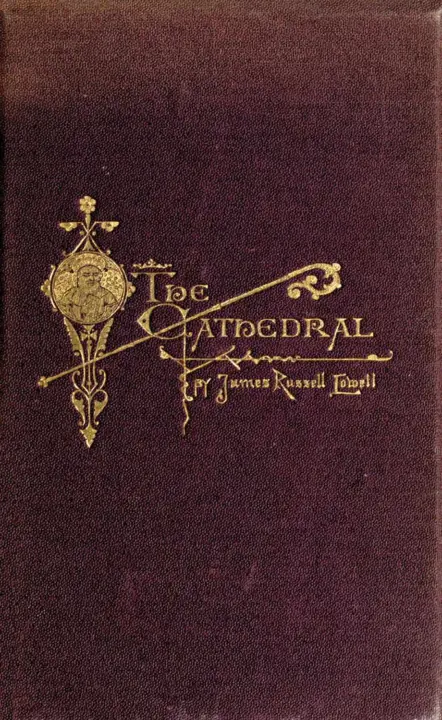
THE CLASSIC COLLECTION · 1870
"The Cathedral" by James Russell Lowell is a reflective poem written in the late 19th century. This work can be classified as a philosophical poem, exploring themes of memory, nature, and the relationship between faith and doubt. Through rich imagery and introspective narrative, it unfolds an examination of the human experience in the context of grand architectural structures, specifically cathedrals, symbolizing deeper spiritual and existential inquiries. In the poem, the speaker revisits his memories associated with cathedrals, inviting readers to reflect on moments of beauty and spiritual significance. He recounts his experiences and childhood reflections, mingling personal history with the awe inspired by monumental architecture. As he observes the cathedral's grandeur, he grapples with feelings of nostalgia, loss, and the tension between tradition and modernity. The poem reveals a deep yearning for the sacred amidst a rapidly changing world, culminating in an exploration of the nature of faith and the human spirit's search for meaning in a universe that often feels indifferent to individual existence. Ultimately, Lowell's work serves as a meditation on the interplay between the physical and the spiritual, celebrating the beauty of memory while acknowledging the complexities of contemporary belief.
Introduction adapted from the source catalogue; source summaries may be automatically generated.
Free to read · English · 6,113 words · No account needed
MAKE TIME FOR A GOOD BOOK
On by default. Untick to stop anonymous reading totals. Each page counts after 10 seconds in view. How this works.
Anonymous counting is on unless you have switched it off.
The born disciple of an elder time,
(To me sufficient, friendlier than the new,)
Who in my blood feel motions of the Past,
I thank benignant nature most for this,--
A force of sympathy, or call it lack
Of character firm-planted, loosing me
From the pent chamber of habitual self
To dwell enlarged in alien modes of thought,
Haply distasteful, wholesomer for that,
And through imagination to possess,
As they were mine, the lives of other men.
This growth original of virgin soil,
By fascination felt in opposites,
Pleases and shocks, entices and perturbs.
In this brown-fisted rough, this shirt-sleeved Cid,
This backwoods Charlemagne of empires new,
Whose blundering heel instinctively finds out
The goutier foot of speechless dignities,
Who, meeting Cæsar’s self, would slap his back,
Call him “Old Horse,” and challenge to a drink,
My lungs draw braver air, my breast dilates
With ampler manhood, and I front both worlds,
Of sense and spirit, as my natural fiefs,
To shape and then reshape them as I will.
It was the first man’s charter; why not mine?
How forfeit? when deposed in other hands?
Thou shudder’st, Ovid? Dost in him forbode
A new avatar of the large-limbed Goth,
To break, or seem to break, tradition’s clew,
And chase to dreamland back thy gods dethroned?
I think man’s soul dwells nearer to the east,
Nearer to morning’s fountains than the sun;
Herself the source whence all tradition sprang,
Herself at once both labyrinth and clew.
The miracle fades out of history,
But faith and wonder and the primal earth
Are born into the world with every child.
Shall this self-maker with the prying eyes,
This creature disenchanted of respect
By the New World’s new fiend, Publicity,
Whose testing thumb leaves everywhere its smutch,
Not one day feel within himself the need
Of loyalty to better than himself,
That shall ennoble him with the upward look?
Shall he not catch the Voice that wanders earth,
With spiritual summons, dreamed or heard,
As sometimes, just ere sleep seals up the sense,
We hear our Mother call from deeps of time,
And, waking, find it vision,--none the less
The benediction bides, old skies return,
And that unreal thing, pre-eminent,
Makes air and dream of all we see and feel?
Shall he divine no strength unmade of votes,
Inward, impregnable, found soon as sought,
Not cognizable of sense, o’er sense supreme?
His holy places may not be of stone,
Nor made with hands, yet fairer far than aught
By artist feigned or pious ardor reared,
Fit altars for who guards inviolate
God’s chosen seat, the sacred form of man.
Doubtless his church will be no hospital
For superannuate forms and mumping shams,
No parlor where men issue policies
Of life-assurance on the Eternal Mind,
Nor his religion but an ambulance
To fetch life’s wounded and malingerers in,
Scorned by the strong; yet he, unconscious heir
To the influence sweet of Athens and of Rome,
And old Judæa’s gift of secret fire,
Spite of himself shall surely learn to know
And worship some ideal of himself,
Some divine thing, large-hearted, brotherly,
Not nice in trifles, a soft creditor,
Pleased with his world, and hating only cant.
And, if his Church be doubtful, it is sure
That, in a world, made for whatever else,
Not made for mere enjoyment,--in a world
Of toil but half-requited, or, at best.
Paid in some futile currency of breath,--
A world of incompleteness, sorrow swift
And consolation laggard, whatsoe’er
The form of building or the creed professed,
The Cross, bold type of shame to homage turned,
Of an unfinished life that sways the world,
Shall tower as sovereign emblem over all.
Your reading position is saved on this browser. Take it to another device with a library code. Reading pages adapt to text, rather than matching a printed edition.
James Russell Lowell
James Russell Lowell
James Russell Lowell

James Russell Lowell
BEHIND THE BOOK
This eBook is for the use of anyone anywhere in the United States and most other parts of the world at no cost and with almost no restrictions whatsoever. You may copy it, give it away or re-use it under the terms of the Project Gutenberg License included with this eBook or online at www.gutenberg.org. If you are not located in the United States, you will have to check the laws of the country where you are located before using this eBook. Read the source licence.
The original source file, including credits and licence, is retained by this library. Request an original-format copy at no charge. Please include the book title and Project Gutenberg identifier #65136.
KEEP YOUR CURIOSITY GOING

David Patterson (Spirit) Hatch
Coulson Kernahan

Ralph Waldo Emerson
Frances Wright

Edwin Abbott Abbott

Joseph Droz