
My study windows
James Russell Lowell
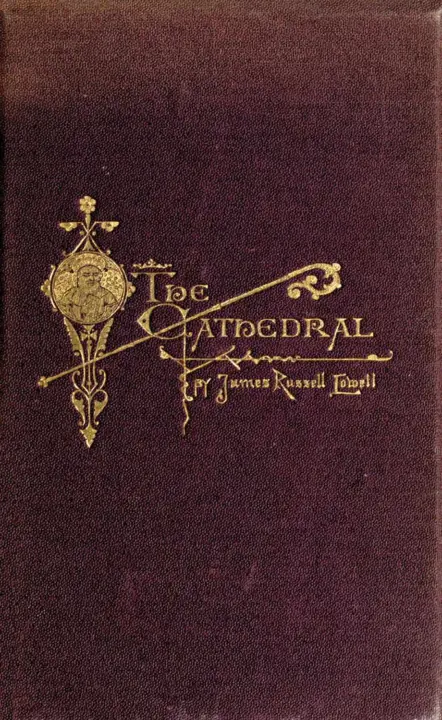
THE CLASSIC COLLECTION · 1870
"The Cathedral" by James Russell Lowell is a reflective poem written in the late 19th century. This work can be classified as a philosophical poem, exploring themes of memory, nature, and the relationship between faith and doubt. Through rich imagery and introspective narrative, it unfolds an examination of the human experience in the context of grand architectural structures, specifically cathedrals, symbolizing deeper spiritual and existential inquiries. In the poem, the speaker revisits his memories associated with cathedrals, inviting readers to reflect on moments of beauty and spiritual significance. He recounts his experiences and childhood reflections, mingling personal history with the awe inspired by monumental architecture. As he observes the cathedral's grandeur, he grapples with feelings of nostalgia, loss, and the tension between tradition and modernity. The poem reveals a deep yearning for the sacred amidst a rapidly changing world, culminating in an exploration of the nature of faith and the human spirit's search for meaning in a universe that often feels indifferent to individual existence. Ultimately, Lowell's work serves as a meditation on the interplay between the physical and the spiritual, celebrating the beauty of memory while acknowledging the complexities of contemporary belief.
Introduction adapted from the source catalogue; source summaries may be automatically generated.
Free to read · English · 6,113 words · No account needed
MAKE TIME FOR A GOOD BOOK
On by default. Untick to stop anonymous reading totals. Each page counts after 10 seconds in view. How this works.
Anonymous counting is on unless you have switched it off.
I turned and saw a beldame on her knees;
With eyes astray, she told mechanic beads
Before some shrine of saintly womanhood,
Bribed intercessor with the far-off Judge:
Such my first thought, by kindlier soon rebuked,
Pleading for whatsoever touches life
With upward impulse: be He nowhere else,
God is in all that liberates and lifts,
In all that humbles, sweetens, and consoles:
Blessëd the natures shored on every side
With landmarks of hereditary thought!
Thrice happy they that wander not lifelong
Beyond near succor of the household faith,
The guarded fold that shelters, not confines!
Their steps find patience in familiar paths,
Printed with hope by loved feet gone before
Of parent, child, or lover, glorified
By simple magic of dividing Time.
My lids were moistened as the woman knelt,
And--was it will, or some vibration faint
Of sacred Nature, deeper than the will?--
My heart occultly felt itself in hers,
Through mutual intercession gently leagued.
Or was it not mere sympathy of brain?
A sweetness intellectually conceived
In simpler creeds to me impossible?
A juggle of that pity for ourselves
In others, which puts on such pretty masks
And snares self-love with bait of charity?
Something of all it might be, or of none:
Yet for a moment I was snatched away
And had the evidence of things not seen;
For one rapt moment; then it all came back,
This age that blots out life with question-marks,
This nineteenth century with its knife and glass
That make thought physical, and thrust far off
The Heaven, so neighborly with man of old,
To voids sparse-sown with alienated stars.
’Tis irrecoverable, that ancient faith,
Homely and wholesome, suited to the time,
With rod or candy for child-minded men:
No theologic tube, with lens on lens
Of syllogism transparent, brings it near,--
At best resolving some new nebula,
Or blurring some fixed-star of hope to mist.
Science was Faith once; Faith were Science now,
Would she but lay her bow and arrows by
And arm her with the weapons of the time.
Nothing that keeps thought out is safe from thought,
For there’s no virgin-fort but self-respect,
And Truth defensive hath lost hold on God.
Shall we treat Him as if He were a child
That knew not His own purpose? nor dare trust
The Rock of Ages to their chemic tests,
Lest some day the all-sustaining base divine
Should fail from under us, dissolved in gas?
The armëd eye that with a glance discerns
In a dry blood-speck between ox and man,
Stares helpless at this miracle called life,
This shaping potency behind the egg,
This circulation swift of deity,
Where suns and systems inconspicuous float
As the poor blood-disks in our mortal veins.
Each age must worship its own thought of God,
More or less earthy, clarifying still
With subsidence continuous of the dregs;
Nor saint nor sage could fix immutably
The fluent image of the unstable Best,
Still changing in their very hands that wrought:
To-day’s eternal truth To-morrow proved
Frail as frost-landscapes on a window-pane.
Meanwhile Thou smiledst, inaccessible,
At Thought’s own substance made a cage for Thought,
And Truth locked fast with her own master-key;
Nor didst Thou reck what image man might make
Of his own shadow on the flowing world;
The climbing instinct was enough for Thee.
Or wast Thou, then, an ebbing tide that left
Strewn with dead miracle those eldest shores,
For men to dry, and dryly lecture on,
Thyself thenceforth incapable of flood?
Idle who hopes with prophets to be snatched
By virtue in their mantles left below;
Shall the soul live on other men’s report,
Herself a pleasing fable of herself?
Man cannot be God’s outlaw if he would,
Nor so abscond him in the caves of sense
But Nature still shall search some crevice out
With messages of splendor from that Source
Which, dive he, soar he, baffles still and lures.
This life were brutish did we not sometimes
Have intimation clear of wider scope,
Hints of occasion infinite, to keep
The soul alert with noble discontent
And onward yearnings of unstilled desire;
Fruitless, except we now and then divined
A mystery of Purpose, gleaming through
The secular confusions of the world,
Whose will we darkly accomplish, doing ours.
No man can think nor in himself perceive,
Sometimes at waking, in the street sometimes,
Or on the hillside, always unforewarned,
A grace of being, finer than himself,
That beckons and is gone,--a larger life
Upon his own impinging, with swift glimpse
Of spacious circles luminous with mind,
To which the ethereal substance of his own
Seems but gross cloud to make that visible,
Touched to a sudden glory round the edge.
Who that hath known these visitations fleet
Would strive to make them trite and ritual?
I, that still pray at morning and at eve,
Loving those roots that feed us from the past,
And prizing more than Plato things I learned
At that best academe, a mother’s knee,
Thrice in my life perhaps have truly prayed,
Thrice, stirred below my conscious self, have felt
That perfect disenthralment which is God;
Nor know I which to hold worst enemy,--
Him who on speculation’s windy waste
Would turn me loose, stript of the raiment warm
By Faith contrived against our nakedness,
Or him who, cruel-kind, would fain obscure,
With painted saints and paraphrase of God,
The soul’s east-window of divine surprise.
Your reading position is saved on this browser. Take it to another device with a library code. Reading pages adapt to text, rather than matching a printed edition.
James Russell Lowell
James Russell Lowell
James Russell Lowell

James Russell Lowell
BEHIND THE BOOK
This eBook is for the use of anyone anywhere in the United States and most other parts of the world at no cost and with almost no restrictions whatsoever. You may copy it, give it away or re-use it under the terms of the Project Gutenberg License included with this eBook or online at www.gutenberg.org. If you are not located in the United States, you will have to check the laws of the country where you are located before using this eBook. Read the source licence.
The original source file, including credits and licence, is retained by this library. Request an original-format copy at no charge. Please include the book title and Project Gutenberg identifier #65136.
KEEP YOUR CURIOSITY GOING

David Patterson (Spirit) Hatch
Coulson Kernahan

Ralph Waldo Emerson
Frances Wright

Edwin Abbott Abbott

Joseph Droz