THE CLASSIC COLLECTION✦The Broken CupCLASSIC FREE BOOKS
The Broken Cup
Heinrich Zschokke
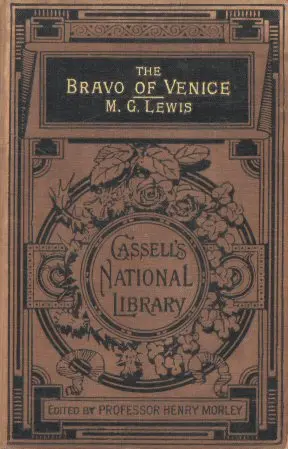
THE CLASSIC COLLECTION · 1805
"The Bravo of Venice: A Romance" by Heinrich Zschokke is a novel written during the early 19th century. The story unfolds against the backdrop of Venice and follows the tragic character Abellino, a beggar who possesses a noble past but now teeters on the edge of desperation, navigating the treacherous world of bandits and moral dilemmas. As he grapples with his fate, he must confront themes of honor, loss, and the possibility of redemption amidst the chaos of his surroundings. At the start of the novel, readers are introduced to Abellino, who reflects on his miserable situation while sitting alone near the canal in Venice on a moonlit night. Struggling with hunger and despair, he vows to take action and ends up intervening to save a stranger from an assassin, unveiling his potential for bravery. The narrative quickly shifts to depict Abellino aligning with bandits after finding himself in dire straits. As he grapples with the implications of his actions, the decision to embrace the life of a "bravo" intertwines with his past and hopes for future greatness, setting the stage for a complex exploration of identity and morality in a world rife with danger and temptation.
Introduction adapted from the source catalogue; source summaries may be automatically generated.
Free to read · English · 34,801 words · No account needed
MAKE TIME FOR A GOOD BOOK
On by default. Untick to stop anonymous reading totals. Each page counts after 10 seconds in view. How this works.
Anonymous counting is on unless you have switched it off.
TWO evenings had elapsed since the Doge’s entertainment. On the second, Parozzi sat in his own apartment, with Memmo and Falieri. Dimly burnt the lights; lowering and tempestuous were the skies without; gloomy and fearful were the souls of the libertines within.
Parozzi (after a long silence).—What, are you both dreaming? Ho, there, Memmo, Falieri, fill your goblets.
Memmo (with indifference).—Well, to please you—. But I care not for
wine to-night.
Falieri.—Nor I. Methinks it tastes like vinegar: yet the wine itself is good: ’tis our ill temper spoils it.
Parozzi.—Confound the rascals.
Memmo.—What, the banditti?
Parozzi.—Not a trace of them can be found. It is enough to kill one
with vexation.
Falieri.—And in the meanwhile the time runs out, our projects will get wind, and then we shall sit quietly in the State prisons of Venice, objects of derision to the populace and ourselves. I could tear my flesh for anger. (A universal silence.)
Parozzi (striking his hand against the table passionately).—Flodoardo,
Flodoardo.
Falieri.—In a couple of hours I must attend the Cardinal Gonzaga, and what intelligence shall I have to give him?
Memmo.—Come, come, Contarino cannot have been absent so long without cause; I warrant you he will bring some news with him when he arrives.
Falieri.—Pshaw, pshaw! My life on’t he lies at this moment at Olympia’s feet, and forgets us, the Republic, the banditti, and himself.
Parozzi.—And so neither of you know anything of this Flodoardo?
Memmo.—No more than of what happened on Rosabella’s birthday.
Falieri.—Well, then, I know one thing more about him; Parozzi is
jealous of him.
Parozzi.—I? Ridiculous, Rosabella may bestow her hand on the German Emperor, or a Venetian gondolier, without its giving me the least anxiety.
Falieri.—Ha! ha! ha!
Memmo.—Well, one thing at least even envy must confess; Flodoardo is the handsomest man in Venice. I doubt whether there’s a woman in the city who can resist him.
Parozzi.—And I should doubt it too, if women had as little sense as you have, and looked only at the shell without minding the kernel—
Memmo.—Which unluckily is exactly the thing which women always do—
Falieri.—The old Lomellino seems to be extremely intimate with this Flodoardo. They say he was well acquainted with his father.
Memmo.—It was he who presented him to the Doge.
Parozzi.—Hark!—Surely some one knocked at the palace door?
Memmo.—It can be none but Contarino. Now, then, we shall hear whether he has discovered the banditti.
Falieri (starting from his chair).—I’ll swear to that footstep, it’s
Contarino.
Your reading position is saved on this browser. Take it to another device with a library code. Reading pages adapt to text, rather than matching a printed edition.
BEHIND THE BOOK
This eBook is for the use of anyone anywhere in the United States and most other parts of the world at no cost and with almost no restrictions whatsoever. You may copy it, give it away or re-use it under the terms of the Project Gutenberg License included with this eBook or online at www.gutenberg.org. If you are not located in the United States, you will have to check the laws of the country where you are located before using this eBook. Read the source licence.
The original source file, including credits and licence, is retained by this library. Request an original-format copy at no charge. Please include the book title and Project Gutenberg identifier #2706.
KEEP YOUR CURIOSITY GOING
Cécile Tormay

Moritz Busch
Coulson Kernahan
John L. Ransom

Maurice Baring
Frances Wright