THE CLASSIC COLLECTION✦The Star of IndiaCLASSIC FREE BOOKS
The Star of India
Edward Sylvester Ellis
THE CLASSIC COLLECTION · 1883
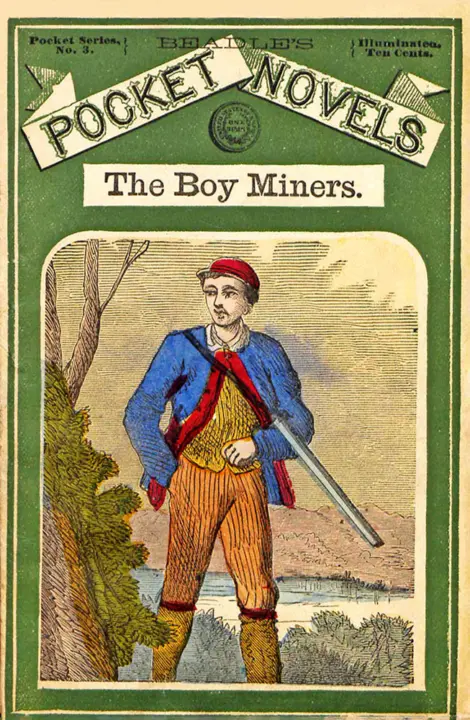
"The Boy Miners; Or, The Enchanted Island, A Tale of the Yellowstone Country" by Edward S. Ellis is a novel written in the late 19th century. This adventure story follows the journey of young gold miners, particularly focusing on brothers George and Edwin Inwood, and their companion Jim Tubbs, as they navigate the dangers of mining in the wilderness of California. The characters find themselves embroiled in conflict with the indigenous Mohave Indians while uncovering various mysteries and challenges along the way. At the start of the narrative, young Edwin Inwood is acting as a lookout for his brother George and their friend Jim Tubbs, who are busy mining for gold in a cave. Tension builds as Edwin spots a group of Mohave Indians approaching, prompting a hurried retreat into their hideout. After a close encounter with the Native Americans, the trio cleverly captures one of the Mohaves, leading to a strategic debate on how best to handle their situation. The opening chapters set the stage for a blend of adventure and conflict, suggesting themes of bravery, survival, and the complexities of human interaction in the wild, while introducing the characters' skills and personalities in the face of danger.
Introduction adapted from the source catalogue; source summaries may be automatically generated.
Free to read · English · 32,425 words · No account needed
MAKE TIME FOR A GOOD BOOK
On by default. Untick to stop anonymous reading totals. Each page counts after 10 seconds in view. How this works.
Anonymous counting is on unless you have switched it off.
It was toward the close of a warm summer day, that our friends drew rein in a grove within sight of the residence of Mr. Underwood, in precisely the same spot that they had encamped a number of weeks before.
George Inwood was rather shabby in his appearance, but he determined to call upon Marian, and have a chat with her before he returned East. He washed himself in a running brook, combed out his hair and whiskers, brushed his clothes, and, having made himself as presentable as possible under the circumstances, he told his friends that perhaps he would not return until late in the evening, and that they were by no means to wait for him.
There was a faint moon, as he came up the path made by the passage of many animals, and he could discover no human beings near the house. He missed the voice of Marian, but he knew she was there, and that in a few moments more he would be sitting face to face with her.
Walking forward, he stepped upon the long, low porch which ran along the entire front of the house, and, seeing no bell near, or knocker upon the open door, he rapped it smartly with his knuckles, and then stepped back and endeavored to feel cool and unconcerned.
In a moment a servant appeared, and he said:
“Is Miss Underwood in?”
“¿Pregunta V. par alguno?”
Not understanding Spanish, Inwood stood for a moment embarrassed and
silent.
“¿Acerca de quien quiere V. informarse? A quien bresca V.?” said the female, quite excitedly.
Seeing little probability of coming to an understanding, Inwood repeated the words “Miss Marian Underwood,” and then walked into a low broad hall. The servant immediately opened a door on his right, and the young man walked into a broad, well-furnished room. Taking his seat on a sofa, which he knew had been brought from the East, he awaited the coming of whomsoever chose to answer his summons.
He had waited scarcely a minute, when a light step caught his ear, and, looking up, Marian stood before him. He saw at once she did not recognize him in the dim light, and he concluded not to undeceive her for a moment. Rising, and bowing profoundly, he lowered his voice and asked:
“Have I the honor to address Miss Marian Underwood?”
“Yes, sir,” was the reply, as she still remained standing.
“I am from the East; Mr. Inwood desires you to receive his kindest
wishes.”
“Ah! you are acquainted with him?” she said, with great vivacity, exceedingly inspiring to the listener, as she seated herself in front of him. “When did you leave New York?”
Your reading position is saved on this browser. Take it to another device with a library code. Reading pages adapt to text, rather than matching a printed edition.
Edward Sylvester Ellis
Edward Sylvester Ellis
Edward Sylvester Ellis
Edward Sylvester Ellis
BEHIND THE BOOK
This eBook is for the use of anyone anywhere in the United States and most other parts of the world at no cost and with almost no restrictions whatsoever. You may copy it, give it away or re-use it under the terms of the Project Gutenberg License included with this eBook or online at www.gutenberg.org. If you are not located in the United States, you will have to check the laws of the country where you are located before using this eBook. Read the source licence.
The original source file, including credits and licence, is retained by this library. Request an original-format copy at no charge. Please include the book title and Project Gutenberg identifier #63868.
KEEP YOUR CURIOSITY GOING
Coulson Kernahan

Maurice Baring
Frances Wright
Cécile Tormay

Frederic Jesup Stimson

W. H. P. (William Henry Pope) Jarvis