THE CLASSIC COLLECTION✦The Star of IndiaCLASSIC FREE BOOKS
The Star of India
Edward Sylvester Ellis
THE CLASSIC COLLECTION · 1883
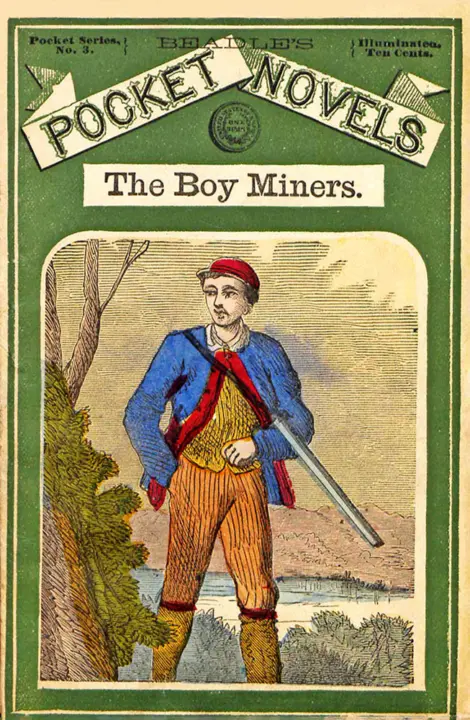
"The Boy Miners; Or, The Enchanted Island, A Tale of the Yellowstone Country" by Edward S. Ellis is a novel written in the late 19th century. This adventure story follows the journey of young gold miners, particularly focusing on brothers George and Edwin Inwood, and their companion Jim Tubbs, as they navigate the dangers of mining in the wilderness of California. The characters find themselves embroiled in conflict with the indigenous Mohave Indians while uncovering various mysteries and challenges along the way. At the start of the narrative, young Edwin Inwood is acting as a lookout for his brother George and their friend Jim Tubbs, who are busy mining for gold in a cave. Tension builds as Edwin spots a group of Mohave Indians approaching, prompting a hurried retreat into their hideout. After a close encounter with the Native Americans, the trio cleverly captures one of the Mohaves, leading to a strategic debate on how best to handle their situation. The opening chapters set the stage for a blend of adventure and conflict, suggesting themes of bravery, survival, and the complexities of human interaction in the wild, while introducing the characters' skills and personalities in the face of danger.
Introduction adapted from the source catalogue; source summaries may be automatically generated.
Free to read · English · 32,425 words · No account needed
MAKE TIME FOR A GOOD BOOK
On by default. Untick to stop anonymous reading totals. Each page counts after 10 seconds in view. How this works.
Anonymous counting is on unless you have switched it off.
“Bress me, but you scart dis chile dat time!” said Jim, his teeth fairly chattering at the remembrance of his shock.
“I threw a stone to let you know I was near; I didn’t mean to
frighten you.”
“It wasn’t de stone dat scart me, it was de thought dat I tink it was sumfin’ else. Whar’s George?”
“Inside the cave.”
“Had breakfast?”
“No; we were just going to prepare it. Here he comes!”
At this moment, George Inwood made his appearance above ground, and he greeted the negro with great gladness. The latter soon gave an account of his pursuit and capture of the horses, and his safe return with them.
“You have done very well, Jim, especially when we remember that you had no gun with you. There are few men who would have dared to do so, even when fully armed.”
“But, dat ain’t all,” added the colored man, as he heaved a great sigh, “I seen de most awfulest ting you ever heard tell on.”
In answer to their anxious inquiry, he gave what has already been given by us, winding up with the declaration:
“An’ when I looked back de last time, what do you ’spose I seen? Why, I seen dat island rise up, flap its wings, an’ fly away!”
“There, Jim, that’s a little too much,” laughed the elder Inwood.
“When it flapped its wings, didn’t it also crow?” asked Edwin, whose interest in the narrative was turned into equally intense amusement at this culmination.
“You folks can laugh,” retorted Jim, indignantly, “but wait till you see what I did, an’ de shivers will run all ober you.”
“It may be possible that it was a mirage,” said George, somewhat impressed by the earnest manner of his sable friend.
“A mirage by moonlight?” inquired Edwin.
“Such things have been heard of, I believe, although very rarely.”
“What’s a mirage?” demanded Jim.
By great perseverance, George succeeded in giving Jim a sort of an idea of what he meant, although, in all probability, he would have regarded the mirage itself equally mysterious and wonderful as the bodily exit of a bona fide island before his eyes.
“All I got to say is, you jes’ go an’ see it, an’ den you’ll stop laughing at dem as what undertakes to explanify it to you.”
“Perhaps we shall have the opportunity, as I have concluded to leave
these quarters.”
“What fur?”
“In the first place, our safety demands it. The Indians have found out we are here, and they will hover about and watch us, until some time they will pounce down upon us before we know it.”
Your reading position is saved on this browser. Take it to another device with a library code. Reading pages adapt to text, rather than matching a printed edition.
Edward Sylvester Ellis
Edward Sylvester Ellis
Edward Sylvester Ellis
Edward Sylvester Ellis
BEHIND THE BOOK
This eBook is for the use of anyone anywhere in the United States and most other parts of the world at no cost and with almost no restrictions whatsoever. You may copy it, give it away or re-use it under the terms of the Project Gutenberg License included with this eBook or online at www.gutenberg.org. If you are not located in the United States, you will have to check the laws of the country where you are located before using this eBook. Read the source licence.
The original source file, including credits and licence, is retained by this library. Request an original-format copy at no charge. Please include the book title and Project Gutenberg identifier #63868.
KEEP YOUR CURIOSITY GOING
Coulson Kernahan

Maurice Baring
Frances Wright
Cécile Tormay

Frederic Jesup Stimson

W. H. P. (William Henry Pope) Jarvis