THE CLASSIC COLLECTION✦Birds in Legend, Fable and FolkloreCLASSIC FREE BOOKS
Birds in Legend, Fable and Folklore
Ernest Ingersoll
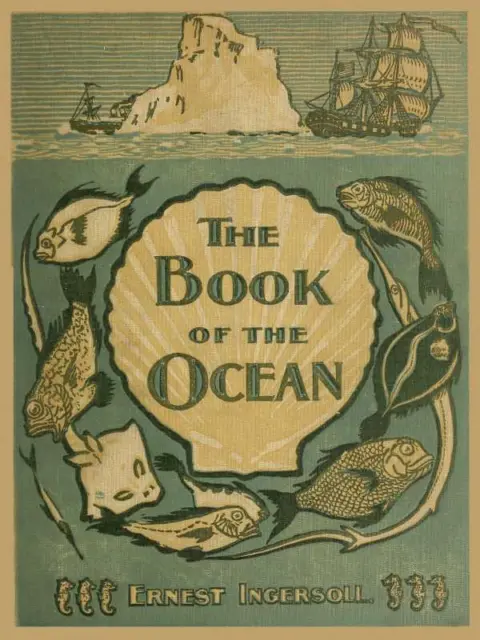
THE CLASSIC COLLECTION · 1898
"The Book of the Ocean" by Ernest Ingersoll is a scientific publication written in the late 19th century. This work serves as a comprehensive exploration of the ocean, covering its origins, physical characteristics, and its significant role in human history and geography. The book discusses various topics such as maritime navigation, oceanic currents, and early explorations, reflecting an era of growing interest in oceanic science. At the start of "The Book of the Ocean," Ingersoll introduces readers to the concept of the ocean and its formation, emphasizing the vastness of seawater compared to terrestrial land. The opening chapter delves into ancient geographical perceptions, the scientific definitions of oceans and seas, and the importance of water's role in shaping the Earth. Ingersoll describes the processes through which oceans evolved, including the impact of surface pressure and temperature variations, as well as the effects of waves, tides, and currents. This foundational knowledge sets the stage for understanding the ocean's fluid dynamics, historical significance, and influences on climate, commerce, and navigation in subsequent chapters.
Introduction adapted from the source catalogue; source summaries may be automatically generated.
Free to read · English · 100,769 words · No account needed
MAKE TIME FOR A GOOD BOOK
On by default. Untick to stop anonymous reading totals. Each page counts after 10 seconds in view. How this works.
Anonymous counting is on unless you have switched it off.
Seventy-four, a, 121.
Sharks, as a danger to divers, 271.
Sharpie, characteristics of the, 198.
Ship-building, development of, 139.
Ship-chandler, a, 204.
Ship, sails of a full-rigged, 36.
Ships’ lanterns and lights, 204.
Ships, Phœnician, 155.
Ships, Roman merchant, 156.
Siberia, explorations north of, 79, 93, 95.
Signaling at night, 205, 206, 222.
Sirens, or fog-horns, 219.
Slave-trade, the, 184.
Sloop, a, described, 35.
Solis discovers the La Plata, 69.
South America, discovery of, 61, 62.
South Sea. See PACIFIC OCEAN.
Spanish conquerors in West Indies, 177.
Spitzbergen, 91, 233.
Sponges and their taking, 265.
Spritsail-mast, the, 34.
Square-rig, examples of, 33.
Starfishes, damage by, 265.
Steamships, development of, 165, 168.
Steamships, ocean courses of, 168.
Steamships, records of transatlantic, 166.
Steerage passage, the, 163.
Steering, methods of, 29.
Suez Canal, the, 41, 169.
Table of sea-road distances, 170.
Tactics, naval, 107, 115, 118, 121, 135.
Tasman, voyages of, 72.
Telegraph, submarine, 161.
Tides, explained, 17.
Topsail schooner, described, 36.
Torpedo-boats, 140, 150-154.
Torpedoes and submarine mines, 148.
Trafalgar, battle of, 126.
Trawls described, 246, 272.
Treasure-ships, Spanish, 173, 178, 182.
Trepang, or bêche la mer, 266.
Tripoli, bombardment of, 174.
Triremes, Greek and Roman, 108.
Tunnies, fishing for, 244.
Turtles, as a danger to divers, 272.
United States exploring expedition, 76.
United States, naval incidents, 128, 174, 183.
Vasco da Gama, 56, 157.
Vega, voyage of, north of Asia, 93.
Venice, state barge of, 112.
Venus’-comb shell, 274.
Verrazano, voyage of, 68.
Vespucci, Amerigo, voyages of, 62.
Vesuvius, the dynamite-cruiser, 154.
Vikings, origin and voyages of, 29, 44.
Vinland visited, 47.
Walrus-hunting, 241.
War-ships wrecked at Samoa, 206-211.
Wasp and Frolic, 129.
Water-spouts at sea, 202.
Waves, tides, and currents, 9.
Weather-stations, international, 96.
West coast of Africa, 42, 53, 56.
Weyprecht, Arctic work of, 91.
Whaleback, the, 169.
Whaling, history of American, 235.
Whaling, history of European, 233.
Whaling, in the North Atlantic, 80, 94.
Whaling, methods of, 231, 237-241.
Whaling-vessels, 235.
Wreckers, doings of, 212.
Yachting, early history of, 187, 196.
Yacht-clubs in the United States, 188, 196.
Yachts, designing racing, 192, 195.
Yachts, rigs of small, 197.
Yawl, characteristics of the, 197.
Zeni, voyages of the, 48.
End of Project Gutenberg's The Book of the Ocean, by Ernest Ingersoll
Your reading position is saved on this browser. Take it to another device with a library code. Reading pages adapt to text, rather than matching a printed edition.
Ernest Ingersoll
Ernest Ingersoll
Ernest Ingersoll
Ernest Ingersoll
BEHIND THE BOOK
This eBook is for the use of anyone anywhere in the United States and most other parts of the world at no cost and with almost no restrictions whatsoever. You may copy it, give it away or re-use it under the terms of the Project Gutenberg License included with this eBook or online at www.gutenberg.org. If you are not located in the United States, you will have to check the laws of the country where you are located before using this eBook. Read the source licence.
The original source file, including credits and licence, is retained by this library. Request an original-format copy at no charge. Please include the book title and Project Gutenberg identifier #56311.
KEEP YOUR CURIOSITY GOING
Cécile Tormay

Moritz Busch
John L. Ransom
Frances Wright
Cécile Tormay

Mabel Potter Daggett