THE CLASSIC COLLECTION✦Birds in Legend, Fable and FolkloreCLASSIC FREE BOOKS
Birds in Legend, Fable and Folklore
Ernest Ingersoll
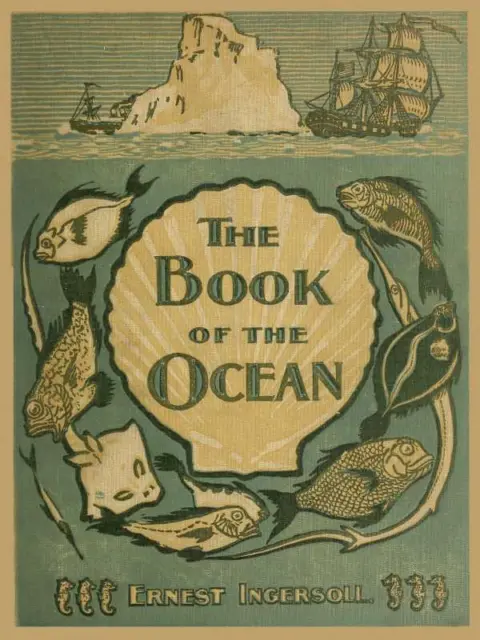
THE CLASSIC COLLECTION · 1898
"The Book of the Ocean" by Ernest Ingersoll is a scientific publication written in the late 19th century. This work serves as a comprehensive exploration of the ocean, covering its origins, physical characteristics, and its significant role in human history and geography. The book discusses various topics such as maritime navigation, oceanic currents, and early explorations, reflecting an era of growing interest in oceanic science. At the start of "The Book of the Ocean," Ingersoll introduces readers to the concept of the ocean and its formation, emphasizing the vastness of seawater compared to terrestrial land. The opening chapter delves into ancient geographical perceptions, the scientific definitions of oceans and seas, and the importance of water's role in shaping the Earth. Ingersoll describes the processes through which oceans evolved, including the impact of surface pressure and temperature variations, as well as the effects of waves, tides, and currents. This foundational knowledge sets the stage for understanding the ocean's fluid dynamics, historical significance, and influences on climate, commerce, and navigation in subsequent chapters.
Introduction adapted from the source catalogue; source summaries may be automatically generated.
Free to read · English · 100,769 words · No account needed
MAKE TIME FOR A GOOD BOOK
On by default. Untick to stop anonymous reading totals. Each page counts after 10 seconds in view. How this works.
Anonymous counting is on unless you have switched it off.
As the sea has furnished opportunities for so much good,—for manly exertion, knowledge of the world, and acquaintance with people outside of one’s own country, and for gaining wealth,—so it has given a chance for unscrupulous men to show the worst that is in them; and the guarding of shore towns and merchant vessels from piratical attacks has always been a part of the usefulness and duty of a nation’s naval force.
As on land there are robbers and highwaymen, so on the ocean robber ships have often been lying in wait for vessels loaded with treasure, and have landed crews of marauders to make havoc with rich seaboard provinces. Such robbers on the high seas are termed pirates, and their crime was visited by the old laws with torturing punishments; yet they were never more daring than when the laws against them were severest.
The word is Greek, and the first pirates who figure in history are those of the Greek and Byzantine islands and coasts—bloody ruffians who originated the amusing method of disposing of unransomed prisoners by making them “walk the plank,” as has been done within the present century.
The intricate channels and hidden harbors of the Ægean Sea long remained a hiding-place of sea-robbers, and are still haunted by them, though every few years, from Cæsar’s time till now, the kings of the surrounding countries have sent expeditions to break them up. In the sixteenth century piracy in that region was especially prevalent. The crews then were chiefly Turkish, but the great leaders were two renegade Greeks, the brothers Aruck and Hayradin Barbarossa (“Redbeard”).
It happened that Spain, having conquered the Moors of Granada in 1492 and pursued her victories across the straits, had gained control of Algeria (at that time a collection of small Mohammedan states), and held it until the death of King Ferdinand in 1516. Then the Algerians sent an embassy to Aruck (sometimes spelled Horuk, or Ouradjh) Barbarossa, requesting him to aid them in driving out the Spaniards, and promising him a share in the spoils. He eagerly accepted this proposition, seeing a great deal more in it than the Algerians saw; and the moment the Spaniards had been beaten and expelled he murdered the prince he had come there to help, seized upon the city and port for himself, and made it the headquarters of that system of desperate piracy which became the dread of all Europe. These robbers of the sea called themselves corsairs, from an Italian word signifying “a race”; and they generally won, because they had the best and swiftest vessels of that time, such as feluccas, xebecs, and the like. The black flag which they flew was not blacker than their reputations, so that even yet to call a man as bad as a Barbary pirate is to mean that he could not be much worse if he tried. The Spanish colonies in America, a few years later, began sending home immense treasures dug in the silver-and gold-mines of Peru and Mexico, and extorted from the natives or stolen from the temples of those unhappy countries. A quantity of ingots and gold and silver ornaments equal in value to fifteen million dollars of our modern money was taken at one time by Pizarro, in Peru, as the ransom of the Inca Atahualpa, and booty amounting to a similar sum was gained in the sacking of various cities. This great inpouring of wealth caused a general giving up of manufactures and trade in Spain, and was one of the reasons of her final decline in power, and it had the immediate bad effect of making piracy more attractive than ever. The treasure-ships, though convoyed by war-ships, were often attacked and captured by the corsairs. Barbarossa’s fleets were more like armadas of a powerful nation than mere pirate craft; and whenever it happened that his commanders were defeated, they would land upon the nearest unprotected coast of Spain, France, or Italy, and pillage and burn some town in revenge. How galling this was to all merchants and travelers we can hardly understand in these days; but so strong were the corsairs that the fleets and armies of various governments, and even of the Pope, which were sent against them, could not gain their stronghold nor suppress their cruisers, at least for more than a short time. Charles V of Spain tried greatly to conquer them; but although his forces, attacking Aruck Barbarossa from the province of Oran, near Algiers, defeated and killed him, Hayradin (more properly spelled Khair-ed-din) Barbarossa succeeded his brother, and, placing himself under the protection of Turkey, continued to build up the power of the pirates. His first care was to fortify the city of Algiers, and he expended a great deal of money and labor on the perfection of the harbor, compelling all his prisoners and thousands of citizens to work as slaves on the defenses. Next he conquered Tunis, and was selected by the sultan as the only fit man to sail against Andrea Doria, the great Genoese naval commander of the Christians in their wars against the Turks early in the sixteenth century. Mediterranean commerce became so unsafe that watch-towers were built all along the coasts, and guards were kept afoot to give alarm at the approach of the corsairs. Charles V gathered together a powerful armament, and sailed to the rescue of Tunis, recapturing it for its rightful sovereign in 1535; but he was never able to capture Hayradin Barbarossa, who lived out his life in Algiers as “a friend to the sea and an enemy to all who sailed upon it.” After his time the power of the pirates continued under other leaders; and not Algeria alone, but Tripoli, Morocco, and even Tunis, harbored piratical vessels in every port, and the rulers shared their spoils; piracy, indeed, was the source of their national revenues, and was encouraged by the Sultan of Turkey inasmuch as all these states were his vassals.
Your reading position is saved on this browser. Take it to another device with a library code. Reading pages adapt to text, rather than matching a printed edition.
Ernest Ingersoll
Ernest Ingersoll

Ernest Ingersoll

Ernest Ingersoll
BEHIND THE BOOK
This eBook is for the use of anyone anywhere in the United States and most other parts of the world at no cost and with almost no restrictions whatsoever. You may copy it, give it away or re-use it under the terms of the Project Gutenberg License included with this eBook or online at www.gutenberg.org. If you are not located in the United States, you will have to check the laws of the country where you are located before using this eBook. Read the source licence.
The original source file, including credits and licence, is retained by this library. Request an original-format copy at no charge. Please include the book title and Project Gutenberg identifier #56311.
KEEP YOUR CURIOSITY GOING
Cécile Tormay

Moritz Busch
John L. Ransom
Frances Wright
Cécile Tormay

Mabel Potter Daggett