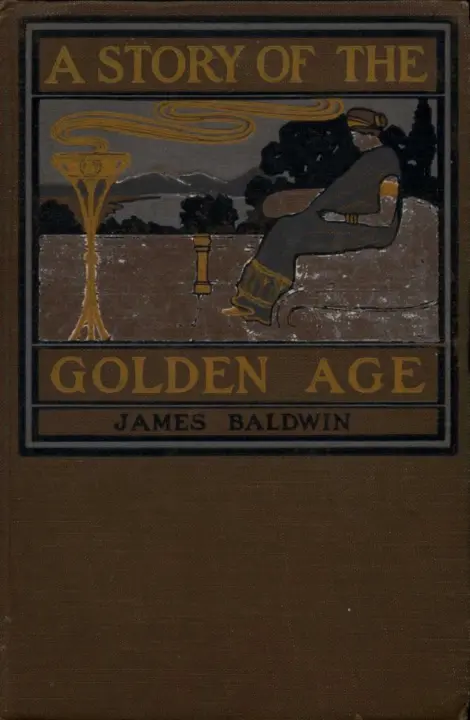
A Story of the Golden Age
James Baldwin
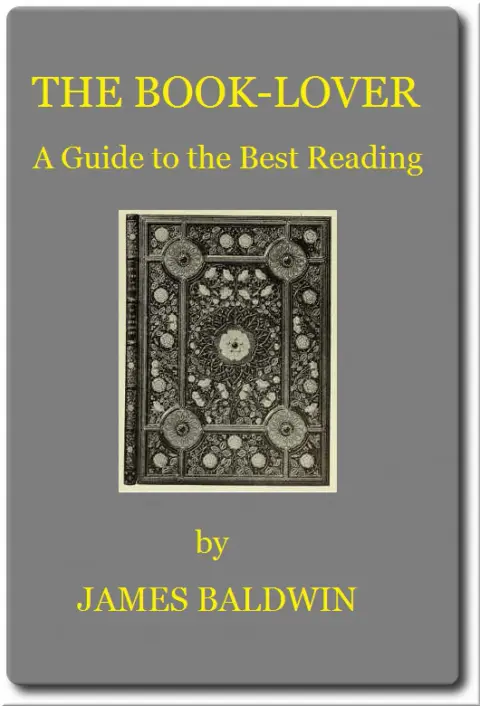
THE CLASSIC COLLECTION · 1884
"The Book-lover: A Guide to the Best Reading" by James Baldwin is a guidebook on literature and reading written in the late 19th century. This work serves as a comprehensive approach to the art of reading, focusing on the selection of meaningful literature and the importance of cultivating a love for good books. Baldwin draws from various literary sources to illustrate his points, aiming to inspire readers to enrich their intellectual lives through thoughtful reading choices. The beginning of the book introduces the author’s philosophy on the value and significance of books. It emphasizes that books are not merely static objects but living entities that serve as companions and mentors throughout one's life. Baldwin urges readers to make deliberate choices in their reading, advocating for the need to avoid poor literature and to seek out texts that nourish the mind and spirit. In this opening portion, Baldwin highlights the role of a scholar in making discerning choices and setting a foundation for a rich intellectual life through careful selection of reading material. He sets the stage for deeper discussions on how to read effectively and how libraries can serve as crucial resources for a scholar's development.
Introduction adapted from the source catalogue; source summaries may be automatically generated.
Free to read · English · 39,709 words · No account needed
MAKE TIME FOR A GOOD BOOK
On by default. Untick to stop anonymous reading totals. Each page counts after 10 seconds in view. How this works.
Anonymous counting is on unless you have switched it off.
(See list of books suggested for the study of Greek history,
etc.)
2. VIRGIL’S Æneid (Morris’s translation). General plan of the
work observed.
See list of books elsewhere given, relating to Greek
Mythology, the Trojan War, etc.
3. DANTE’S Divina Commedia (Longfellow’s or Carey’s translation). General plan of the work observed.
See—
LOWELL’S Essay on Dante, in Among My Books.
SYMOND’S Introduction to the Study of Dante.
BOTTA’S Dante as a Philosopher, Patriot, and Poet.
CARLYLE’S Heroes and Hero-Worship.
Attempted Epics—
COWLEY’S Davideis.
GLOVER’S Leonidas.
SOUTHEY’S Joan of Arc, Madoc, Thalaba, and The Curse of
Kehama.
LANDOR’S Gebir.
Why these poems fail to be epics.
Historical studies suggested by these attempted poems.
Write an essay on the qualities requisite to a great epic poem.
Discuss the possibility of another great epic being written.
Heroic Poems—
BARBOUR’S Bruce.
DAVENANT’S Gondibert.
Study the legends and historical events upon which these poems
are founded.
The Mock-Heroic—
POPE’S Rape of the Lock. The general plan. Selections studied.
Write an essay on some subject suggested by these studies.
+For the Study of Poetical Romance.+
For manuals, see Scheme I.
To be studied—
Sir Walter Scott’s great poems,—
The Lay of the Last Minstrel.
Marmion.
The Lady of the Lake.
To be read—
CARLYLE’S Essay on Sir Walter Scott.
HAZLITT on Scott, in The Spirit of the Age.
The chapter on Scott in Shaw’s Manual of English Literature.
For histories, see Scheme I.
Read the history of Scotland from the earliest period to the
reign of James V.
MISS PORTER’S Scottish Chiefs.
SCOTT’S Minstrelsy of the Scottish Border.
AYTOUN’S Ballads of Scotland.
SCOTT’S Fair Maid of Perth.
Write essays on subjects suggested by these studies.
Discuss the character of the Scotch people in feudal times.
R. H. HUTTON’S Sir Walter Scott, in “English Men of Letters.”
How the Romance poetry differed from Classic poetry.
See Macaulay’s Essay on Southey’s Life of Byron.
Compare selections from Scott with selections from Pope. Find
other illustrations of the difference between the two schools
of poetry.
The Origin of Romance Literature.—Refer to—
WARTON’S History of Poetry.
The Introduction to Ellis’s Early English Metrical Romances.
RITSON’S Ancient English Metrical Romances.
PERCY’S Reliques, introductory essay to book iii.
Read the chapter on the Troubadours, in Sismondi’s Literature of Southern Europe; also in Van Laun’s History of French Literature.
Refer to Miss Prescott’s Troubadours and Trouvères.
To be studied—
TENNYSON’S Idylls of the King.
Your reading position is saved on this browser. Take it to another device with a library code. Reading pages adapt to text, rather than matching a printed edition.
James Baldwin
James Baldwin
James Baldwin
James Baldwin
BEHIND THE BOOK
This eBook is for the use of anyone anywhere in the United States and most other parts of the world at no cost and with almost no restrictions whatsoever. You may copy it, give it away or re-use it under the terms of the Project Gutenberg License included with this eBook or online at www.gutenberg.org. If you are not located in the United States, you will have to check the laws of the country where you are located before using this eBook. Read the source licence.
The original source file, including credits and licence, is retained by this library. Request an original-format copy at no charge. Please include the book title and Project Gutenberg identifier #47013.
KEEP YOUR CURIOSITY GOING

David Patterson (Spirit) Hatch

David Patterson (Spirit) Hatch

David Patterson (Spirit) Hatch

Ralph Waldo Emerson

Maurice Baring

Oscar Wilde & James McNeill Whistler