
The unhallowed harvest
Homer Greene
THE CLASSIC COLLECTION · 1887
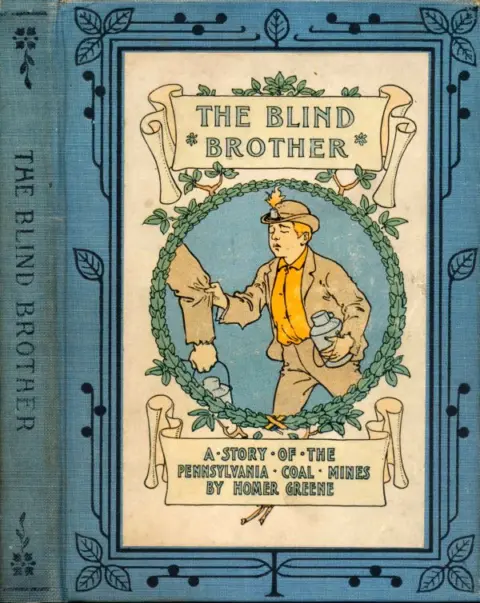
"The Blind Brother: A Story of the Pennsylvania Coal Mines" by Homer Greene is a novel written in the late 19th century. The story revolves around two brothers, Tom and Bennie Taylor, who are navigating the harsh realities of life in the Pennsylvania coal mines during a time of labor strikes. Tom, the older brother, is determined to help his blind sibling regain his sight, highlighting themes of familial loyalty, sacrifice, and the moral dilemmas faced by the working class. At the start of the novel, we are introduced to Bennie, a blind boy who works as a door-boy in the coal mine, relying on his older brother Tom for support and guidance. The narrative sets the stage for their struggles as they navigate the complexities of life in a mining community facing turmoil from strikes. A significant moment occurs when Bennie shares his hopes of saving money to seek medical treatment for his blindness, which underscores the brothers' deep bond. As the story unfolds, Bennie becomes lost in the mine, prompting a desperate search by Tom, which ultimately tests their resilience and love for one another amid a backdrop of social unrest and personal sacrifice. This opening sets up a poignant exploration of the intersection of personal dreams and harsh realities.
Introduction adapted from the source catalogue; source summaries may be automatically generated.
Free to read · English · 27,621 words · No account needed
MAKE TIME FOR A GOOD BOOK
On by default. Untick to stop anonymous reading totals. Each page counts after 10 seconds in view. How this works.
Anonymous counting is on unless you have switched it off.
He called the name somewhat feebly.
“Bennie!”
It was a shout at last, and there was terror in his voice.
He raised himself to his feet, and stood leaning against the shattered frame-work of the door. He felt weak and dizzy. He was bruised and bleeding, too, but he did not know it; he was not thinking of himself, but of Bennie, who had not answered to his call, and who might be dead.
He was in total darkness, but he had matches in his pocket. He drew one out and stood, for a moment, in trembling hesitancy, dreading what its light might disclose. Then he struck it, and there, almost at his feet, lay his cap, with his lamp still attached to it.
He lighted the lamp and looked farther.
At the other side of the entrance, half-hidden by the wreck of the door, he saw Bennie, lying on his side, quite still. He bent down and flashed the light into Bennie’s face. As he did so the blind boy opened his eyelids, sighed, moved his hands, and tried to rise.
“Tom!”
The word came in a whisper from his lips.
“Yes, Bennie, I’m here; are you hurt?”
“No--yes--I don’t know; what was it, Tom?”
“The fall, I guess. Can you get up? Here, I’ll help you.”
Bennie gained his feet. He was not much hurt. The door had given way readily when the boys were forced against it, and so had broken the severity of the shock. But both lads had met with some cuts and some severe bruises.
“Have you got a lamp, Tom?”
“Yes; I just found it; come on, let’s go home.”
Tom took Bennie’s hand and turned to go out, but the first step around the pillar, into the heading, brought him face to face with a wall of solid rock which filled every inch of the passage. It had dropped, like a curtain, blotting out, in one instant, the mule and the cars, and forming an impassable barrier to the further progress of the boys in that direction.
“We can’t get out this way,” said Tom; “we’ll have to go up through the
airway.”
They went back into the airway, and were met by a similar impenetrable
mass.
Then they went up into the short chambers beyond the airway, and Tom flashed the light of his lamp into every entrance, only to find it blocked and barred by the roof-rock from the fall.
“We’ll have to go back up the headin’,” said Tom, at last, “an’ down through the old chambers, an’ out to the slope that way.”
Your reading position is saved on this browser. Take it to another device with a library code. Reading pages adapt to text, rather than matching a printed edition.
Homer Greene

Homer Greene

Homer Greene
Homer Greene
BEHIND THE BOOK
This eBook is for the use of anyone anywhere in the United States and most other parts of the world at no cost and with almost no restrictions whatsoever. You may copy it, give it away or re-use it under the terms of the Project Gutenberg License included with this eBook or online at www.gutenberg.org. If you are not located in the United States, you will have to check the laws of the country where you are located before using this eBook. Read the source licence.
The original source file, including credits and licence, is retained by this library. Request an original-format copy at no charge. Please include the book title and Project Gutenberg identifier #45232.
KEEP YOUR CURIOSITY GOING
Coulson Kernahan

Maurice Baring
Frances Wright
Cécile Tormay

Frederic Jesup Stimson

W. H. P. (William Henry Pope) Jarvis