
The unhallowed harvest
Homer Greene
THE CLASSIC COLLECTION · 1887
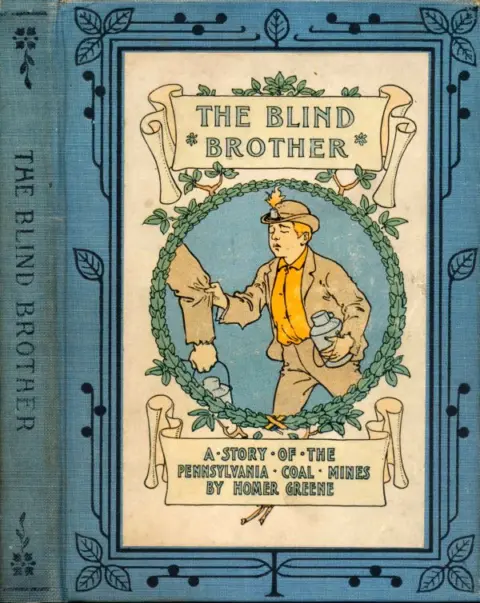
"The Blind Brother: A Story of the Pennsylvania Coal Mines" by Homer Greene is a novel written in the late 19th century. The story revolves around two brothers, Tom and Bennie Taylor, who are navigating the harsh realities of life in the Pennsylvania coal mines during a time of labor strikes. Tom, the older brother, is determined to help his blind sibling regain his sight, highlighting themes of familial loyalty, sacrifice, and the moral dilemmas faced by the working class. At the start of the novel, we are introduced to Bennie, a blind boy who works as a door-boy in the coal mine, relying on his older brother Tom for support and guidance. The narrative sets the stage for their struggles as they navigate the complexities of life in a mining community facing turmoil from strikes. A significant moment occurs when Bennie shares his hopes of saving money to seek medical treatment for his blindness, which underscores the brothers' deep bond. As the story unfolds, Bennie becomes lost in the mine, prompting a desperate search by Tom, which ultimately tests their resilience and love for one another amid a backdrop of social unrest and personal sacrifice. This opening sets up a poignant exploration of the intersection of personal dreams and harsh realities.
Introduction adapted from the source catalogue; source summaries may be automatically generated.
Free to read · English · 27,621 words · No account needed
MAKE TIME FOR A GOOD BOOK
On by default. Untick to stop anonymous reading totals. Each page counts after 10 seconds in view. How this works.
Anonymous counting is on unless you have switched it off.
The sound of working pillars is familiar to frequenters of the mines, and is the well-known warning which precedes a fall. The remedy is to place wooden props beneath the roof for additional support, and, if this is not done, there comes a time, sooner or later, when the strained pillars suddenly give way, and the whole mass comes crashing down, to fill the gangways and chambers over an area as great as that through which the working extended, and to block the progress of mining for an indefinite time.
Tom had been too long about the mines to be ignorant of all this, and so had Bennie; but they knew, too, that the working often continued weeks, and sometimes months, before the fall would take place, though it might, indeed, come at any moment.
That afternoon Tom told the slope boss about the working, and he came and made an examination, and said he thought there was no immediate danger, but that he would give orders to have the extra propping of the place begun on the following day.
“Jimmie Travis said he seen rats goin’ out o’ the slope, though, when he come in,” said Tom, after relating to Bennie the opinion of the mine boss.
“Then ’twon’t be long,” replied Bennie, “’fore the fall comes.”
He was simply echoing the belief of all miners, that rats will leave a mine in which a fall is about to take place. Sailors have the same belief concerning a ship about to sink.
“An’ when the rats begin to go out,” added Bennie, “it’s time for men an’ boys to think about goin’ out too.”
Somehow, the child seemed to have a premonition of disaster.
The afternoon wore on very slowly, and Bennie gave a long sigh of relief when he heard Tom’s last trip come rumbling down the airway.
“Give me the dinner-pail, Bennie!” shouted Tom, as the door closed behind the last car, “an’ you catch on behind--Whoa, Billy!” as the mule trotted on around the corner into the heading.
“Come, Bennie, quick! Give me your hand; we’ll have to run to catch him
now.”
But even as the last word trembled on the boy’s lips, there came a blast of air, like a mighty wind, and in the next instant a noise as of bursting thunder, and a crash that shook the foundations of the mines, and the two boys were hurled helplessly against Bennie’s closed door behind them.
The fall had come.
The terrible roar died away in a series of rumbling echoes, and, at
last, stillness reigned.
“Bennie!”
It was Tom who spoke.
“Bennie!”
Your reading position is saved on this browser. Take it to another device with a library code. Reading pages adapt to text, rather than matching a printed edition.
Homer Greene

Homer Greene

Homer Greene
Homer Greene
BEHIND THE BOOK
This eBook is for the use of anyone anywhere in the United States and most other parts of the world at no cost and with almost no restrictions whatsoever. You may copy it, give it away or re-use it under the terms of the Project Gutenberg License included with this eBook or online at www.gutenberg.org. If you are not located in the United States, you will have to check the laws of the country where you are located before using this eBook. Read the source licence.
The original source file, including credits and licence, is retained by this library. Request an original-format copy at no charge. Please include the book title and Project Gutenberg identifier #45232.
KEEP YOUR CURIOSITY GOING
Coulson Kernahan

Maurice Baring
Frances Wright
Cécile Tormay

Frederic Jesup Stimson

W. H. P. (William Henry Pope) Jarvis