
The unhallowed harvest
Homer Greene
THE CLASSIC COLLECTION · 1887
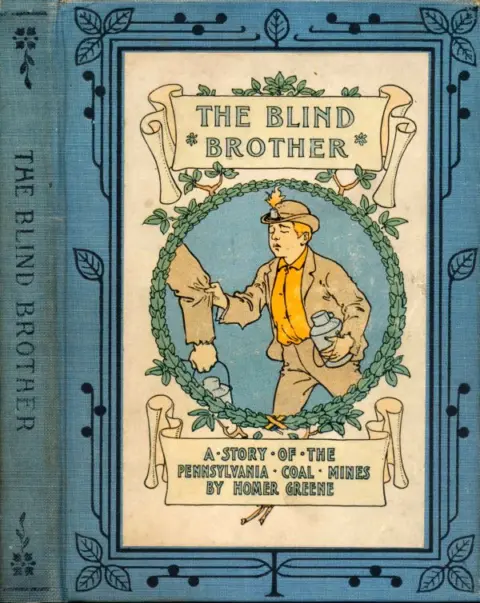
"The Blind Brother: A Story of the Pennsylvania Coal Mines" by Homer Greene is a novel written in the late 19th century. The story revolves around two brothers, Tom and Bennie Taylor, who are navigating the harsh realities of life in the Pennsylvania coal mines during a time of labor strikes. Tom, the older brother, is determined to help his blind sibling regain his sight, highlighting themes of familial loyalty, sacrifice, and the moral dilemmas faced by the working class. At the start of the novel, we are introduced to Bennie, a blind boy who works as a door-boy in the coal mine, relying on his older brother Tom for support and guidance. The narrative sets the stage for their struggles as they navigate the complexities of life in a mining community facing turmoil from strikes. A significant moment occurs when Bennie shares his hopes of saving money to seek medical treatment for his blindness, which underscores the brothers' deep bond. As the story unfolds, Bennie becomes lost in the mine, prompting a desperate search by Tom, which ultimately tests their resilience and love for one another amid a backdrop of social unrest and personal sacrifice. This opening sets up a poignant exploration of the intersection of personal dreams and harsh realities.
Introduction adapted from the source catalogue; source summaries may be automatically generated.
Free to read · English · 27,621 words · No account needed
MAKE TIME FOR A GOOD BOOK
On by default. Untick to stop anonymous reading totals. Each page counts after 10 seconds in view. How this works.
Anonymous counting is on unless you have switched it off.
“The objection is sustained,” said his Honor, abruptly.
Pleadwell had gained a point; he might yet win the day. But the district attorney would not loose his grip.
“Why did you just give that money to the attorney for the defence?” he
asked.
Pleadwell interposed another objection, but the court ruled that the question was properly in the line of cross-examination of the defendant’s witness, and Tom answered,--
“’Cause I had no right to it, an’ he knows who it belongs to.”
“Whom does it belong to?”
“I don’t know, sir. I only know who gave it to me.”
“When was it given to you?”
“A week ago last Thursday, sir.”
“Where was it given to you?”
“In Mr. Pleadwell’s office.”
“Was Mr. Pleadwell present?”
“No, sir.”
“How much money was given to you?”
“One hundred dollars, sir.”
“For what purpose was it given to you?”
“To send my blind brother away to get his sight.”
“I mean what were you to do in consideration of receiving the money?”
Before Tom could answer, Pleadwell was addressing the court:
“I submit, your Honor,” he said, “that this inquisition has gone far enough. I protest against my client being prejudiced by the unauthorized and irrelevant conduct of any one.”
The judge turned to the district attorney. “Until you can more closely connect the defendant or his authorized agent,” he said, “with the giving of this money, we shall be obliged to restrict you in this course of inquiry.”
Pleadwell had made another point. He still felt that the case was not
hopeless.
Then Summons, the private counsel for the prosecution, took the witness. “Tom,” he said, “did you tell the truth in your direct examination?”
“I did, sir,” replied Tom, “but not the whole truth.”
“Well, then, suppose you tell the rest of it.”
“I object,” interposed Pleadwell, “to allowing this witness to ramble over the field of legal and illegal evidence at will. If counsel has questions to ask, let him ask them.”
“We will see that the witness keeps within proper limits,” said the judge; then, turning to Tom, “Go on, sir.”
Your reading position is saved on this browser. Take it to another device with a library code. Reading pages adapt to text, rather than matching a printed edition.
Homer Greene

Homer Greene

Homer Greene
Homer Greene
BEHIND THE BOOK
This eBook is for the use of anyone anywhere in the United States and most other parts of the world at no cost and with almost no restrictions whatsoever. You may copy it, give it away or re-use it under the terms of the Project Gutenberg License included with this eBook or online at www.gutenberg.org. If you are not located in the United States, you will have to check the laws of the country where you are located before using this eBook. Read the source licence.
The original source file, including credits and licence, is retained by this library. Request an original-format copy at no charge. Please include the book title and Project Gutenberg identifier #45232.
KEEP YOUR CURIOSITY GOING
Coulson Kernahan

Maurice Baring
Frances Wright
Cécile Tormay

Frederic Jesup Stimson

W. H. P. (William Henry Pope) Jarvis