
The unhallowed harvest
Homer Greene
THE CLASSIC COLLECTION · 1887
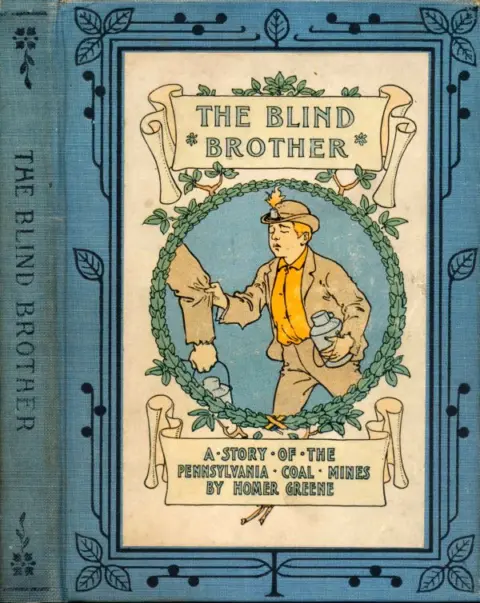
"The Blind Brother: A Story of the Pennsylvania Coal Mines" by Homer Greene is a novel written in the late 19th century. The story revolves around two brothers, Tom and Bennie Taylor, who are navigating the harsh realities of life in the Pennsylvania coal mines during a time of labor strikes. Tom, the older brother, is determined to help his blind sibling regain his sight, highlighting themes of familial loyalty, sacrifice, and the moral dilemmas faced by the working class. At the start of the novel, we are introduced to Bennie, a blind boy who works as a door-boy in the coal mine, relying on his older brother Tom for support and guidance. The narrative sets the stage for their struggles as they navigate the complexities of life in a mining community facing turmoil from strikes. A significant moment occurs when Bennie shares his hopes of saving money to seek medical treatment for his blindness, which underscores the brothers' deep bond. As the story unfolds, Bennie becomes lost in the mine, prompting a desperate search by Tom, which ultimately tests their resilience and love for one another amid a backdrop of social unrest and personal sacrifice. This opening sets up a poignant exploration of the intersection of personal dreams and harsh realities.
Introduction adapted from the source catalogue; source summaries may be automatically generated.
Free to read · English · 27,621 words · No account needed
MAKE TIME FOR A GOOD BOOK
On by default. Untick to stop anonymous reading totals. Each page counts after 10 seconds in view. How this works.
Anonymous counting is on unless you have switched it off.
Every one, but Jack Rennie himself, seemed to feel the force of Tom’s testimony. The prisoner still sat clutching the table, looking blankly at the wall, pale, almost trembling, with some suppressed emotion.
But through Tom’s mind kept echoing the solemn words of his oath: “The whole truth; the whole truth.” And he had not told it; his testimony was no better than a lie. An awful sense of guilt came pressing in upon him from above, from below, from every side. Hateful voices seemed sounding in his brain: “Perjurer in spirit! Receiver of bribes!”
The torture of his self-abhorrence, in that one moment of silence, was
terrible beyond belief.
Then a sudden impulse seized him; a bright, brave, desperate impulse.
He stepped down from the witness-stand, passed swiftly between chairs and tables, tearing the money from his breast-pocket by the way, and flinging the hated hundred dollars down before the astonished Pleadwell, he returned as quickly as he came, stepped into his place with swelling breast and flaming cheeks and flashing eyes, and exclaimed, falling, in his excitement, into the broad accent of his mother tongue,--
“Noo I’m free! Do what ye wull wi’ me! Prison me, kill me, but I’ll no’ hold back the truth longer for ony mon, nor a’ the money that ony mon can gi’ me!”
Men started to their feet in astonishment. Some one back among the people began to applaud. Jack Rennie turned his face toward the boy with a look of admiration, and his eyes were blurred with sudden tears.
“He’s the son o’ his father!” he exclaimed; “the son o’ his father! He’s a braw lad, an’ good luck till him, but it was flyin’ i’ the face o’ fortune to swear him. I told ye! I told ye!”
“Who gave you that money?” asked the district attorney of Tom, when quiet had been partially restored.
Pleadwell was on his feet in an instant.
“Stop!” he shouted. “Don’t answer that question! Did I give you that
money?”
“No, sir,” replied Tom, awed by the man’s vehemence.
“Did Jack Rennie give you that money?”
“No, sir.”
Pleadwell turned to the court.
“Then if your Honors please, we object to the witness answering this question. This is a desperate theatrical trick, concocted by the prosecution to prejudice this defendant. We ask that they be not allowed to support it with illegal evidence.”
The judge turned to Tom.
“Do you know,” he asked, “that this money was given to you by the defendant’s authority, or by his knowledge or consent?”
“I can’t swear that it was,” replied Tom.
Your reading position is saved on this browser. Take it to another device with a library code. Reading pages adapt to text, rather than matching a printed edition.
Homer Greene

Homer Greene

Homer Greene
Homer Greene
BEHIND THE BOOK
This eBook is for the use of anyone anywhere in the United States and most other parts of the world at no cost and with almost no restrictions whatsoever. You may copy it, give it away or re-use it under the terms of the Project Gutenberg License included with this eBook or online at www.gutenberg.org. If you are not located in the United States, you will have to check the laws of the country where you are located before using this eBook. Read the source licence.
The original source file, including credits and licence, is retained by this library. Request an original-format copy at no charge. Please include the book title and Project Gutenberg identifier #45232.
KEEP YOUR CURIOSITY GOING
Coulson Kernahan

Maurice Baring
Frances Wright
Cécile Tormay

Frederic Jesup Stimson

W. H. P. (William Henry Pope) Jarvis